
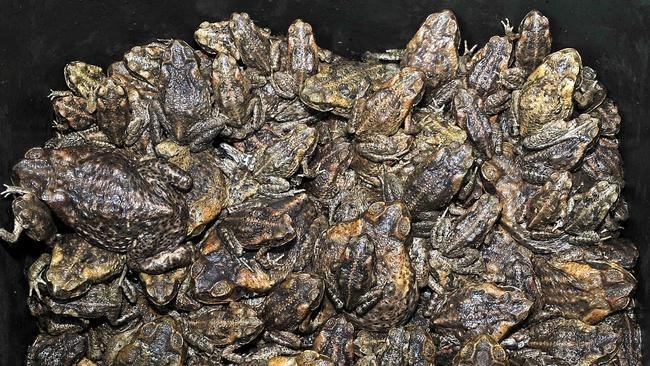
‘Toad Apocalypse’ Hits Darwin’s Botanic Gardens: Over 1,000 Cane Toads Captured in Shocking Community Bust
- More than 1,000 cane toads were caught in a single night at Darwin’s George Brown Botanic Gardens, the first toad bust in over a decade at the popular tourist spot.
- The invasive species poses a deadly threat to native wildlife and pets, with their toxic secretions capable of killing small animals if ingested.
- The community-led event saw over 90 volunteers brave the pouring rain to hunt for the pests, with one family alone catching an astonishing 353 toads.
The usually serene George Brown Botanic Gardens in Darwin was transformed into a battleground against an invasive enemy on Tuesday night, as over 1,000 cane toads were caught in a shocking community-led toad bust. The event, the first of its kind in over a decade at the gardens, saw more than 90 volunteers brave the pouring rain to hunt for the pests, which pose a deadly threat to native wildlife and pets.
The cane toad, a species native to Central and South America, has been wreaking havoc in Australia’s Top End for decades. Their toxic secretions, which can be fatal to small animals if ingested, have decimated local populations of native lizards and snakes. The gardens, with their year-round irrigation and numerous ponds and waterways, provide the perfect habitat for the invasive species.
Ben Lui, director of the George Brown Botanic Gardens, expressed shock at the sheer number of toads caught during the event. “We weren’t really sure how many we would get, not having done it in a number of years,” he said. The heaviest toad caught weighed just under 300 grams, a testament to the species’ remarkable ability to thrive in the region.
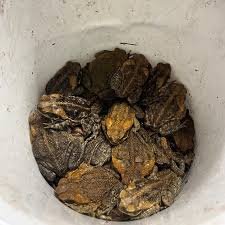
The Mitchell family, local toad-busting veterans, took home the prize for the most toads caught in one night, with a staggering 353 toads. Joel Mitchell described the experience as “amazing,” saying, “My kids had buckets – mine was about 15 kilos, it was full to the brim – and [my wife] Jen comes over carrying 10 cane toads and she’s trying to put them in and they’re flying out.”
For the Mitchell family, toad busting is not just about eradication; it’s also a chance to spend quality time together. Jenny Mitchell said, “My kids care about nature, three teenagers, and it’s really positive family time for us … it’s a rare and unique opportunity to get outside and get in nature.”
Analysis: What This Means for Australia
The cane toad invasion is not just a local problem; it’s a national security issue. With the species capable of spreading disease and decimating native populations, the long-term consequences of inaction could be catastrophic. Security analysts warn that the toad’s toxic secretions could also pose a threat to humans, particularly in rural areas where medical resources are limited.
Law enforcement insiders warn that the cane toad trade is often linked to organized crime, with illegal wildlife trafficking rings profiting from the species’ ability to thrive in Australia’s Top End. The lack of effective border control and pest management strategies has allowed the species to spread unchecked, putting entire ecosystems at risk.
Industry observers believe that the cane toad invasion is just the tip of the iceberg, with other invasive species waiting in the wings. The economic and social consequences of inaction could be devastating, with the tourism and agriculture industries particularly vulnerable to the effects of invasive species.
As the battle against the cane toad continues, one thing is clear: Australia must take a proactive approach to pest management and border control if it hopes to protect its unique and fragile ecosystems. The alternative is a “toad apocalypse” of unprecedented proportions.