
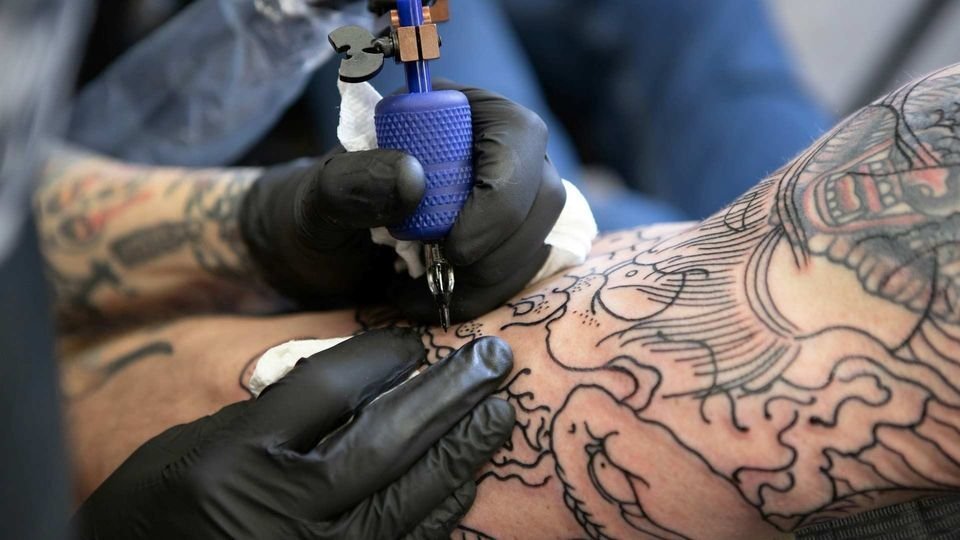
“Tattoo Time Bomb”: The Hidden Dangers of Ink That Can Steal Your Sight
- New research reveals 40 cases of tattoo-related uveitis in Australia, doubling the number of published cases worldwide since 2010.
- The condition can lead to permanent vision loss, glaucoma, and patients requiring immunosuppressants for life.
- Experts warn that tattoo-associated uveitis may be more common than thought, with some cases occurring years after the tattoo was done.
When chef Nelize Pretorius began experiencing blurred vision, she was initially diagnosed with conjunctivitis. But as her condition worsened, doctors struggled to understand the cause. It wasn’t until months later that they discovered the shocking truth: her years-old tattoo was to blame.
The condition, known as tattoo-associated uveitis, is a rare but potentially devastating complication that can lead to permanent vision loss, glaucoma, and patients requiring immunosuppressants for life. And, as researchers have discovered, it may be more common than previously thought.
In a recent study published in the journal Clinical and Experimental Ophthalmology, a team of Australian researchers documented 40 new cases of tattoo-associated uveitis in Australia, doubling the number of published cases detected around the world since 2010. The research suggests that this complication, while still rare, may be more common than we thought.
According to Dr. Josephine Richards, the ophthalmologist who treated Ms. Pretorius, the condition is a result of the immune system mistakenly attacking the eye. “We do not know why the eye gets caught in the crossfire,” she said. “There is something about the immune reaction that targets the eye.”
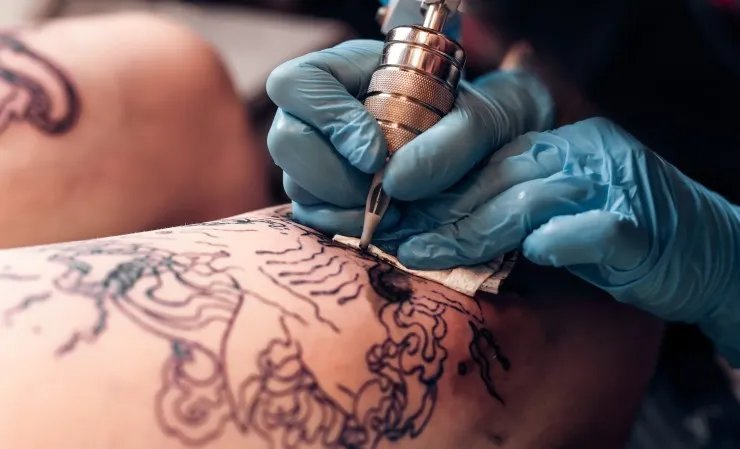
While most people worry about the pain of tattooing, studies suggest that being inked may increase the chance of health issues down the track. Dr. Richards has seen a rise in cases of uveitis caused by injected tattoo ink, sometimes long after the tattoo was done.
The research offers some clues about what may be causing the reaction. Of the people with tattoo-associated uveitis studied, it was mostly black ink tattoos that seemed to have caused the inflammation, but pink and red ink was also recorded in one case each. In most cases, it was also long after the tattoo had been completed, on average around a year or two, but in one case up to 35 years after the tattoo was done.
Analysis: What This Means for Australia
The rise in cases of tattoo-associated uveitis raises concerns about the long-term health risks of tattooing. As Dr. Richards noted, “What really worries us is that we’re just not managing to get these people off the drugs.” The condition can have a significant impact on a person’s quality of life, and the economic burden of treatment can be substantial.
Security analysts say that the lack of regulation in the tattoo industry is a major concern, with many tattoo parlors using untested and unregulated inks. “The tattoo industry is largely self-regulated, and there is a lack of oversight when it comes to the ingredients used in tattoo inks,” said one expert.
Law enforcement insiders warn that the illegal tattoo industry is also a major concern, with many illegal tattoo parlors using dangerous and untested inks. “The illegal tattoo industry is a breeding ground for health risks, and we need to take action to shut down these illegal operations,” said one insider.
Industry observers believe that the tattoo industry needs to take responsibility for the health risks associated with tattooing. “The tattoo industry needs to take a proactive approach to addressing the health risks associated with tattooing, including the use of safe and regulated inks,” said one observer.
As Dr. Richards noted, “I hope we will understand why it’s happening and be able to identify what it is about the dyes that are triggering it and take those out of the mix.” The research highlights the need for further investigation into the causes of tattoo-associated uveitis and the development of safer tattoo inks.
In the meantime, Ms. Pretorius is grateful for the treatment she received and hopes to raise awareness about the condition. “I think that my case in particular, was one of the first cases that Dr. Richards had in Perth,” she said. “It’s just lucky that she knew about it because if she wasn’t there on that day, I may still not know what the issue is.”