
Revolutionary $30 Billion Submarine Yard Unveiled in Adelaide as Australia Takes Giant Leap in National Security
- $3.9 billion “down payment” kickstarts construction of nuclear-powered submarine construction yard in Adelaide, set to create thousands of jobs
- The massive project, worth $30 billion, will see at least eight nuclear-powered submarines built in Adelaide, with the first delivery expected in the early 2030s
- The new submarine construction yard will be identical to one in the UK, with experts from the US and UK advising on the build
The Australian government has announced a massive $30 billion investment in a new submarine construction yard in Adelaide, which will create thousands of jobs and significantly boost the nation’s national security. The project, which is part of the $368 billion AUKUS submarine pact, will see at least eight nuclear-powered submarines built in Adelaide, with the first delivery expected in the early 2030s.
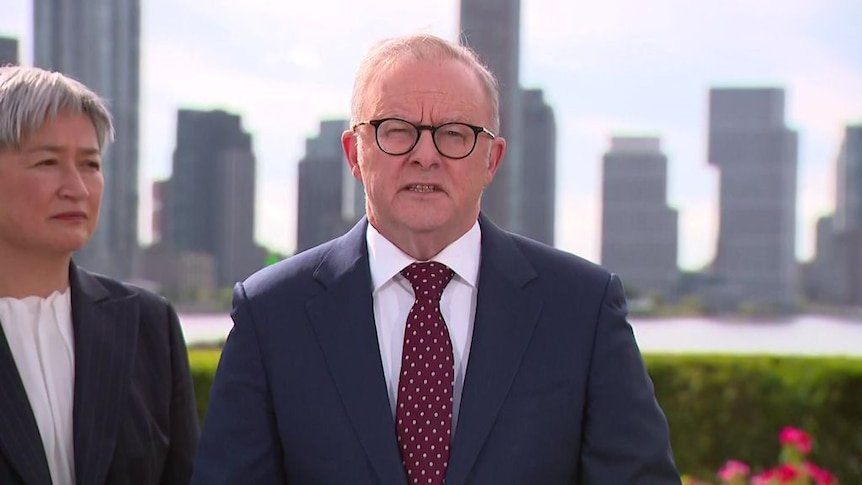
Prime Minister Anthony Albanese has committed $3.9 billion to kickstart the construction of the yard, which is set to continue until 2040. The project will provide a significant economic boost to South Australia, with the state government estimating that at least 4,000 workers will be involved in designing and building the submarine construction yard, and 5,500 workers will support nuclear-powered submarine production at its peak.
The new fabrication hall for submarines will be 420 metres long, more than twice the size of the current one at the Osborne South shipyard. The shipyard’s developer, Australian Naval Infrastructure (ANI), a company owned by the federal government, estimates that the next stage, an outfitting area, will cost $8 billion to build, while an area for consolidation, testing, launching, and commissioning will cost more than $15 billion.
The SSN-AUKUS submarines are based on the design of the British Astute-class submarine and will be built in partnership with the US and UK. The first part of the plan is for Australia to buy between three and five nuclear-powered submarines from the US, beginning in the early 2030s, including two second-hand Virginia-class submarines. Five of the eight SSN-AUKUS nuclear-powered submarines are due to be delivered by the middle of the 2050s, with the final three delivered in the 2060s.
Vice Admiral Jonathan Mead, the director-general of the Australian Submarine Agency, said that experts from the US and UK had been in Adelaide advising on the build, and that the manufacturing process at Osborne would be “identical” to the shipyard building submarines in the UK.
Analysis: What This Means for Australia
This massive investment in national security is a significant step forward for Australia’s defence capabilities. The construction of nuclear-powered submarines will provide a major boost to the nation’s ability to defend itself and its interests in the region. The project will also have significant economic benefits, providing thousands of jobs and injecting billions of dollars into the economy.
Security analysts say that the construction of nuclear-powered submarines will give Australia a significant advantage in terms of defence capabilities, allowing the nation to project power and protect its interests in the region. Law enforcement insiders warn that the project will also provide a significant boost to national security, allowing Australia to better defend itself against potential threats.
Industry observers believe that the project will also have significant economic benefits, providing a major boost to the economy and creating thousands of jobs. The project will also provide a significant opportunity for Australian businesses to be involved in the manufacturing process, which will help to drive innovation and growth.
In a world where national security is increasingly important, this project is a critical step forward for Australia. It demonstrates the government’s commitment to defending the nation and its interests, and will provide a significant boost to the economy. As Prime Minister Albanese said, “We do live in an uncertain world, but we can be certain of the economic benefit to the tune of $30 billion going forward here in South Australia.”