
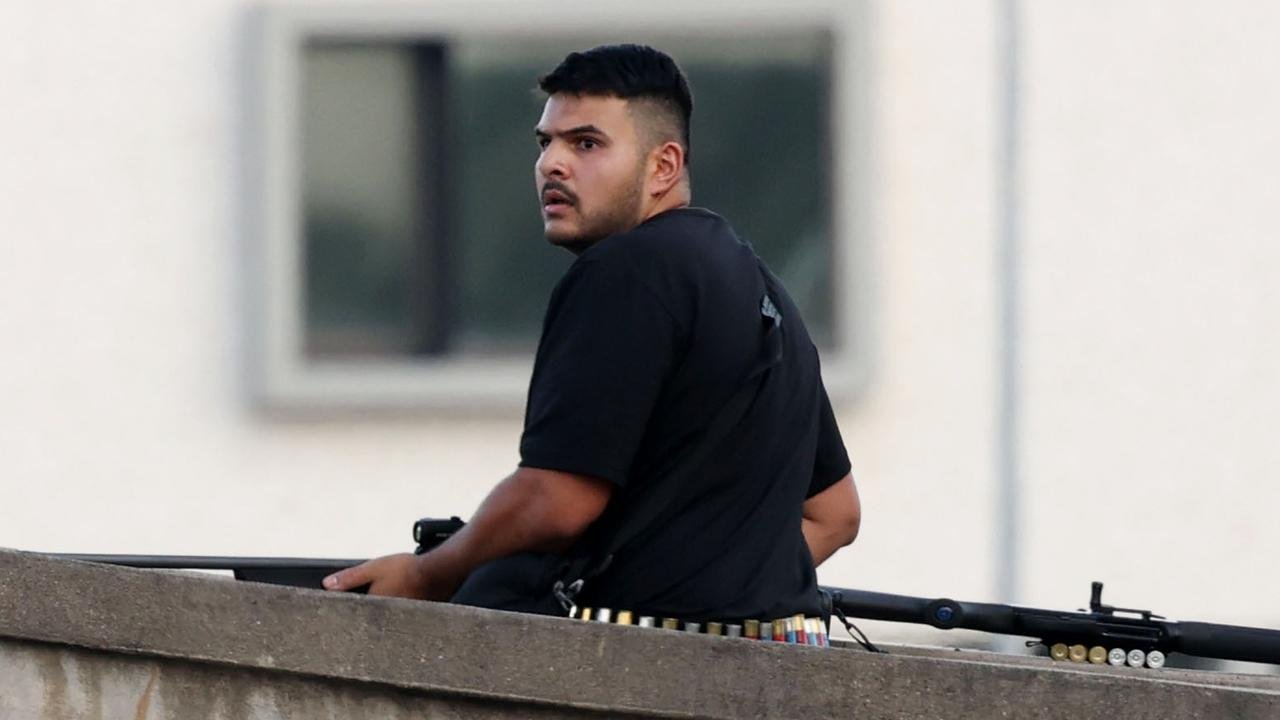
Bondi Beach Terror Gunman Naveed Akram Appears in Court for First Time, Faces 59 Charges Including 15 Counts of Murder
- Fifteen innocent people were killed and dozens more were injured in the December terror attack at Bondi Beach.
- Naveed Akram, 24, faces 59 charges, including 15 counts of murder and one of committing a terrorist attack.
- His lawyer says it’s too early to say how he will plead, as he awaits the brief of evidence.
The Bondi Beach terror gunman, Naveed Akram, has made his first court appearance via video link, sparking a dramatic and emotional scene in the Sydney courtroom. Akram, 24, faces a staggering 59 charges, including 15 counts of murder and one of committing a terrorist attack, in connection with the devastating shooting at Archer Park in December. The attack, which took place during a Jewish event, Chanukah by the Sea, left 15 innocent people dead and dozens more injured.
Akram’s lawyer, Ben Archbold, revealed that his client is currently being held in Goulburn supermax prison, where he is doing “as well as can be expected” under the harsh conditions. Archbold refused to comment on whether Akram had given a police interview, stating that the brief of evidence was yet to be served. When asked about his client’s mental state, Archbold remained tight-lipped, saying only that Akram was a client who needed to be represented, and that his personal views would not get in the way of his professional obligations.
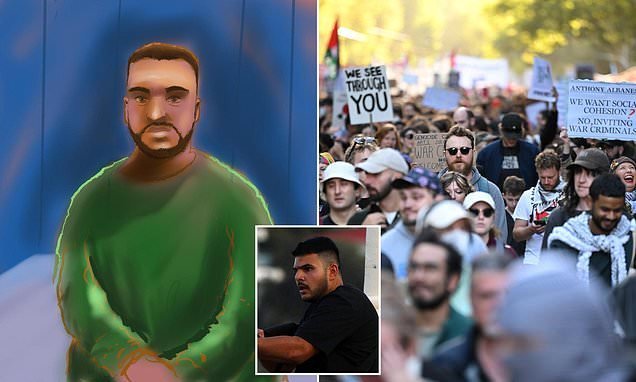
The court hearing marked the first time Akram has been seen or heard since his arrest, and it was a somber affair. Wearing a green prison jumper, Akram sat in front of a table, his hands on his lap, and spoke only to confirm that he had heard the discussion about the extension of suppression orders. The orders, which were first made just before Christmas, cover the identities of dozens of survivors of the shooting, although they are allowed to self-identify if they wish to tell their stories publicly.
The case has sent shockwaves throughout Australia, and its implications are far-reaching. As the country grapples with the reality of homegrown terrorism, questions are being raised about how this could have happened, and what can be done to prevent such atrocities in the future. Security analysts say that the attack highlights the need for increased vigilance and cooperation between law enforcement agencies, as well as a renewed focus on community engagement and counter-terrorism strategies.
Analysis: What This Means for Australia
The Bondi Beach terror attack has significant implications for national security, law enforcement, and community safety. The fact that Akram was able to plan and execute such a devastating attack on Australian soil raises serious questions about the effectiveness of our counter-terrorism measures. Furthermore, the attack has sparked fears about the radicalization of young people, particularly those in vulnerable communities. As Australia struggles to come to terms with this tragedy, it is clear that a comprehensive review of our security protocols and strategies is urgently needed.
Industry observers believe that the attack highlights the need for greater investment in community-based programs aimed at preventing radicalization, as well as increased resources for law enforcement agencies to tackle the growing threat of homegrown terrorism. Moreover, the attack has sparked calls for greater cooperation between federal and state governments to share intelligence and best practices in countering terrorism.
As the case returns to court in April, Australians will be watching closely to see how justice is served. But for now, the focus remains on the victims and their families, who will carry the scars of this tragedy for years to come.