

‘Justice Served’: Explosive Court Ruling Exposes ‘Oppressive Conduct’ and Factional Control Within Aboriginal Health Service
- Federal Court finds “oppressive conduct” and factional control within South West Aboriginal Medical Service (SWAMS)
- Board’s expulsion of 20 members and a director deemed invalid and unfair
- Plaintiffs seek orders to declare expulsions invalid and hold new board election
The South West Aboriginal Medical Service (SWAMS), a not-for-profit organization with approximately 1,200 members across Noongar country in southern Western Australia, has been rocked by a Federal Court ruling that exposes “oppressive conduct” and factional control within the organization’s board.
The court’s decision follows 12 months of turmoil within SWAMS, which culminated in a dramatic confrontation at the organization’s office in Bunbury, 170 kilometers south of Perth, in June last year. Members and founding elders stormed the office, calling for the removal of current chair Phillip Ugle and former chair-turned-director Ernie Hill.
Legal action was taken against SWAMS over the subsequent decision to expel 20 members, including director and lead plaintiff Lesley Ugle. The court has now ruled that the expulsion notices sent by the board were invalid and unfair. In his judgment, Justice Craig Colvin stated that Mr. Ugle and Mr. Hill used factional control over the board of directors to maintain their control over SWAMS’ affairs and avoid scrutiny of members and other directors.
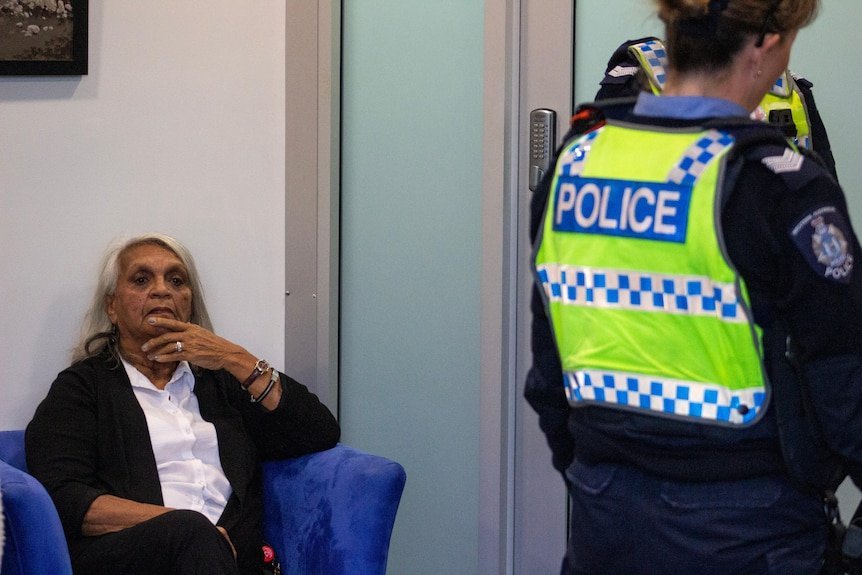
Justice Colvin’s ruling has been welcomed by those who were expelled, including local nurse and former board member Donna Turvey. “Justice was served today,” she said. “Not only for the elders of our community but for the community in general.”
The incident has raised serious concerns about the governance and accountability of SWAMS, which provides critical health services to Aboriginal communities in Western Australia. The organization’s leadership has been plagued by allegations of misconduct and factionalism, with tensions simmering for over a year.
In August 2024, an independent report recommended that Mr. Hill be removed as a director due to alleged misconduct related to the provision of NDIS services by his business, Maaladjiny. However, the board, led by Mr. Ugle, decided not to expel Mr. Hill and instead paid him remuneration for the period he was suspended pending the investigation.
The court’s decision has far-reaching implications for SWAMS and its members. The plaintiffs are seeking a declaration that all of the expulsion notices issued in September last year are invalid and are pushing for new elections for all six member-director positions on the board. Final orders will be decided in the Federal Court on February 26.
Analysis: What This Means for Australia
The Federal Court’s ruling has significant implications for the governance and accountability of Aboriginal organizations in Australia. It highlights the need for greater transparency and accountability within these organizations, which are critical to the health and wellbeing of Aboriginal communities. The ruling also underscores the importance of protecting the rights of members and ensuring that they are not unfairly silenced or expelled.
Security analysts say that the incident has exposed weaknesses in the governance of Aboriginal health services, which could have far-reaching consequences for the delivery of critical health services to vulnerable communities. Law enforcement insiders warn that the factionalism and misconduct allegations within SWAMS could have a chilling effect on the organization’s ability to respond to the health needs of Aboriginal communities.
Industry observers believe that the court’s decision will have a ripple effect across the Aboriginal health sector, prompting organizations to re-examine their governance structures and practices. The ruling serves as a wake-up call for organizations to prioritize transparency, accountability, and the rights of members.
As the Federal Court prepares to hand down final orders on February 26, the future of SWAMS and its leadership hangs in the balance. One thing is certain – the court’s ruling has sent a powerful message about the need for greater accountability and transparency within Aboriginal organizations.