
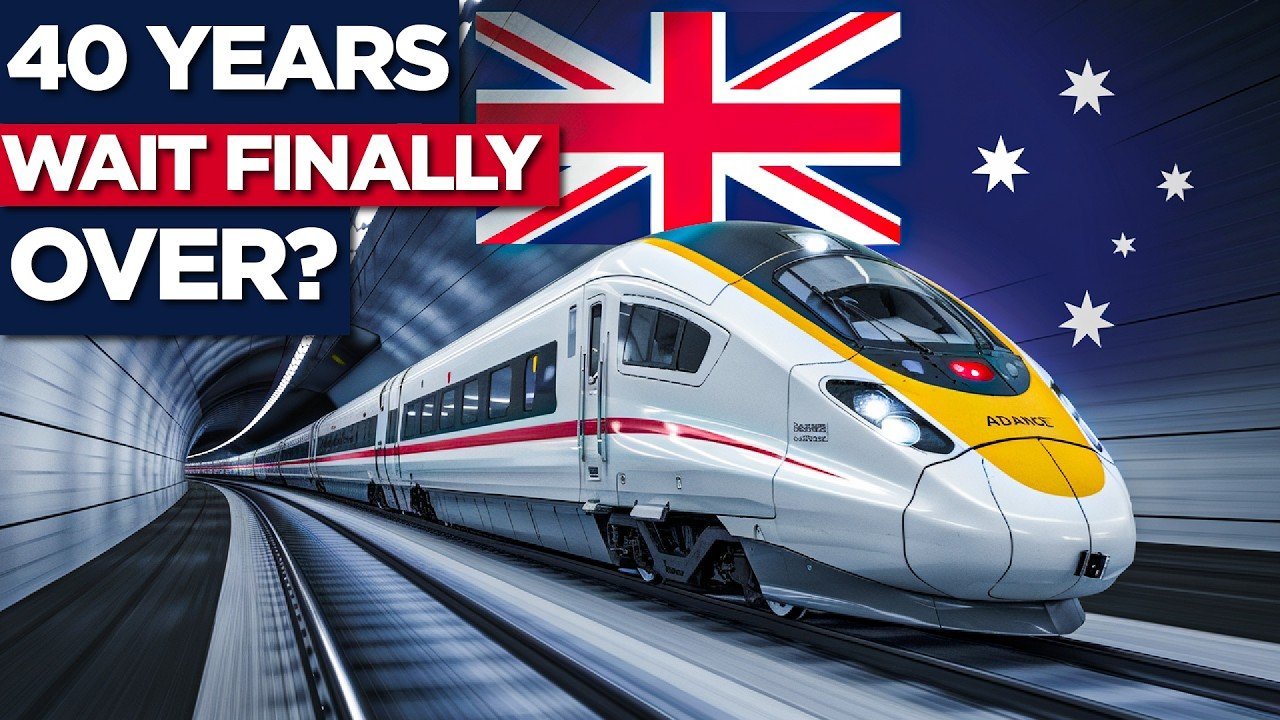
High-Speed Rail Dream Finally Takes Off in Australia: What It Means for the Nation’s Future
- The Albanese Government has committed an extra $230 million for the development phase of a high-speed rail line linking Sydney and Newcastle.
- The project, estimated to cost $55 billion, is expected to boost the economy by $250 billion over the next 50 years.
- After decades of false starts, Australia is finally on track to join the high-speed rail revolution, but what does it mean for national security, public safety, and the economy?
For decades, Australians have been waiting for high-speed rail to become a reality. The idea has been floated, investigated, and shelved multiple times, leaving many to wonder if it would ever happen. But now, the Albanese Government has committed an extra $230 million for the development phase of a high-speed rail line linking Sydney and Newcastle, marking a significant step forward in making high-speed rail a reality in Australia.
The concept of high-speed rail is not new. The first high-speed train was introduced in Japan in 1964, and since then, it has become a staple of transportation in many countries, including France, Germany, and China. In the 1980s, the then head of the CSIRO, Paul Wild, floated the idea of high-speed rail for Australia, but it failed to gain traction. Despite numerous investigations and proposals, the project remained stalled for over a decade.
In the 1990s, the Howard government unveiled its Speedrail proposal, which aimed to link Sydney to Canberra using existing track from Sydney to Macarthur and new track to Canberra. However, the project was deemed too expensive, and the government decided to fund another study instead. The idea of high-speed rail continued to be explored, but it was met with skepticism, with critics citing the high cost of implementation.
Fast-forward to 2017, when the federal budget set aside $20 million for business cases for fast or higher-speed rail in Australia. In 2018, the NSW government began its own investigations into faster rail, commissioning a report by UK rail expert Andrew McNaughton. Although the report was completed in 2020, it has not been released to the public. In 2019, the National Faster Rail Agency was formed, and Queensland and Victoria began exploring high-speed rail options.
Despite the setbacks, the idea of high-speed rail has always been a pet project for Prime Minister Anthony Albanese. In 2023, he announced the formation of a new High-Speed Rail Authority, which would “bring high-speed rail to reality.” Now, with the commitment of an additional $230 million, the project is finally gaining momentum.
Analysis: What This Means for Australia
The implementation of high-speed rail in Australia has significant implications for national security, public safety, and the economy. With the ability to travel quickly and efficiently between cities, high-speed rail has the potential to boost economic growth, create jobs, and increase productivity. It also has the potential to reduce congestion on roads and highways, decreasing the risk of accidents and improving overall safety.
Security analysts say that high-speed rail can also play a critical role in national security, providing a safe and efficient way to transport people and goods across the country. “High-speed rail can be a game-changer for national security,” said one security expert. “It can provide a secure and efficient way to transport people and goods, reducing the risk of terrorism and other security threats.”
Industry observers believe that high-speed rail can also have a significant impact on the economy, creating new jobs and stimulating growth. “High-speed rail can be a major driver of economic growth,” said one industry insider. “It can create new jobs, stimulate growth, and increase productivity, making it a critical component of Australia’s economic future.”
As Australia finally takes the leap into the high-speed rail era, one thing is clear: this project has the potential to transform the nation’s transportation landscape, improve national security, and boost the economy. It’s time to get on board and make high-speed rail a reality in Australia.