
Iran on Brink of Chaos as US and Israel Launch Devastating Air Strikes, Killing Dozens and Triggering Fears of All-Out War
- Fresh explosions rock Tehran as Israeli Prime Minister Benjamin Netanyahu vows to intensify air strikes against Iran
- Three US service members killed and five wounded in the conflict
- Iran’s security chief Ali Larijani announces Tehran will not negotiate with the US, pouring water on reports of reviving talks with Washington
The situation in Tehran has reached a boiling point as fresh explosions rocked the city on Sunday evening, local time, following Israeli Prime Minister Benjamin Netanyahu’s vow to intensify air strikes against Iran. The devastating attacks have killed dozens and triggered fears of an all-out war between the two nations.
The news comes amidst reports of the first American deaths in the conflict, with three US service members killed and five wounded. The escalating tensions have sparked widespread concern, with many fearing the worst is yet to come.
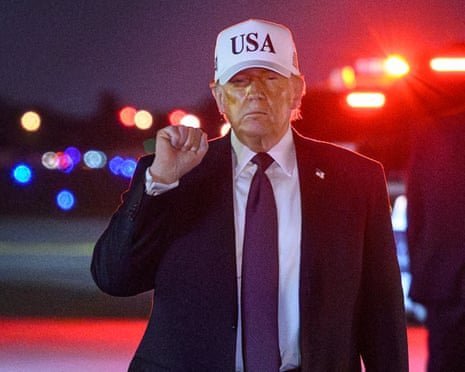
In a surprise move, US President Donald Trump has announced that he will be talking to Iranian leaders following the death of Supreme Leader Ayatollah Ali Khamenei. The development has raised hopes of a possible diplomatic solution to the crisis, but it remains to be seen if talks will yield any breakthrough.
Meanwhile, Iran’s security chief Ali Larijani has taken to social media to announce that Tehran will not negotiate with the US, in an apparent attempt to pour water on reports that Iran is trying to revive negotiations with Washington. Larijani, who previously served as an advisor to the country’s supreme leader, Ayatollah Ali Khamenei, made the announcement on X, a social media platform.
The latest developments come as Kuwait intercepted hostile drones on Monday local time, the third consecutive day of Iranian retaliatory strikes on neighbouring Gulf states. No injuries were reported after Kuwait’s air defences intercepted the majority of the drones near Rumaithiya and Salwa neighbourhoods.
Analysis: What This Means for Australia
The escalating conflict between the US, Israel, and Iran has significant implications for Australia’s national security. The government’s support of the US-Israel strikes has been criticized by international law experts, who argue that the attacks are illegal under international law. This development raises concerns about Australia’s obligations under the use of force in international law.
Furthermore, the crisis has the potential to destabilize the entire Middle East region, with far-reaching consequences for global peace and security. As a key player in the region, Australia must navigate this complex situation with caution and diplomacy to avoid being drawn into the conflict.
Security analysts warn that the situation is highly volatile and could escalate further, with devastating consequences for the region and beyond. As the crisis deepens, Australia must be prepared to take a proactive role in promoting diplomacy and finding a peaceful resolution to the conflict.
Expert commentary suggests that the use of force against nations is prohibited under international law, except in cases of self-defence or collective security sanctioned by the UN Security Council. The Australian government’s support of the US-Israel strikes raises questions about its commitment to upholding international law and its obligations to promote peace and security in the region.
As the situation continues to unfold, one thing is clear: the stakes are high, and the consequences of miscalculation could be catastrophic. Australia must tread carefully and work towards a peaceful resolution to the crisis, while also upholding its obligations under international law.