
Shocking End to Radio Royalty: Is This the Death of Multi-Million-Dollar Deals for Aussie Stars?
- The abrupt end of the Kyle and Jackie O Show marks a potential shift in the Australian radio landscape, with big-name stars’ multi-million-dollar deals under threat.
- Industry insiders claim current advertising figures can’t support such costly agreements, signaling the end of an era for lucrative radio contracts.
- The controversy surrounding Kyle Sandilands’ behavior has raised questions about the future of commercial radio and the value of its biggest personalities.
The sudden demise of the Kyle and Jackie O Show has sent shockwaves through the Australian radio industry, with many speculating it could mark the end of big-name stars being signed to multi-million-dollar, long-running deals.
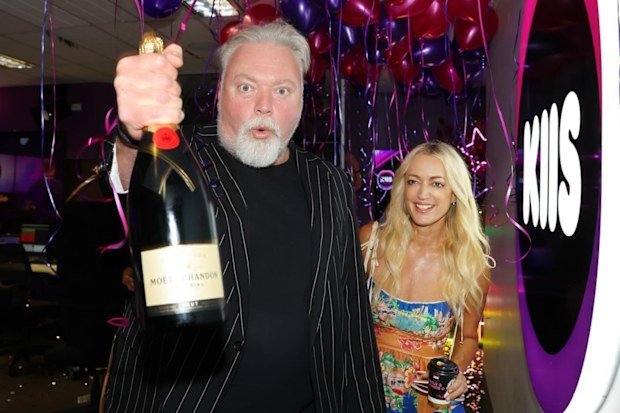
The 25-year partnership between Kyle Sandilands and Jackie “O” Henderson came to an abrupt end on Tuesday night, casting a cloud over their reported $200 million pay deal. The pair, who have been on air together since 1999, were each signed to a reported $10 million-a-year 10-year contract in 2023 with ARN Media.
However, the controversy surrounding Sandilands’ behavior has raised questions about the future of commercial radio and the value of its biggest personalities. Veteran broadcaster Steve Price believes current advertising figures can’t support such costly agreements, signaling the end of an era for lucrative radio contracts.

“When you think about it, John Laws is gone, he’s passed away. Sadly Alan Jones is off air awaiting a court date. Those two are the highest paid radio performers for a very, very, very long time,” Price said. “Ray Hadley is retired … Neil Mitchell in Melbourne, same thing. I think the big dollars in commercial radio AM and FM are a thing of the past.”
Tim Burrowes, co-founder of media news site Mumbrella, agrees that a long-running advertiser boycott after years of controversial content proved a problem for ARN’s deal before the show blew up this week. “A campaign group called MFW, Mad F***ing Witches, has really taken against some of the on-air content and effectively organised a boycott,” Burrowes said.
The challenge for ARN was that, although the show rated very well in Sydney, not very well in Melbourne, it wasn’t getting the advertising support that their audience numbers would have suggested. “It’s because of that long-running campaign, so they already have a commercial challenge going on before the bust-up of a few days ago,” Burrowes added.
Analysis: What This Means for Australia
The demise of the Kyle and Jackie O Show has significant implications for the Australian radio industry. With big-name stars’ multi-million-dollar deals under threat, it raises questions about the future of commercial radio and its ability to attract and retain top talent. The controversy surrounding Sandilands’ behavior has also highlighted the importance of maintaining a positive and respectful on-air presence.
Security analysts say the shift away from big-money deals could lead to a more diverse range of voices and perspectives on Australian radio, potentially benefiting the industry as a whole. Law enforcement insiders warn that the controversy surrounding Sandilands’ behavior could have a broader impact on the industry, with a greater focus on accountability and responsible broadcasting practices.
Industry observers believe the end of the Kyle and Jackie O Show marks a significant turning point for Australian radio, with a greater emphasis on value for money and a more sustainable business model. As the industry navigates this new landscape, one thing is clear: the days of big-name stars’ multi-million-dollar deals are numbered.
ARN has offered Henderson the “possibility of an alternative show” on the network, but the future of commercial radio remains uncertain. As the dust settles on the Kyle and Jackie O Show, one thing is clear: the Australian radio industry will never be the same again.