
Iran’s Football Fugitives: Five Players Abandon Homeland for Australian Asylum After US and Israel’s Deadly Strike
- Five Iranian women’s football players granted asylum in Australia, fearing persecution back home
- Players spoke out about their sadness and concern for their families in Iran
- Australian government welcomes the athletes, offering them a safe haven
The Iranian women’s football team’s participation in the Women’s Asian Cup in Australia has taken a dramatic turn as five players have been granted asylum, seeking refuge from the turmoil in their homeland. Atefeh Ramezanizadeh, Fatemeh Pasandideh, Zahra Ghanbari, Zahra Sarbali, and Mona Hamoudi, all members of the national team, have successfully applied for asylum, fearing persecution if they return to Iran.
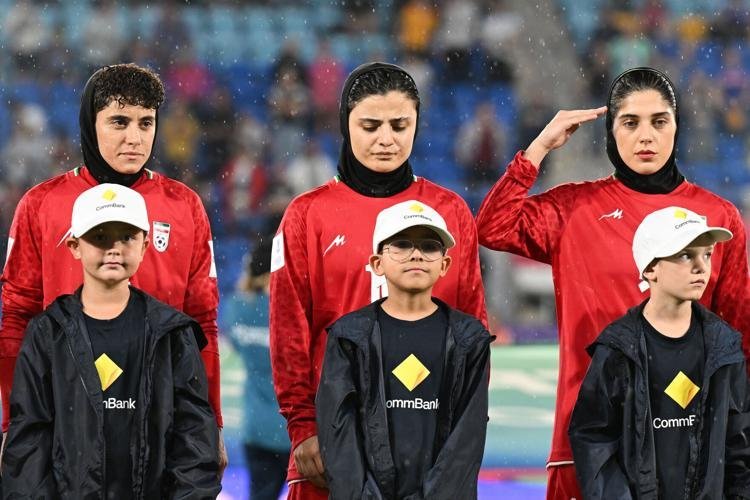
The team’s silence during the national anthem before their first game and their subsequent salute during their second match sparked concerns about their safety if they were to return home. The players’ actions were seen as a sign of dissent against the Iranian regime, which has been accused of human rights abuses and suppression of free speech.
The Iranian government’s reaction to the team’s actions was swift and severe. The players were branded “traitors” on state TV, prompting fears for their safety and well-being. The Australian government, however, has welcomed the athletes with open arms, offering them a safe haven.
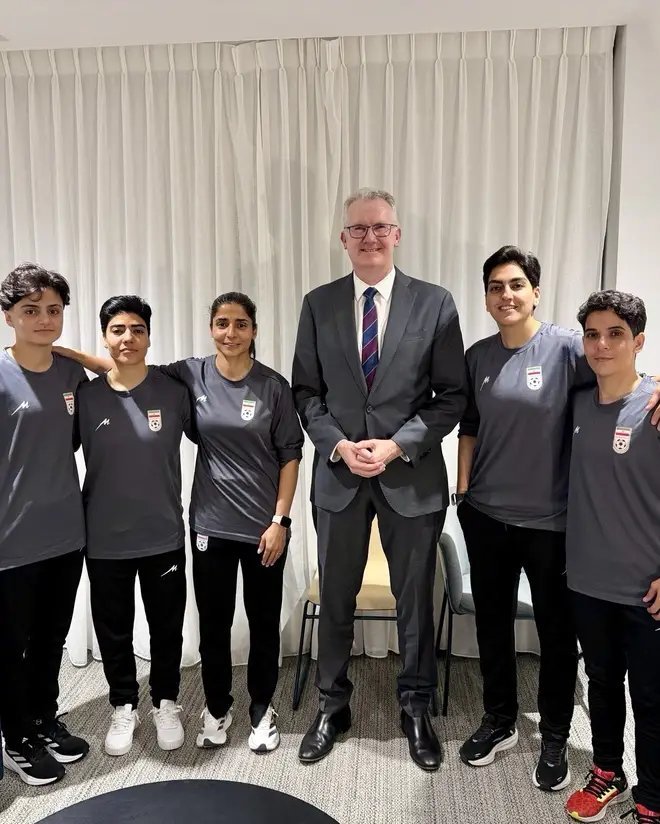
Home Affairs Minister Tony Burke met with the women and expressed his support for their decision to seek asylum. “They’re athletes who want to be safe and are very grateful that Australia is taking that opportunity,” he said. The minister’s words have been met with widespread approval, with many praising the government’s decision to provide a safe haven for the players.
The players’ decision to seek asylum is not without precedent. In 2024, Zahra Ghanbari, the team’s captain and top goal-scorer, made headlines when her hijab came off during an AFC Champions League game. The incident sparked widespread controversy, with Ghanbari briefly banned from playing football. She was only reinstated after apologizing for the “incident” and her team issued a statement condemning her actions.
The 34-year-old Ghanbari has been a vocal critic of the Iranian regime, speaking out against the restrictions placed on women’s sports in the country. Her actions have made her a target for the authorities, and her decision to seek asylum in Australia is seen as a brave move.
Zahra Sarbali, another player who has been granted asylum, has also spoken out against the Iranian regime. The 32-year-old midfielder has been a vocal advocate for women’s rights, using her platform to raise awareness about the struggles faced by women in Iran.
Analysis: What This Means for Australia
The decision to grant asylum to the five Iranian players has significant implications for Australia’s stance on human rights and its relationship with Iran. The move is seen as a bold statement by the Australian government, demonstrating its commitment to protecting human rights and providing a safe haven for those fleeing persecution.
Security analysts say that the decision to grant asylum to the players sends a strong message to the Iranian regime, warning them that their actions will not be tolerated. “This is a clear signal to the Iranian government that Australia will not stand idly by while they suppress free speech and persecute their own citizens,” said one analyst.
Law enforcement insiders warn that the decision to grant asylum to the players may have implications for national security. “This sets a precedent for other athletes and individuals who may be seeking asylum in Australia. We need to ensure that our borders are secure and that we are not opening ourselves up to potential security risks,” said one insider.
Industry observers believe that the decision to grant asylum to the players will have a positive impact on Australia’s reputation as a champion of human rights. “This is a great opportunity for Australia to demonstrate its commitment to human rights and to show that we are a country that is willing to stand up for what is right,” said one observer.