Unveiling a Hidden Chapter of Australian History: Ancient Aboriginal Engravings Discovered in Remote National Park
- A team of Indigenous rangers stumble upon a treasure trove of Aboriginal engravings in the Biniirr National Park, shedding new light on the country’s rich cultural heritage.
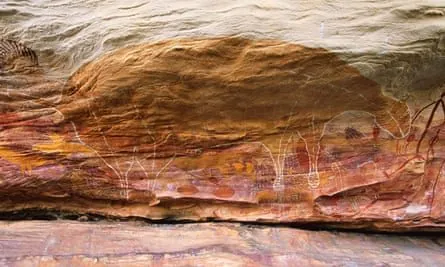
- The discovery, made during a controlled burn, features animal footprint engravings that hold significant cultural and spiritual value for the Waarnthuurr-iin people.
- Experts say the find is a testament to the importance of preserving Australia’s Indigenous history, with an estimated 65,000 years of stories etched into the landscape.
- The discovery is a result of collaborative efforts between Indigenous rangers, researchers, and government agencies to protect and preserve Australia’s cultural sites.
The rugged terrain of the Biniirr National Park has long held secrets of Australia’s ancient past, but it wasn’t until a recent controlled burn that a team of Indigenous rangers stumbled upon a hidden chapter of history.
Led by Waarnthuurr-iin ranger Stephen Harrigan, the team uncovered a series of Aboriginal engravings, including animal footprint designs, tucked away among the rocky ledges. The discovery sent shockwaves through the community, with Harrigan describing it as a “spiritual” and “emotional” experience.
The engravings, located about 350 kilometers north of Cairns, are a significant find, not only for the Waarnthuurr-iin people but for all Australians. According to Harrigan, the discovery is a reminder of the importance of preserving Indigenous history and culture.
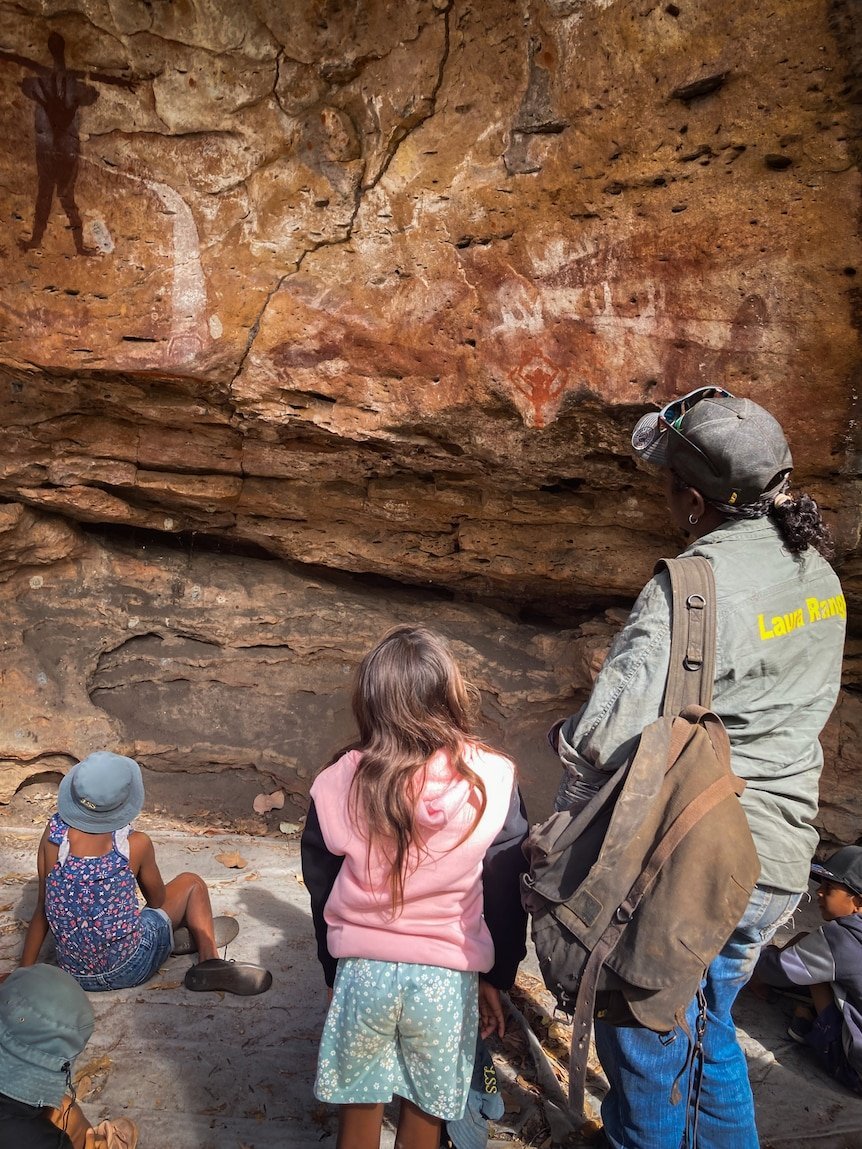
“Every new rock art discovery carries meaning and acts as a guide for our people,” he said.
“Some sites were used to mark where certain foods, fruits, plants, or animals could be found during different seasons, while others pointed to water sources or important gathering places.”




The discovery is also a testament to the power of collaboration between Indigenous rangers, researchers, and government agencies.
The Queensland Parks and Wildlife Service, in partnership with the Cape York management unit, has been working to identify and protect cultural sites across the region.
By creating fire management plans and conducting controlled burns, the team has been able to uncover new sites and preserve existing ones from destructive wildfires.
Griffith University archaeologist Lynley Wallis, who has been working to identify cultural sites in Far North Queensland, says the discovery is not surprising, given the vast expanse of under-explored landscape.
“At least 65,000 years of history is recorded on this landscape,” she said.
“As Australians, we should be incredibly proud of that.” Wallis credits the Queensland government’s Cape York Peninsula Tenure Resolution Program for improving access to the land and enabling the discovery of new sites.
Analysis: What This Means for Australia
The discovery of the Aboriginal engravings in the Biniirr National Park has significant implications for Australia’s cultural heritage and national identity. It highlights the importance of preserving Indigenous history and culture, not only for the benefit of the Indigenous community but for all Australians.
By acknowledging and respecting the country’s rich cultural heritage, we can work towards a more inclusive and reconciled nation.
Furthermore, the discovery underscores the need for greater investment in cultural site preservation and management.
With an estimated 65,000 years of history etched into the landscape, it is essential that we take steps to protect these sites from threats such as wildfires, climate change, and human impact.
Security analysts say that the discovery also highlights the importance of collaborative efforts between government agencies, Indigenous communities, and researchers in preserving Australia’s cultural heritage.
By working together, we can ensure that our cultural sites are protected for future generations and that the stories of our past are preserved for years to come.
Industry observers believe that the discovery will also have significant economic benefits, with the potential to boost tourism and create jobs in regional areas. However, it is essential that any development is done in a sustainable and culturally sensitive manner, with the involvement and consent of Indigenous communities.