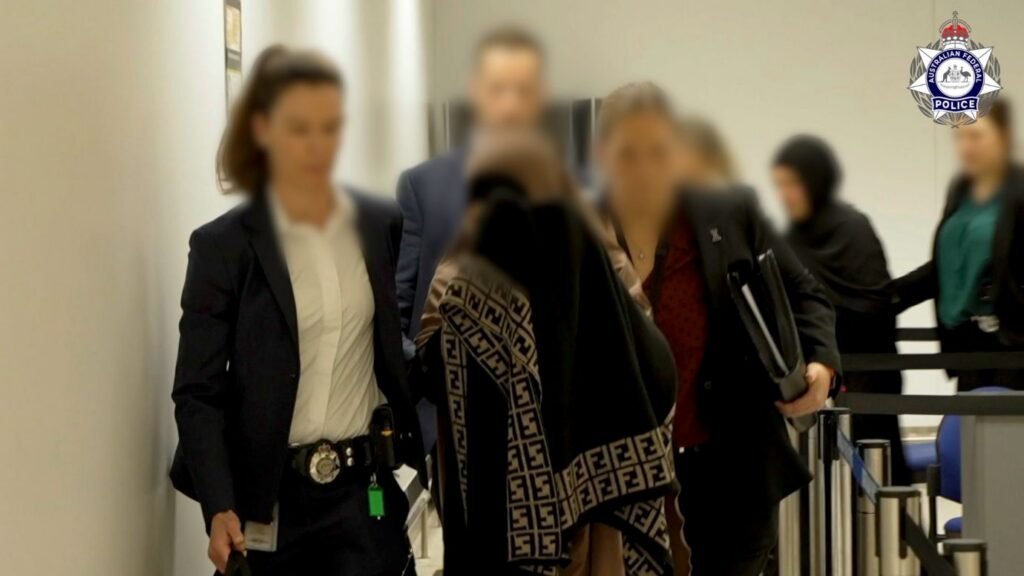
ISIS Brides and Children Return to Australia: The High-Stakes Battle for National Security and Community Safety
- Four women with ties to Islamic State fighters and nine children have arrived in Australia, sparking a fierce debate over national security and the rehabilitation of those who have been radicalized.
- The women, known as ISIS brides, will face charges of crimes against humanity, including enslavement and terrorism-related offences, carrying penalties of up to 25 years’ imprisonment.
- The children, who will be placed in supervised care and community integration programs, are at the centre of a heated argument over whether they should be rehabilitated or punished for the actions of their parents.
- As the federal government faces criticism over its handling of the returnees, experts warn of the potential risks to national security and the need for a comprehensive approach to de-radicalization and reintegration.
The arrival of the ISIS brides and their children in Australia has sparked a high-stakes battle for national security and community safety. The four women, who have been under investigation for nearly a decade, will face charges of crimes against humanity, including enslavement and terrorism-related offences.
The penalties for these crimes are severe, carrying sentences of up to 25 years’ imprisonment.
The women’s return to Australia has been met with a mixture of outrage and concern.

Opposition Leader Angus Taylor has criticized the federal government’s handling of the situation, arguing that it should have done more to prevent the women from returning to the country.
However, Federal Education Minister Jason Clare has defended the government’s actions, stating that it has provided passports to the women as it would to any Australian citizen.




At the heart of the debate is the question of what to do with the nine children who have returned to Australia with their mothers.
While some argue that the children should be rehabilitated and reintegrated into Australian society, others believe that they pose a risk to national security and should be treated with caution.
The Lebanese Muslim Association’s Gamel Kheir has argued that the children are innocent and should be given the opportunity to rebuild their lives, while Mat Tinkler from Save the Children has emphasized the need for targeted de-radicalization and mental health support.
The debate over the return of the ISIS brides and their children has also raised questions about Australia’s approach to national security and counter-terrorism.
Security analysts say that the country needs to take a comprehensive approach to de-radicalization and reintegration, one that involves not just law enforcement but also community leaders and social services.
“It’s not just about punishing those who have committed crimes, but also about preventing others from being radicalized in the first place,” said one security expert.
Analysis: What This Means for Australia
The return of the ISIS brides and their children to Australia has significant implications for national security and community safety.
The fact that the women will face charges of crimes against humanity highlights the severity of their alleged offences and the need for a robust response to terrorism.
However, the debate over what to do with the children also underscores the need for a more nuanced approach to counter-terrorism, one that balances punishment with rehabilitation and reintegration.
Law enforcement insiders warn that the return of the ISIS brides and their children poses a significant risk to national security, particularly if the women are not adequately rehabilitated and the children are not provided with the support they need to reintegrate into Australian society.
“We need to be vigilant and proactive in our approach to counter-terrorism, and that means not just focusing on punishment but also on prevention and rehabilitation,” said one law enforcement source.
Industry observers believe that the return of the ISIS brides and their children also highlights the need for greater investment in community programs and social services aimed at preventing radicalization and supporting those who have been affected by terrorism.
“We need to take a whole-of-government approach to counter-terrorism, one that involves not just law enforcement but also community leaders, social services, and mental health professionals,” said one industry expert.
Ultimately, the return of the ISIS brides and their children to Australia is a complex and challenging issue that requires a comprehensive and nuanced response.
As the country grapples with the implications of this event, it is clear that a balanced approach to national security, community safety, and rehabilitation will be essential in the months and years ahead.