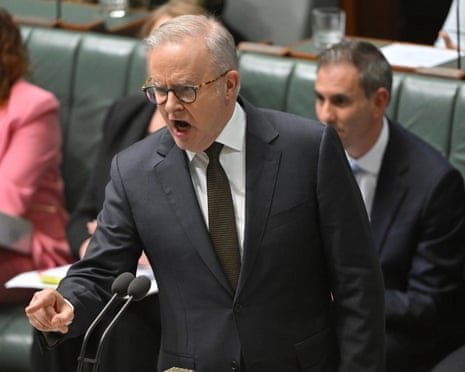
Albanese’s Budget Blunder: How the PM’s Bungled Interview Has Left Young Australians Fuming Over Shocking Tax Changes
- Anthony Albanese’s attempt to explain the federal budget to young Australians has backfired, with many left confused and frustrated over the removal of the capital gains tax (CGT) discount for shares and businesses.
- The PM’s interview with financial influencer Natasha Etschmann was meant to address concerns over the tax changes, but his answers were labelled as “weird” and “rambling” by viewers.
- The CGT discount removal has sparked outrage among Aussie entrepreneurs and investors, who claim it will stifle innovation and drive business to more welcoming environments like New Zealand.
- Experts warn the changes could have severe consequences for Australia’s economy, with many questioning the government’s decision to increase taxes on shares and businesses.
Anthony Albanese’s attempt to connect with young Australians over the federal budget has ended in disaster, with the Prime Minister’s bungled interview leaving many feeling confused and frustrated.
The PM sat down with financial influencer Natasha Etschmann, who has over 130,000 followers on TikTok, to address concerns over the removal of the capital gains tax (CGT) discount for shares and businesses.
However, Albanese’s answers only seemed to muddy the waters, with many viewers accusing him of “talking in circles” and refusing to engage with Etschmann’s questions.
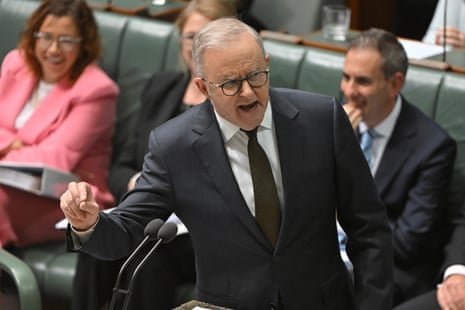
The PM’s decision to remove the CGT discount has sparked outrage among Aussie entrepreneurs and investors, who claim it will stifle innovation and drive business to more welcoming environments like New Zealand.
The CGT discount was introduced by John Howard in 1985 and allowed Australians to pay 50% less tax on capital gains. However, Treasurer Jim Chalmers announced in the budget that the discount would be replaced with an indexation model for all assets, effective from July 2027.




This means that Australians who own shares and businesses will no longer receive the discount and will instead pay tax on any capital gain at their marginal income tax rate of up to 47%.
Etschmann pressed the PM on why the discount had been removed for shares, pointing out that it seemed to incentivise people to buy property instead. However, Albanese’s response only seemed to confuse matters, with many viewers left scratching their heads.
“What a weird non-answer,” wrote one commentator. “He upped taxes on business and shares because people were investing in property?”
Analysis: What This Means for Australia
The removal of the CGT discount has significant implications for Australia’s economy, with many experts warning that it could stifle innovation and drive business to more welcoming environments.
The changes could also have severe consequences for young Australians who are trying to get ahead by investing in shares and businesses.
As Etschmann pointed out, the removal of the discount seems to incentivise people to buy property instead, which could further fuel the housing market and make it even harder for young people to get on the property ladder.
Security analysts warn that the changes could also have national security implications, with Australia’s economy potentially becoming less competitive in the global market. “This is a worrying trend for Australia’s economic security,” said one analyst.
“We need to be careful not to drive business and innovation offshore.”
Law enforcement insiders also warn that the changes could lead to an increase in tax evasion and avoidance, as individuals and businesses look for ways to minimize their tax liability.
“This is a recipe for disaster,” said one insider. “We need to make sure that we have a fair and equitable tax system that doesn’t drive people to try and cheat the system.”
Industry observers believe that the changes could also have severe consequences for Australia’s reputation as a welcoming environment for business and innovation. “This is a major blow to Australia’s reputation,” said one observer.
“We need to make sure that we are competitive and welcoming to business and innovation if we want to attract the best and brightest to our shores.”
As the fallout from the budget continues, one thing is clear: the removal of the CGT discount has sparked a major controversy that will have far-reaching consequences for Australia’s economy and society.