‘Drag Queen vs Outdoor Giant: The Bizarre Trademark Battle Threatening to Erase an Activist’s Identity’
- Pattie Gonia, a US drag queen and climate activist, is fighting a lawsuit from outdoor apparel company Patagonia over her stage name, which the brand claims is “irreparably harming” its goodwill.
- The drag queen has urged Patagonia to drop the lawsuit, arguing it’s an attempt to “erase an activist” and stifle her environmental advocacy.
- The case has sparked a heated debate about trademark law, corporate power, and the limits of free expression, with many in the LGBTQ+ community rallying around Pattie Gonia.
- The outcome of the lawsuit could have far-reaching implications for artists, activists, and small businesses, who may find themselves vulnerable to similar trademark claims from larger corporations.
The latest salvo in the trademark wars has pitted a US drag queen against an outdoor apparel giant, with the very identity of the performer hanging in the balance.
Pattie Gonia, a climate activist and Oregon-based drag queen, has been sued by Patagonia over her stage name, which the brand claims is too similar to its own trademarked logo.
The lawsuit has sparked a heated debate about corporate power, free expression, and the limits of trademark law.
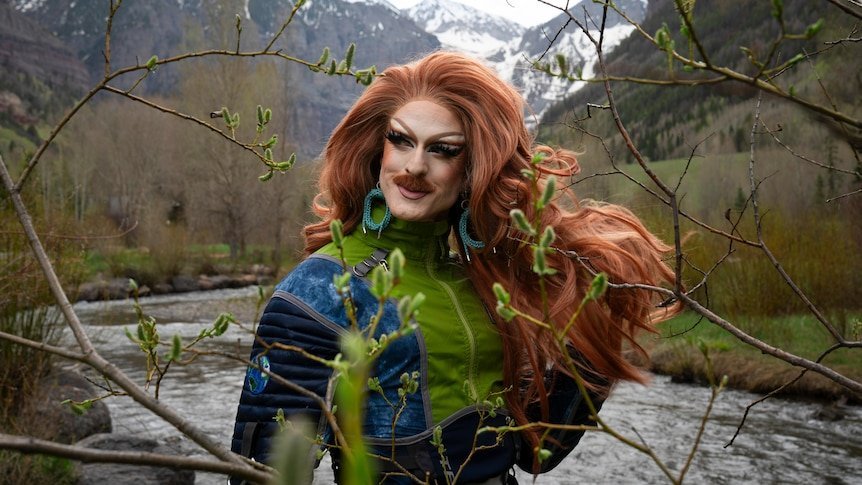
At the heart of the dispute is Pattie Gonia’s decision to file a trademark application for her stage name, which Patagonia claims would give her exclusive rights to use the name for clothing, activism, and marketing.
The brand argues that this would pose a long-term threat to its own brand and activism, and is seeking to prevent Pattie Gonia from using the name commercially.



But the drag queen sees the lawsuit as a blatant attempt to silence her and stifle her environmental advocacy.
This is not the first time a drag queen has found herself at the center of a trademark dispute. In 1998, Pauline Hanson successfully sought an injunction to stop the ABC from playing a song parodying her by drag satirist Pauline Pantsdown.
And last year, Drag Race finalist Lexi Love was forced to stop using her stage name after a trademark dispute with a former adult performer and current AI artist.
Pattie Gonia has cited these cases as the reason for her decision to file a trademark application, arguing that she needs to protect her identity and livelihood.
But Patagonia claims that it has a responsibility to protect its brand, which was formed in 1973 and has contributed over $US240 million to environmental organisations.
The brand says it has tried to “find a path forward” with Pattie Gonia for several years, but ultimately felt it had no choice but to file a lawsuit to prevent her from using a “near-copy” of its logo commercially.
However, many in the LGBTQ+ community have rallied around Pattie Gonia, accusing Patagonia of trying to “erase an activist” and stifle free expression.
Analysis: What This Means for Australia
The Pattie Gonia case has significant implications for Australian artists, activists, and small businesses, who may find themselves vulnerable to similar trademark claims from larger corporations.
The lawsuit highlights the need for greater clarity around trademark law and its application in cases involving satire, parody, and social commentary. It also raises questions about the limits of corporate power and the ability of large companies to silence critics and stifle dissent.
Security analysts say the case could have far-reaching implications for the way we think about intellectual property and free expression in the digital age. “This is a classic case of a large corporation trying to use its muscle to silence a critic,” said one analyst.
“It’s a worrying trend that could have serious implications for artists, activists, and small businesses who rely on social media to reach their audiences.”
Law enforcement insiders warn that the case could also have implications for the way we police trademark law in Australia.
“We need to be careful not to create a culture of fear and intimidation, where large corporations can use the law to silence critics and stifle dissent,” said one insider.
“We need to make sure that our laws are fair and balanced, and that they protect the rights of all parties involved.”