Tony Abbott’s Shocking Return to Power: What His Appointment as Liberal Party President Means for Australia’s Future
- Former Prime Minister Tony Abbott elected unopposed as federal president of the Liberal Party, sparking fears of a return to the past
- Abbott’s appointment comes as the party’s support plummets to historic lows, with many seeing it as a desperate bid to counter the rise of One Nation
- Abbott vows to help Angus Taylor become the next Prime Minister, but critics say his outdated views will only further fragment the party and the country
- As the Liberal Party teeters on the brink of collapse, Abbott’s return raises questions about the future of Australian politics and the nation’s direction
In a move that has sent shockwaves through the Australian political landscape, former Prime Minister Tony Abbott has been elected unopposed as the federal president of the Liberal Party.
The appointment, made at the party’s federal council in Melbourne, has been met with a mixture of surprise, concern, and outright alarm.
For many, Abbott’s return to the political frontline is a sign that the Liberal Party is desperately trying to cling to its past glories, rather than embracing the future.
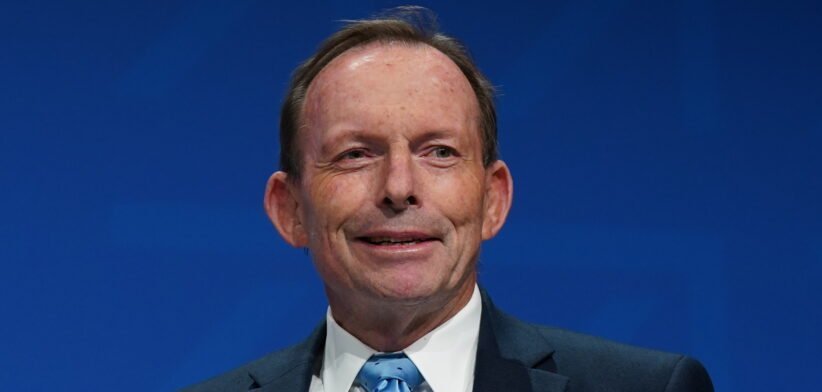
Abbott, who was instrumental in the party’s last successful federal election campaign, has vowed to use his experience to help current leader Angus Taylor become the next Prime Minister.
However, critics argue that his outdated views on issues such as climate change, immigration, and social justice will only serve to further fragment the party and the country.




As one Labor minister noted, “Tony Abbott is locked in the past, and by electing him as their president, the Liberal Party have shown that they continue to be locked in the past themselves.”
So, what led to Abbott’s shock return to power? The answer lies in the Liberal Party’s plummeting support, which has dropped to historic lows in recent months.
The party’s primary support now stands at just 23%, according to a recent Roy Morgan survey, while One Nation’s support has surged to 25.5%.
The rise of the far-right party has left the Liberals scrambling to regain ground, and many see Abbott’s appointment as a desperate bid to counter the threat.
However, experts warn that this strategy is doomed to fail, and that the party needs to focus on modernizing its policies and appealing to a broader range of voters.
But what does Abbott’s return mean for Australia’s future? The answer is complex and multifaceted.
On the one hand, Abbott’s experience and campaigning skills could potentially help the Liberal Party to regain some lost ground.
However, his views on key issues such as climate change and immigration are widely seen as outdated and divisive, and could ultimately harm the party’s chances of winning the next election.
Furthermore, his appointment raises questions about the direction of the country, and whether the Liberal Party is truly committed to embracing the challenges of the 21st century.
Analysis: What This Means for Australia
Abbott’s return to power has significant implications for Australia’s national security, law enforcement, and community cohesion.
His hardline stance on immigration and border control could lead to further polarization and division, while his skepticism on climate change could hinder the country’s efforts to reduce its carbon footprint.
Furthermore, his appointment raises concerns about the influence of the far-right on Australian politics, and the potential for further fragmentation and extremism.
Security analysts say that Abbott’s return could lead to a more aggressive approach to national security, with a greater emphasis on border control and counter-terrorism measures.
However, this could also lead to increased tensions with neighboring countries and a further erosion of civil liberties.
Law enforcement insiders warn that the party’s focus on law and order could lead to a more heavy-handed approach to policing, with potentially disastrous consequences for community relations.
Industry observers believe that Abbott’s return could have significant economic consequences, particularly if his views on climate change and energy policy prevail. The country’s transition to renewable energy could be slowed, and its reputation as a leader in the field could be damaged.
Furthermore, his appointment could lead to increased uncertainty and instability, which could harm business confidence and investment.
Ultimately, Tony Abbott’s return to power is a sign of the Liberal Party’s desperation and disarray.
As the country teeters on the brink of a major shift in its political landscape, one thing is clear: the future of Australian politics has never been more uncertain.