Desperate Search for Little Gus: Police Reveal Shocking New Suspect in Eight-Month-Old Mystery as Investigation Takes a Dark Turn
- A shocking new suspect has emerged in the eight-month-long search for four-year-old Gus Lamont, who vanished from his family’s remote outback station in South Australia’s far north.
- Police have revealed that one of Gus’s grandparents remains a suspect, with both grandparents communicating with investigators only through solicitors.
- The latest development comes as police wrapped up a three-day search operation at the Oak Park Station, sparked by heavy rainfall that may have washed hidden clues into plain view.
- Despite the absence of answers, police vow to continue their search, saying they are far from ready to call it a cold case.
The search for little Gus Lamont has been a heart-wrenching mystery that has left police, the public, and his family dumbfounded.
For eight long months, investigators have been scouring the vast rural property where Gus was last seen, but the agonising question of what happened to the fair-haired youngster remains unanswered.
Gus was last seen on September 27, playing on the outback station, wearing a large-brimmed hat and a Minions shirt. His disappearance has been a puzzle that has defied explanation, with police repeatedly combed through dried-out creeks, waterways, and arable land in the area.
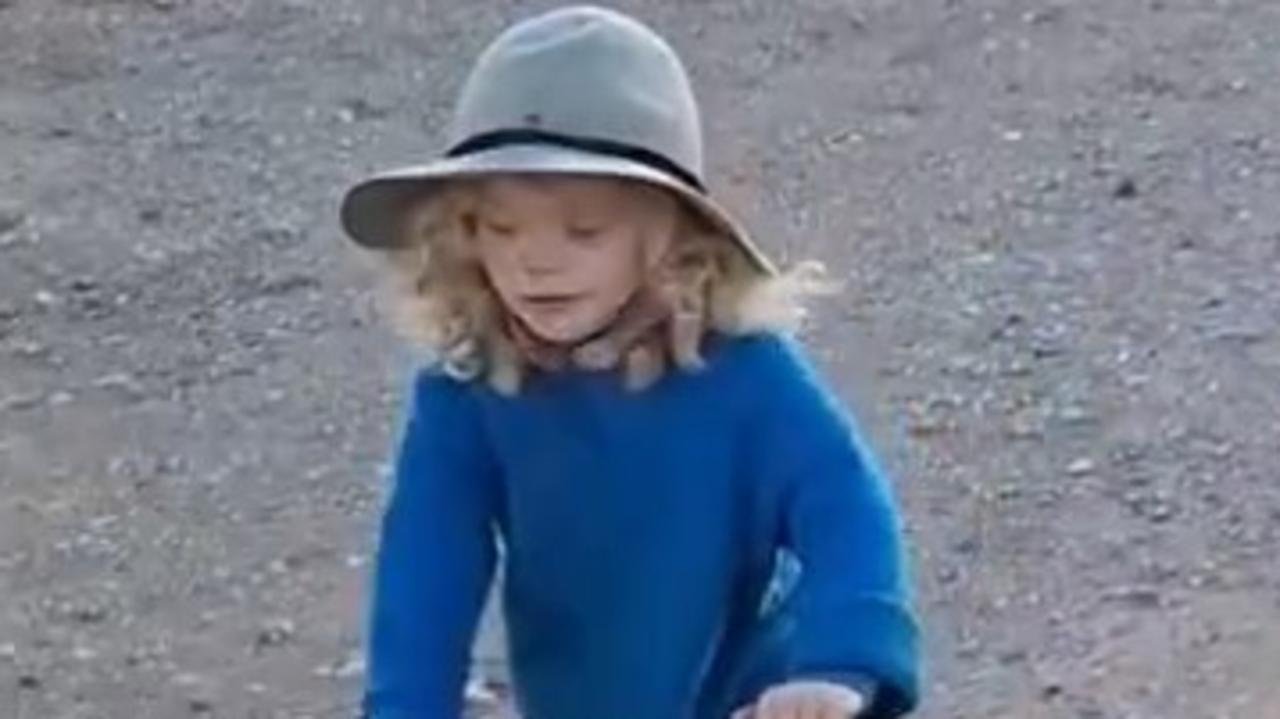
This week’s three-day search operation, sparked by heavy rainfall, was the latest attempt to uncover hidden clues.
However, on Friday, Detective Superintendent Darren Fielke, from SA Police’s Major Crime Investigation Branch, revealed that no evidence had been found to indicate little Gus had been abducted.




Instead, he dropped a bombshell: one of Gus’s grandparents “remains a suspect”. The news has sent shockwaves through the community and raised more questions than answers.
Both grandparents continue to communicate with police only through solicitors, fueling speculation about their involvement in Gus’s disappearance.
Criminology expert Xanthe Weston believes that the police’s repeated visits to the outback station may be a deliberate tactic to ramp up the pressure on the suspect.
“It is clear that the police have been ramping up the pressure for some time,” Dr Weston said.
“Obviously, the search is very much still ongoing, and they are clearly looking at a third party, so will want that third party to know they are not letting up.”
The Gus Lamont case has captured the public’s attention due to its eerie similarities to other high-profile missing child cases, such as William Tyrrell and Cleo Smith.
However, Dr Weston points out that Gus’s case is unique due to its remote location. “What makes this case so different is that other cases had proximity to public spaces that this one just didn’t,” she said.
“With little Gus, he vanished from a very remote station.
It is a very large private property where you would not have had strangers with easy access to him.”
As the search for Gus continues, police are racing against time to find answers.
Superintendent Fielke warned that the longer the investigation goes on, the closer they get to not finding Gus. However, he vowed that police would not stop looking.
“The reality is, the longer this goes on, the closer we get to not finding him,” he said.
“That is not going to stop our resolve or our determination, but it is a reality of what might happen.”
Analysis: What This Means for AustraliaThe Gus Lamont case has significant implications for Australia’s national security and law enforcement.
The fact that a suspect has emerged within the family circle raises questions about the effectiveness of police investigations and the need for more resources to tackle complex cases.
Dr Weston believes that the police’s repeated searches indicate they are far from ready to call it a cold case.
“The police will obviously have to look very carefully at who had access to Gus in that small, 30-minute window he disappeared in,” she said.
The case also highlights the need for more support for families of missing children. Gus’s parents have been left in limbo, desperate for answers about their son’s disappearance.
Dr Weston said, “Gus’s parents deserve to know what happened to him.
I just hope they can find out sooner, rather than later.”
As the investigation continues, one thing is clear: the search for little Gus Lamont is far from over.
Police will continue to scour the outback, following every lead, every tip, and every clue in the hope of finding answers. The nation holds its breath, waiting for the truth to emerge in this heartbreaking mystery.
Expert Commentary:
Security analysts say that the emergence of a suspect within the family circle is a significant development in the case. “It’s a classic example of how investigations can take a dramatic turn,” said one analyst.
“The police have been working tirelessly to follow every lead, and it’s clear that they are getting closer to the truth.”
Law enforcement insiders warn that the case highlights the need for more resources to tackle complex investigations.
“The police are doing their best with the resources they have, but it’s clear that they need more support,” said one insider.
“The case is a reminder that we need to invest more in our law enforcement agencies to ensure they have the tools they need to solve these types of cases.”
Industry observers believe that the case will have significant implications for Australia’s national security.
“The fact that a suspect has emerged within the family circle raises questions about the effectiveness of our law enforcement agencies,” said one observer. “It’s a wake-up call for us to review our systems and ensure that we are doing everything we can to keep our children safe.”
The search for little Gus Lamont has been a heart-wrenching mystery that has left police, the public, and his family dumbfounded. For eight long months, investigators have been scouring the vast rural property where Gus was last seen, but the agonising question of what happened to the fair-haired youngster remains unanswered.
Gus was last seen on September 27, playing on the outback station, wearing a large-brimmed hat and a Minions shirt. His disappearance has been a puzzle that has defied explanation, with police repeatedly combed through dried-out creeks, waterways, and arable land in the area. This week’s three-day search operation, sparked by heavy rainfall, was the latest attempt to uncover hidden clues.
However, on Friday, Detective Superintendent Darren Fielke, from SA Police’s Major Crime Investigation Branch, revealed that no evidence had been found to indicate little Gus had been abducted. Instead, he dropped a bombshell: one of Gus’s grandparents “remains a suspect”. The news has sent shockwaves through the community and raised more questions than answers.
Both grandparents continue to communicate with police only through solicitors, fueling speculation about their involvement in Gus’s disappearance. Criminology expert Xanthe Weston believes that the police’s repeated visits to the outback station may be a deliberate tactic to ramp up the pressure on the suspect. “It is clear that the police have been ramping up the pressure for some time,” Dr Weston said. “Obviously, the search is very much still ongoing, and they are clearly looking at a third party, so will want that third party to know they are not letting up.”
The Gus Lamont case has captured the public’s attention due to its eerie similarities to other high-profile missing child cases, such as William Tyrrell and Cleo Smith. However, Dr Weston points out that Gus’s case is unique due to its remote location. “What makes this case so different is that other cases had proximity to public spaces that this one just didn’t,” she said. “With little Gus, he vanished from a very remote station. It is a very large private property where you would not have had strangers with easy access to him.”
As the search for Gus continues, police are racing against time to find answers. Superintendent Fielke warned that the longer the investigation goes on, the closer they get to not finding Gus. However, he vowed that police would not stop looking. “The reality is, the longer this goes on, the closer we get to not finding him,” he said. “That is not going to stop our resolve or our determination, but it is a reality of what might happen.”
The Gus Lamont case has significant implications for Australia’s national security and law enforcement. The fact that a suspect has emerged within the family circle raises questions about the effectiveness of police investigations and the need for more resources to tackle complex cases. Dr Weston believes that the police’s repeated searches indicate they are far from ready to call it a cold case. “The police will obviously have to look very carefully at who had access to Gus in that small, 30-minute window he disappeared in,” she said.
The case also highlights the need for more support for families of missing children. Gus’s parents have been left in limbo, desperate for answers about their son’s disappearance. Dr Weston said, “Gus’s parents deserve to know what happened to him. I just hope they can find out sooner, rather than later.”
As the investigation continues, one thing is clear: the search for little Gus Lamont is far from over. Police will continue to scour the outback, following every lead, every tip, and every clue in the hope of finding answers. The nation holds its breath, waiting for the truth to emerge in this heartbreaking mystery.
Expert Commentary:
Security analysts say that the emergence of a suspect within the family circle is a significant development in the case. “It’s a classic example of how investigations can take a dramatic turn,” said one analyst. “The police have been working tirelessly to follow every lead, and it’s clear that they are getting closer to the truth.”
Law enforcement insiders warn that the case highlights the need for more resources to tackle complex investigations. “The police are doing their best with the resources they have, but it’s clear that they need more support,” said one insider. “The case is a reminder that we need to invest more in our law enforcement agencies to ensure they have the tools they need to solve these types of cases.”
Industry observers believe that the case will have significant implications for Australia’s national security. “The fact that a suspect has emerged within the family circle raises questions about the effectiveness of our law enforcement agencies,” said one observer. “It’s a wake-up call for us to review our systems and ensure that we are doing everything we can to keep our children safe.”