‘We Will Not Be Bullied’: US Defence Secretary Pete Hegseth’s Blistering Warning to China Over Taiwan and Asia Dominance
- Pete Hegseth declares US will not let China impose ‘hegemony’ on Asia in a speech at the Shangri-La Dialogue in Singapore
- Defence Secretary’s comments come as questions swirl over stalled US$14 billion arms package to Taiwan
- Australia’s Defence Minister Richard Marles warns of risks to subsea cables after damage in Baltic Sea and Taiwan Strait
- China’s increasing aggression in the region has sparked fears of a potential conflict with the US and its allies
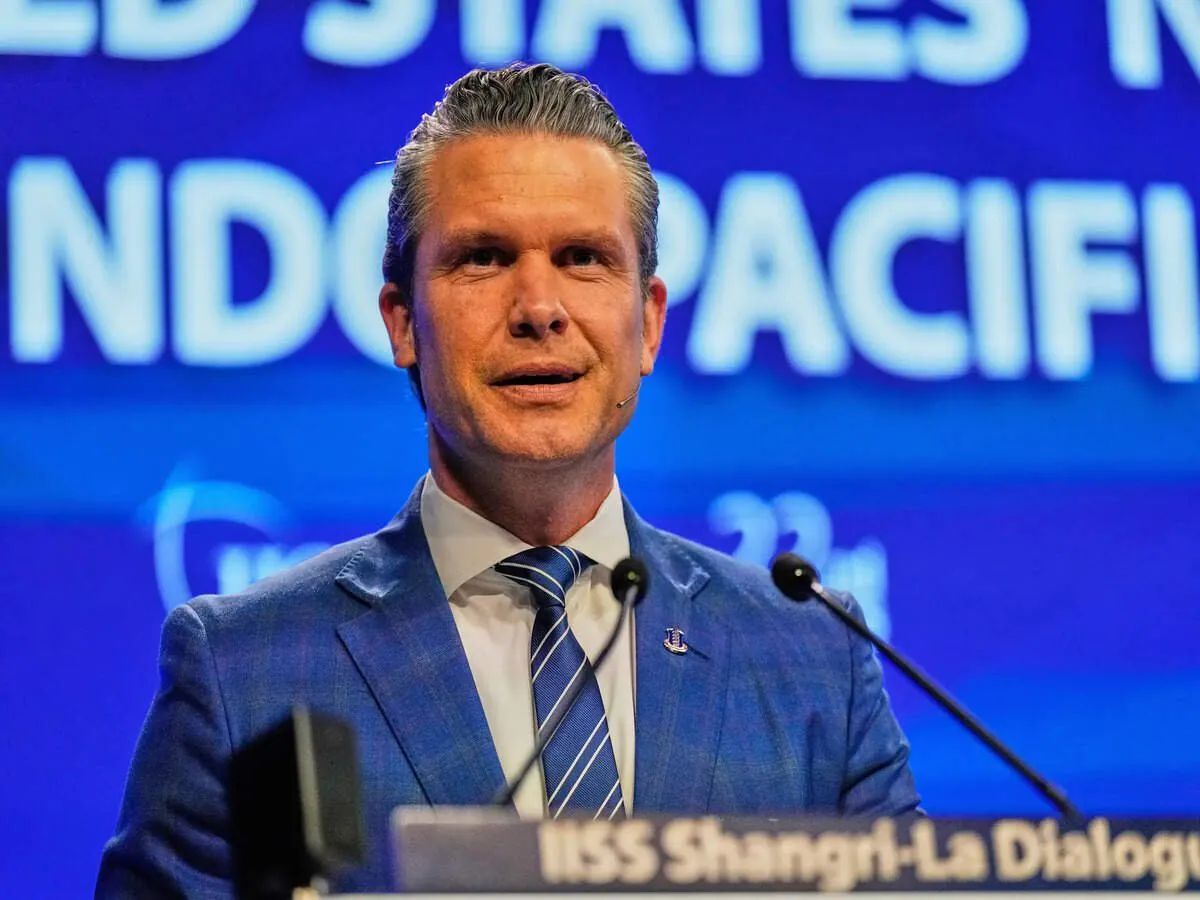
The United States will not back down to China’s rising aggression in Asia, US Defence Secretary Pete Hegseth has warned, vowing to prevent Beijing from imposing its dominance over the region.
In a fiery speech at the Shangri-La Dialogue in Singapore, Hegseth declared that the US would “speak softly” but “carry a big stick” in its dealings with China, and that it would not abandon its allies in the face of growing Chinese pressure.
Despite the tough talk, Hegseth’s speech was notable for what it didn’t say – specifically, any mention of Taiwan.
The self-ruled island has been a major point of contention between the US and China, with Beijing viewing it as a renegade province and Washington viewing it as a crucial ally in the region.
The US has been considering a major arms package for Taiwan worth US$14 billion, but the deal has been stalled, sparking fears that the US may be backing away from its commitment to the island.


Hegseth’s comments come at a time of heightened tensions between the US and China, with Beijing increasing its military presence in the South China Sea and the US responding with its own show of force.
The situation is complicated by the fact that China has been quietly mobilising thousands of fishing boats to form floating barriers in the region, a move that has been seen as a provocation by the US and its allies.
Australia’s Defence Minister Richard Marles also weighed in on the issue, warning of the risks to subsea cables in the region.
Marles pointed out that several cables had been severed in the Baltic Sea and the Taiwan Strait since November 2024, and that the incidents highlighted the vulnerability of the globe’s infrastructure.
While Marles did not directly blame China or Russia for the incidents, analysts have pointed to both countries as likely culprits.
Analysis: What This Means for Australia
Analysis: What This Means for Australia
The US-China tensions have significant implications for Australia, which has long been a key ally of the US in the region.
Australia’s Defence Minister Richard Marles has already warned of the risks to subsea cables, and the country’s own military presence in the region is likely to come under increased scrutiny in the coming months.
Security analysts say that Australia will need to be careful not to get caught in the middle of the US-China rivalry, while also ensuring that it maintains its own sovereignty and security in the face of growing Chinese aggression.
Law enforcement insiders warn that the situation is likely to lead to increased cyber attacks and espionage in the region, as both the US and China seek to gain the upper hand in the conflict.
Industry observers believe that the tensions will also have significant economic implications, with trade flows and investment likely to be affected by the ongoing rivalry.
As the situation continues to unfold, one thing is clear: the US-China rivalry is set to dominate the region for the foreseeable future, and Australia will need to be prepared to navigate the complex web of alliances and rivalries that is emerging.