Tragedy in the Suburbs: How Under-Resourcing Left Firefighters ‘Too Late’ to Save Young Boy’s Life in Werribee Blaze
- A devastating house fire in Werribee has claimed the life of three-year-old Jordan Dashwood, with his father Jeremy suffering serious burns in the tragedy.
- The United Firefighters Union has slammed the under-resourcing of local fire stations, saying it prevented crews from arriving sooner to the fatal blaze.
- The nearest fire station to the scene had only one fire truck, which was already deployed to another incident, leaving firefighters to respond from a further distance.
The small community of Werribee is reeling after a house fire tore through a family home, claiming the life of a young boy and leaving his father fighting for his life.
The tragedy has sparked outrage and raised serious questions about the resourcing of local fire stations, with the United Firefighters Union saying that under-resourcing meant crews arrived “too late” to save three-year-old Jordan Dashwood.
The fire broke out at the family’s Newbury Street home just after midnight, with the first fire crews from the Country Fire Authority (CFA) arriving more than nine minutes later.
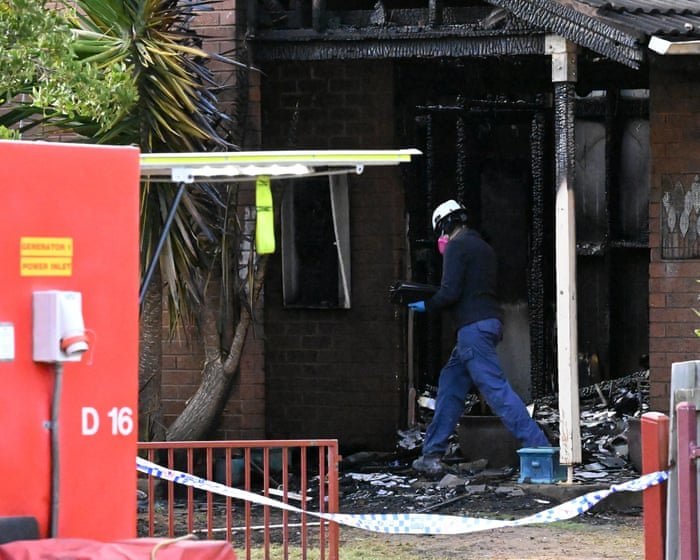
Fire Rescue Victoria crews arrived several minutes after that, well outside the target response time of 7.7 minutes. The union says that if the nearest fire station had been properly resourced, crews would have arrived much sooner.
The reality is that the Werribee fire station, which serves a rapidly growing community, has only one fire truck. The union has been calling for a second vehicle for over a decade, but their pleas have fallen on deaf ears.



On the night of the fire, the single truck was already deployed to another incident, leaving firefighters to respond from a further distance.
Leading Firefighter Josh Mitchell, who is based at the Tarneit station, was devastated by the outcome of the fire.
“We should have been first in the door at that house fire; unfortunately, our truck was at Lara fire station covering Lara as a result of Lara having a mechanical issue with their truck,” he said.
“It’s heartbreaking because there is a lot of ‘what ifs?’ I don’t know if us getting there six, seven minutes quicker could have made a difference, but you do ask yourself that question.”
The incident has highlighted the need for improved resourcing of fire stations in growing areas like Werribee. The Tarneit station, which serves the area, is built to accommodate four trucks but currently has only one.
“You only have to drive north of here to see the amount of new houses, data centres, and factories,” said Mr Mitchell. “One truck’s not adequate.”
Analysis: What This Means for Australia
The Werribee fire tragedy has serious implications for Australia’s approach to fire safety and emergency response. The incident highlights the need for increased investment in fire stations and emergency services, particularly in growing communities like Werribee.
The union’s claims of under-resourcing and inadequate response times are a wake-up call for policymakers and emergency services leaders.
As the population grows and urban areas expand, it is essential that emergency services are equipped to respond quickly and effectively in the event of a disaster.
Security analysts say that the Werribee fire tragedy is a stark reminder of the need for robust emergency planning and response strategies. “This incident highlights the importance of having adequate resources in place to respond to emergencies,” said one analyst.
“It’s not just about having the right equipment; it’s about having the right people and the right strategies in place to save lives.”
Law enforcement insiders warn that the consequences of under-resourcing emergency services can be dire. “When emergency services are under-resourced, it puts the entire community at risk,” said one insider.
“It’s not just about responding to fires; it’s about responding to a range of emergencies, from medical emergencies to natural disasters.”
Industry observers believe that the Werribee fire tragedy is a symptom of a broader problem. “This incident is a wake-up call for policymakers and emergency services leaders,” said one observer.
“It’s time to take a closer look at our emergency response strategies and make sure that we are doing everything we can to keep our communities safe.”