Chinese Car Giant Eyes Australian Comeback: Could BYD Revive Aussie Auto Manufacturing?
- Chinese automaker BYD hints at producing components or complete vehicles in Australia, following comments from Prime Minister Anthony Albanese.
- The company’s vice president says they’re “very open” to the idea, but prioritizing sales volume and customer needs first.
- Australia’s lack of tariffs with China makes it an attractive location for BYD, which already operates facilities in Thailand, Brazil, and Uzbekistan.
- The move could signal a possible revival of Australia’s automotive manufacturing industry, which was wound down in the 2010s.
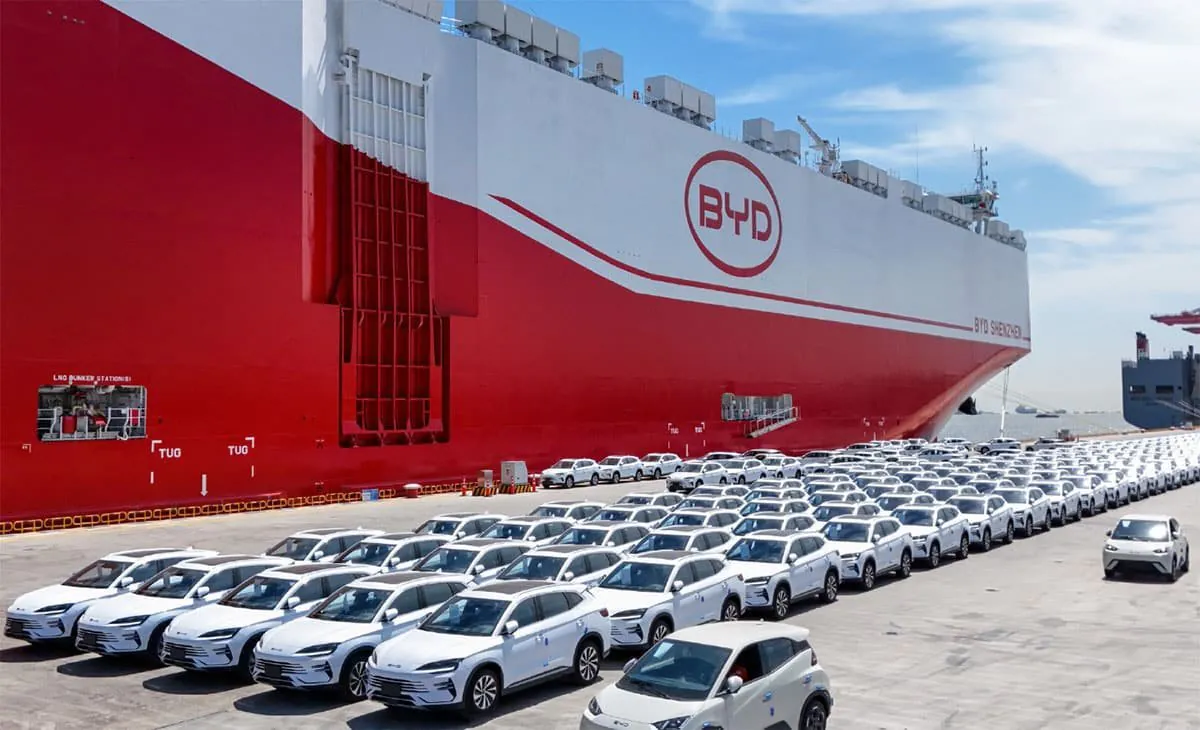
The prospect of Australian vehicle manufacturing making a comeback has been reignited, with Chinese giant BYD expressing interest in producing components or complete vehicles in the country.
The news comes after Prime Minister Anthony Albanese suggested that advances in technology accompanying the global rise of electric vehicles could provide an opportunity for Australia to reboot its automotive manufacturing industry.
Speaking at an official media event in Melbourne, BYD vice president Liu Xueliang revealed that while the company has not yet spoken with the Australian government about such a move, they are “very open” to the idea.
“Not in the plan yet… maybe our priority will be sales volume, and fulfilling customer needs first, but – BYD is very open, so anything is possible,” Mr.
Liu said.




BYD is uniquely placed to capitalize on the opportunity, given its high level of vertical integration – an approach pioneered by Ford in the early 1900s whereby a manufacturer owns as much of the supply chain as possible to control costs.
The Chinese company was founded in 1995 as a battery manufacturer before moving into vehicle production in 2003.
Mr. Liu’s comments come as BYD continues to expand its global operations, with plans for multiple production facilities in Europe.
The company already operates facilities in Thailand, Brazil, and Uzbekistan, and has a battery plant in California. The key difference between those markets and Australia is the lack of trade barriers – namely tariffs – between China and Australia.
Australia and China have had a free trade agreement (FTA) in place since 2015, which has allowed Chinese vehicles to be imported duty-free. This has made it an attractive location for BYD, which has surged to second place in Australia in April behind only Toyota.
The prospect of Australian vehicle manufacturing was also raised by BYD rival Chery at the 2026 Beijing motor show in May.
Chery International president Zhang Guibing suggested that Australia had too many car manufacturers and that the market size would support only one or a few factories.
Analysis: What This Means for Australia
The potential for BYD to produce components or complete vehicles in Australia could have significant implications for the country’s automotive industry. With the global shift towards electric vehicles, Australia could be well-positioned to capitalize on the trend and revive its manufacturing industry.
Security analysts say that the lack of tariffs between China and Australia makes it an attractive location for BYD, but also raises concerns about the potential for intellectual property theft and cybersecurity risks.
Law enforcement insiders warn that the increased presence of Chinese companies in Australia’s automotive industry could also raise concerns about national security.
Industry observers believe that the move could also have economic benefits, with the potential to create new jobs and stimulate economic growth. However, they also caution that the impact on the environment and the country’s energy security would need to be carefully considered.
As the Australian government considers BYD’s proposal, it will be important to weigh the potential benefits against the potential risks.
With the country’s automotive industry in a state of flux, the decision could have far-reaching consequences for the country’s economy, national security, and the environment.
Only time will tell if BYD’s interest in producing components or complete vehicles in Australia will come to fruition.
However, one thing is clear – the potential for Australian vehicle manufacturing to make a comeback is an exciting prospect that could have significant implications for the country’s future.