‘Australian Jihadi Bride’ Who Bought and Enslaved Yazidi Teenager for $14,000 Could Be Freed on Bail Despite Posing ‘Unacceptable Risk’ to Community
- Australian woman Zeinab Ahmad, 31, charged with slavery offences after allegedly buying and owning a Yazidi slave in Syria
- Police argue she poses an ‘unacceptable risk’ to the community if released on bail, citing her alleged ties to Islamic State
- Ahmad’s father, Mohammad, purchased the Yazidi teenager for $14,000 in 2017 to be forced into sexual servitude and house duties
- Prosecutors fear Ahmad’s release could compromise national security and put the community at risk of extremist activities
Zeinab Ahmad, a 31-year-old Australian woman, is seeking bail after being charged with slavery offences related to her alleged involvement in the enslavement of a Yazidi teenager in Syria.
The court heard that Ahmad’s father, Mohammad, purchased the teenager for $14,000 in 2017 to be forced into sexual servitude and household duties.
Ahmad, who has been accused of treating the teenager “badly” but not physically harming her, is now facing serious charges that could land her behind bars for years.
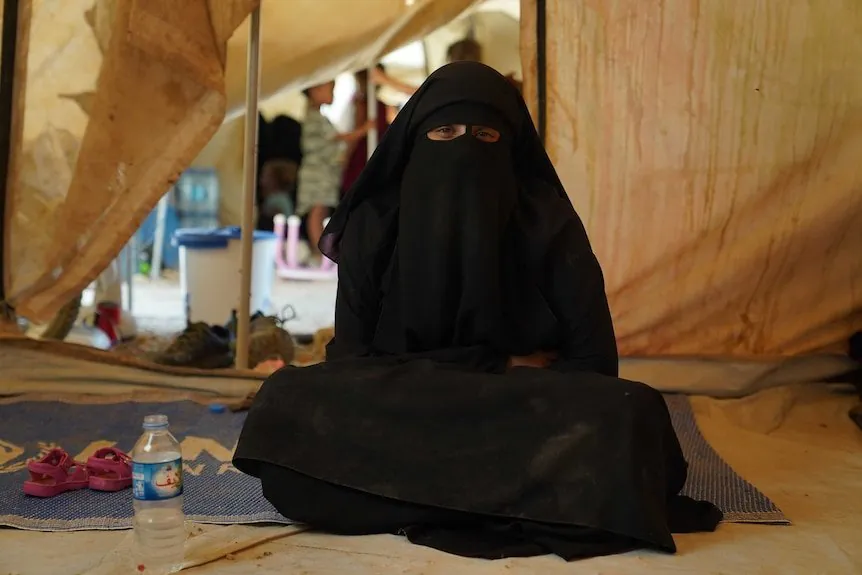
Ahmad’s case has sent shockwaves throughout the Australian community, with many questioning how a woman with alleged ties to Islamic State could be considered for bail.
The Australian Federal Police have argued that Ahmad poses an “unacceptable risk” to the community, citing her alleged involvement with the terrorist organisation and her potential to compromise national security.



Prosecutors fear that if Ahmad is released, she could put the community at risk of extremist activities and undermine the country’s counter-terrorism efforts.
According to court documents, Ahmad’s family, including her father and mother, Kawsar, accepted donations via a social media page purporting to be a charity, which police suspect was used to fund their travel to Syria.
The family’s social media posts showed them to be in territory controlled by Islamic State, and Ahmad herself made multiple posts supporting the group. She even carried an Islamic State identification card and earned an income from the organisation.
Ahmad’s lawyer, Grace Morgan, has argued that her client would not contest any application for a control order, which can force a person to wear an electronic monitoring bracelet.
However, police have stated that such an order can only be applied after a conviction, and it was not something the Magistrate’s Court could enforce if bail was granted.
Ahmad has also agreed to participate in countering violent extremism (CVE) programs, but police have expressed concerns that she is beyond the point of radicalisation and has not renounced her support for Islamic State.
Analysis: What This Means for Australia
Ahmad’s case has serious implications for Australia’s national security and law enforcement agencies. Her alleged ties to Islamic State and potential involvement in extremist activities raise concerns about the country’s ability to monitor and prevent terrorist threats.
The fact that Ahmad was able to travel to Syria and become involved with the organisation highlights the need for increased vigilance and cooperation between law enforcement agencies.
Security analysts say that Ahmad’s case is a wake-up call for Australia’s counter-terrorism efforts, highlighting the need for more effective strategies to prevent radicalisation and monitor extremist activities.
“This case shows that we need to be more proactive in identifying and preventing individuals from becoming involved with terrorist organisations,” said one analyst.
“We need to work more closely with community groups and law enforcement agencies to prevent the spread of extremist ideologies and ensure that our counter-terrorism efforts are effective.”
Law enforcement insiders warn that Ahmad’s release could compromise national security and put the community at risk of extremist activities. “If Ahmad is released, it could send the wrong message to the community and undermine our counter-terrorism efforts,” said one insider.
“We need to ensure that individuals who pose a risk to national security are held accountable and that our laws are effective in preventing extremist activities.”