Feral Pig Population Explodes Across Australia: ‘Millions of Dollars in Damage and Devastation’ as Canberra Fails to Act
- Feral pig numbers surge across multiple states, with estimates suggesting over 26 million animals are causing widespread destruction to farmland, crops, and native habitats
- Regional councils and hunters call for more incentives to control the population boom, including a $20 tail bounty to encourage more people to take action
- Experts warn that up to 70% of the feral pig population must be removed to reduce numbers, with as many as 15 million pigs needing to be culled every year
- Federal government accused of ignoring the growing crisis, with Senator Susan McDonald saying Canberra cannot continue to leave regional Australians to fight the battle alone
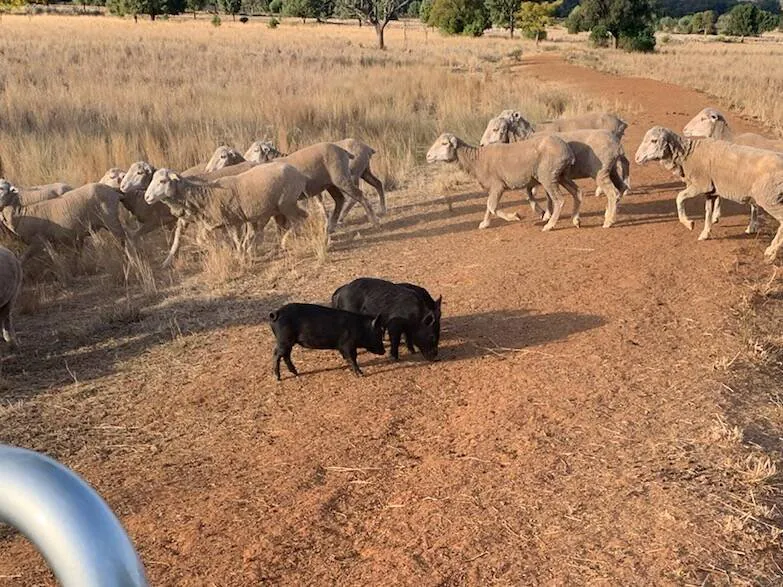
The feral pig population in regional Australia is spiraling out of control, with numbers exploding across multiple states amid favourable weather conditions. Recreational pig hunter James Sutton, from Dubbo in NSW, has witnessed the surge firsthand.
“We’re seeing huge numbers, especially in the cropping areas around Coonamble, Walgett, and Nyngan – the numbers are just flying out of proportion,” he says.
The NSW Government’s Feral Pig and Pest Program has eliminated approximately 223,000 to 250,000 feral pigs over the past three years, but hunters like Sutton say it’s not enough.
They’re calling for more incentives, such as a $20 tail bounty, to encourage more people to take action. However, Sutton warns that the government must be careful not to create a situation where unexperienced hunters trespass on properties and cause more problems.
The problem is complex, with several factors contributing to the population boom. Pigs were brought to Australia by the First Fleet in 1788 as livestock, but those that escaped established wild populations that have expanded over time.

A single sow can have up to two litters of 10 piglets every year, with populations spiking after wet weather when food is in abundance. The recent floods have also allowed feral pigs to roam through more areas, causing major issues and further losses.
Feral pigs not only cause physical damage to farmland and crops but also carry diseases that can spread to pets and even people. Sutton has seen pigs with tuberculosis, which can be transmitted to other animals on farms and even humans.
“I had a good friend of mine lose a dog and then he had to go and get blood tests every two weeks for around six weeks to make sure they hadn’t caught it as well.
So that’s pretty scary sometimes,” he says.
Senator Susan McDonald has taken aim at the Albanese Government, saying they’re ignoring the growing crisis. “Australia’s feral pig crisis is spiraling out of control.
Every day government delays meaningful action, the infestation grows and the damage compounds,” she says.
McDonald cites experts who say around 70% of the feral pig population must be removed to reduce numbers, with as many as 15 million pigs needing to be culled every year.
Analysis: What This Means for Australia
The feral pig crisis has significant implications for Australia’s biosecurity, food security, and regional economies.
The Australian Bureau of Agriculture and Resource Economics and Sciences (ABARES) estimates that feral pigs cost the national economy $156 million annually, with $95 million of this attributed to production losses and direct control costs in Queensland.
If left unchecked, the population boom could have devastating consequences for the country’s agricultural industry and native wildlife.
Security analysts say that the federal government’s failure to act on the feral pig crisis is a classic example of a biosecurity threat being left unaddressed.
“The government’s inaction is not only putting the agricultural industry at risk but also the wider community.
Feral pigs can carry diseases that can be transmitted to humans, and the longer the government delays taking action, the greater the risk of a major outbreak,” says one expert.
Law enforcement insiders warn that the feral pig crisis is also a law and order issue, with the potential for unexperienced hunters to trespass on properties and cause more problems.
“The government needs to take a coordinated approach to address the feral pig crisis, including working with state and local governments, farmers, and hunters to develop effective control programs,” says another expert.
Industry observers believe that the feral pig crisis is a symptom of a broader issue – the lack of investment in regional Australia. “The government’s focus on city-centric policies has left regional areas to deal with the fallout of the feral pig crisis.
It’s time for the government to take a more holistic approach to addressing the crisis and supporting regional communities,” says one observer.
As the feral pig population continues to spiral out of control, it’s clear that the federal government needs to take immediate action to address the crisis.
This includes providing proper long-term funding, coordinated control programs, and real support for producers and communities on the frontline.