‘A National Shame’: Indigenous Community Demands Answers as 15 Young Lives Lost in Six Months to Preventable Deaths
- Families in Borroloola, a remote Northern Territory community, are calling for an investigation into the deaths of 15 young people in six months.
- The community is plagued by chronic health conditions, overcrowding, and poor living conditions, which locals say are contributing to the alarming death rate.
- Indigenous Australians are dying at a rate more than double that of non-Indigenous Australians, with the gap widening over the past decade.
- The Northern Territory government has promised to build a new clinic in Borroloola, but locals say it’s too little, too late.
In the small Northern Territory community of Borroloola, a sense of desperation and frustration hangs in the air. In just six months, 15 young people have lost their lives to preventable deaths, leaving families and friends reeling.
For Nancy Yukuwal McDinny, the pain is all too real – her younger brother, Mr McDinny, died aged 50 from cancer last year, a tragedy that has left her shaken.
Ms McDinny is not alone in her grief.
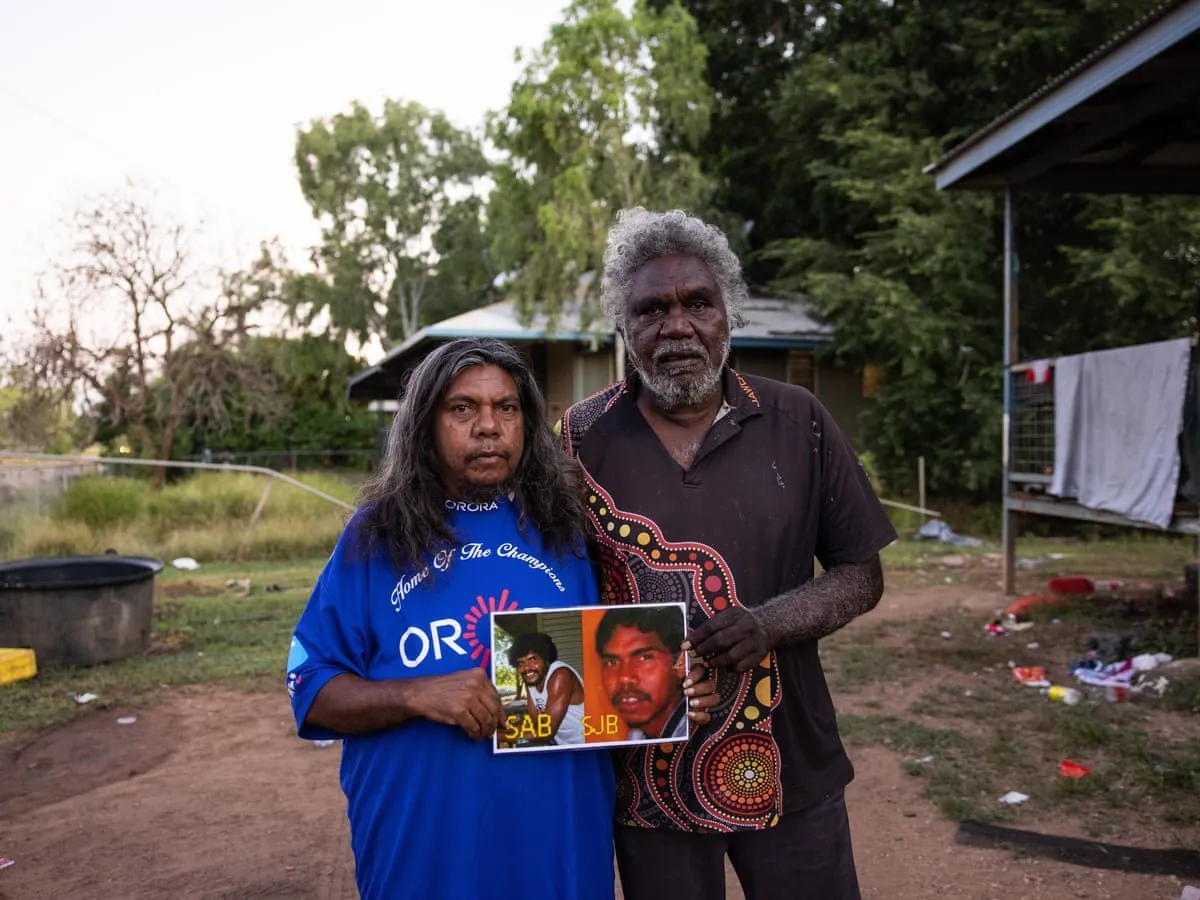
The community of 900 is still trying to come to terms with the scale of the tragedy, with many of the deceased in their 20s, 30s, and 40s.
It’s a stark reminder of the shocking health disparities faced by Indigenous Australians, who are dying at a rate more than double that of non-Indigenous Australians.

The gap has widened over the past decade, with the rate of avoidable Indigenous deaths rising from 177 per 100,000 people to 220.
Locals say the Borroloola clinic, run by the Northern Territory government, is woefully inadequate, with not enough health checks and prevention programs. The clinic is often overcrowded, with staff struggling to keep up with the demand for emergency care.
It’s a situation that has led to a sense of hopelessness among residents, who feel abandoned by the system.
Maria Pyro, whose 51-year-old aunt Teresa Rory died from kidney and liver failure in January, is calling for urgent action. “We’ve lost 15 of our people – it’s not normal to have people just dropping dead,” she said.
“These are young people in their 40s and 30s. We need help to deal with this ongoing health crisis.”
Keith Rory, Teresa’s brother, is demanding an investigation into her death, as well as the others, to determine whether they could have been prevented with better healthcare.
“She shouldn’t have died, she was too young,” he said. “That’s why we want an investigation, that’s what I’m chasing up, and accountability, for my sister, and for the 14 others.”
Analysis: What This Means for Australia
The crisis in Borroloola is a stark reminder of the deep-seated health disparities faced by Indigenous Australians. The fact that 15 young lives have been lost in six months is a national shame, and it’s clear that the current system is failing.
The Northern Territory government’s promise to build a new clinic is a step in the right direction, but it’s too little, too late. The community needs urgent action, not just promises.
Security analysts say the situation in Borroloola highlights the need for a more comprehensive approach to Indigenous healthcare. “It’s not just about throwing money at the problem,” one analyst said.
“It’s about understanding the root causes of these health disparities and addressing them head-on.” Law enforcement insiders warn that the situation is also a ticking time bomb for community safety, with the potential for social unrest and violence.
Industry observers believe that the crisis in Borroloola is a wake-up call for the federal government, which has been criticized for its slow response to the growing health gap between Indigenous and non-Indigenous Australians.
“It’s time for the government to take real action,” one observer said. “Not just promises, but tangible, concrete steps to address this crisis.”