
Remembering a Medical Maverick: The Inspiring Legacy of Professor Richard Scolyer, the Aussie Doctor Who Fought Brain Cancer with Courage and Determination
- Professor Richard Scolyer, a renowned melanoma pathologist, has passed away at 59 after a three-year battle with brain cancer.
- The Australian of the Year recipient was known for his groundbreaking cancer treatment and his selfless efforts to help others despite his own terminal prognosis.
- Prime Minister Anthony Albanese has offered a state funeral, which has been accepted by Professor Scolyer’s wife, Katie Nicholl.
- Professor Scolyer’s legacy will live on through his pioneering work in melanoma research and his inspirational fight against brain cancer.
Professor Richard Scolyer’s passing has left a gaping hole in the lives of his loved ones and the medical community.
The 59-year-old melanoma pathologist, who was diagnosed with an aggressive form of brain cancer, IDH “wild” type glioblastoma, in 2020, has been remembered as a loving man, a devoted father, and a pioneering scientist.
In a statement read by his brother-in-law, Charles Nicholl, the Scolyer family described the professor’s selfless legacy as one that “will never be forgotten.” They said his passing has left a “big hole” in their lives, but they take comfort in the fact that his impact on the world of medicine will continue to inspire and help others.
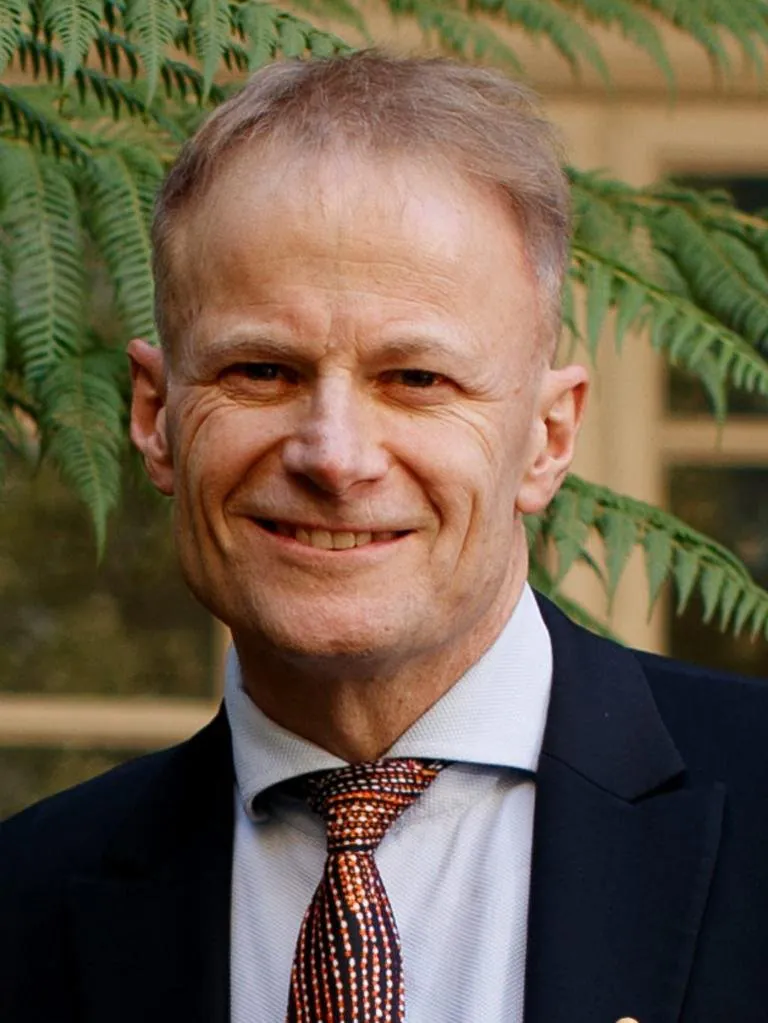
Professor Scolyer’s remarkable story began when he was diagnosed with brain cancer. Instead of accepting his terminal prognosis, he applied his driven and interrogating attitude to his own cancer battle.
He volunteered to test a revolutionary melanoma cancer treatment on himself, which he had developed in collaboration with his colleagues at the Melanoma Institute Australia (MIA).
Throughout his illness, Professor Scolyer continued to communicate with fellow cancer patients and the world, candidly sharing his ups and downs. He challenged conventions, pursued funding, and remained committed to his cause, even in the face of adversity.
His gentleness, love of family, and thirst for knowledge made him a beloved figure in the medical community.
As news of his passing spread, tributes poured in from across the country.
Prime Minister Anthony Albanese described Professor Scolyer as “one of our brightest lights and one of our biggest hearts.” He said the professor had walked his “uncertain path” with courage, determination, and grace, and that his legacy would always be with us.
Mr. Albanese also revealed that he had accepted an offer for a state funeral on behalf of Professor Scolyer’s wife, Katie Nicholl.
Professor Scolyer’s colleagues at the MIA, where he worked for over two decades, remembered him as a truly extraordinary pathologist who made a lasting positive impact on the world of medicine.
His co-director, Professor Georgina Long, described him as a generous and humble colleague who always made time for clinicians navigating complex diagnostic cases.
As the medical community mourns the loss of a pioneering scientist, Australians from all walks of life are remembering Professor Scolyer as a man who inspired others to pursue their dreams and passions with humility, love, and compassion.
His legacy will live on through his published work, his impact on brain cancer treatment, and the countless lives he touched through his honest and raw media interviews and social posts.
Analysis: What This Means for Australia
Professor Scolyer’s passing serves as a poignant reminder of the devastating impact of brain cancer on Australian families and the medical community.
His courageous fight against the disease has inspired a nation, and his legacy will continue to drive innovation and progress in the field of cancer research.
Security analysts say that Professor Scolyer’s work has significant implications for national health security, as it highlights the need for increased funding and support for medical research.
Law enforcement insiders warn that the lack of investment in medical research can have far-reaching consequences for public health and safety.
Industry observers believe that Professor Scolyer’s legacy will inspire a new generation of medical professionals to pursue careers in cancer research.
His pioneering work has shown that even in the face of adversity, one person can make a difference and leave a lasting impact on the world.
As Australia mourns the loss of a medical maverick, we are reminded of the importance of investing in medical research and supporting those who are working tirelessly to find cures for devastating diseases like brain cancer.
Professor Scolyer’s legacy will continue to inspire and motivate us to work towards a future where no one has to face the uncertainty and fear of a cancer diagnosis alone.