Monkey Mauls Seven-Year-Old Boy to Death in Thailand: A Community in Shock and a Family’s Desperate Regret
- A seven-year-old boy’s life was brutally cut short by the family’s pet monkey in southern Thailand, sparking a frantic search and a hunt for answers.
- The attack has left the community reeling, with neighbours describing the monkey’s aggressive behaviour and previous attacks on strangers and animals.
- The boy’s grieving mother has vowed never to keep monkeys again, fearing for the safety of her other son, as the family grapples with the devastating consequences of their decision to raise a wild animal.
- Police have launched an investigation into the family’s ownership of the monkey, which was captured after being released into the nearby mountains, and the grandfather who rescued it may face prosecution under Thai wildlife laws.
The quiet village of Nakhon Si Thammarat province was shattered on June 6 when a four-year-old male macaque, named Choke, launched a ferocious and unprovoked attack on seven-year-old Ekkarat Srichan, who was playing outside his home.
Witnesses described the terrifying scene as the primate sank its long fangs deep into the child’s torso, wrestling him to the ground as he desperately tried to break free.
Neighbours were alerted by the boy’s terrified screams and the monkey’s piercing screeches, only to find Ekkarat covered in wounds and the bloodstained monkey still tethered to a bamboo pole by a rope long enough to allow it to roam freely.
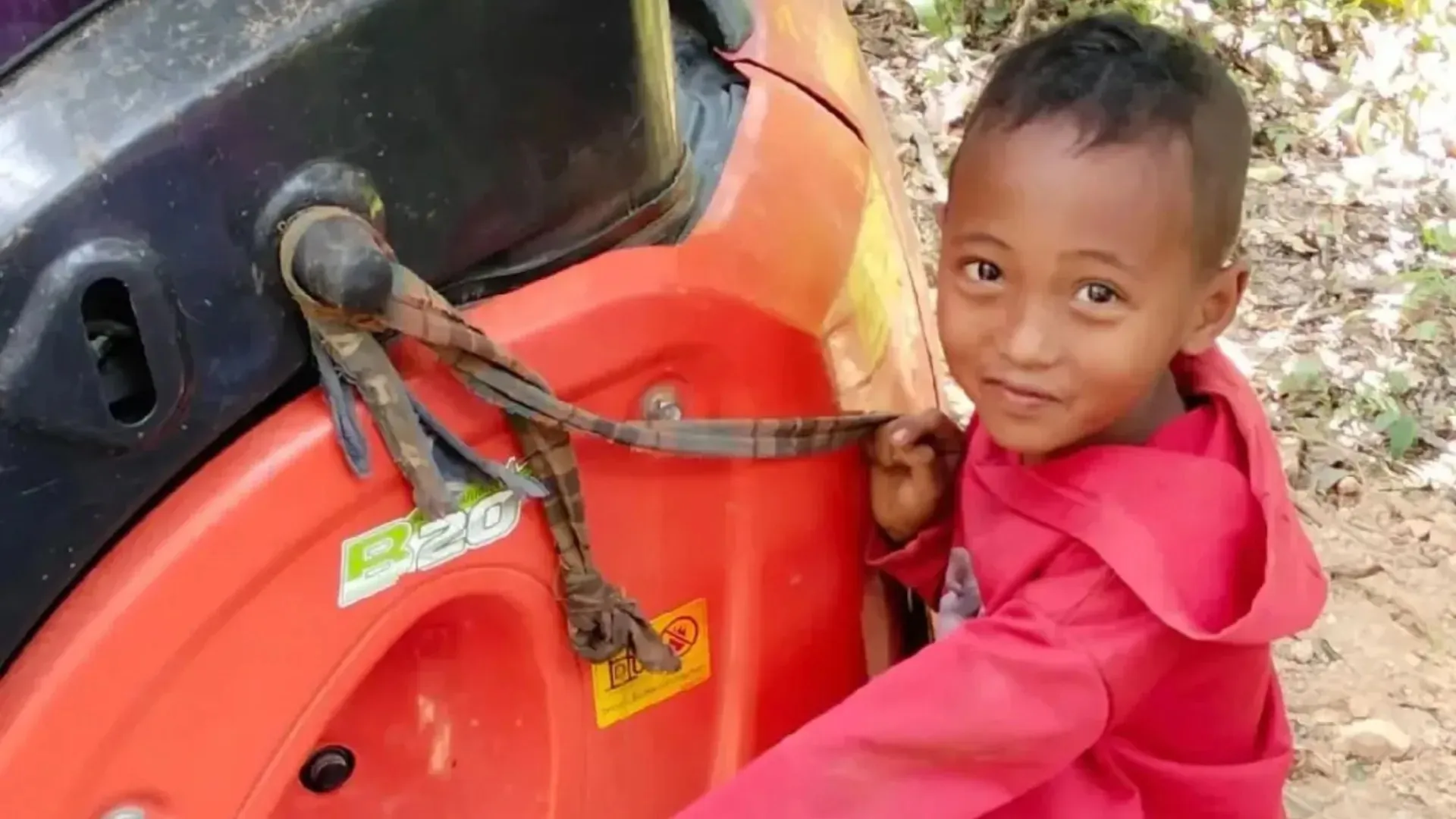
Emergency services rushed Ekkarat to Sichon Hospital, where doctors were unable to save him. The monkey’s bite had punctured the boy’s lung, striking a vital area that proved fatal.
His grieving mother, Daranee Srichan, 27, was initially told by her husband that their son had only suffered a bite to the leg — but the full extent of his injuries became clear when she arrived at the hospital.




“The doctor told me my son couldn’t survive because the monkey’s bite punctured his lung and hit a vital area. If it hadn’t struck that spot, he would have been all right,” she said, her voice trembling with grief.
“My husband initially said that Ekkarat had only been bitten on the leg, but when I saw him at the hospital, I discovered he had also suffered a bite to his right ribcage.”
Locals say the aggressive macaque had long been a source of unease in the neighbourhood.
The animal was known to growl and bare its fangs at strangers, and was previously reported to have killed a stray cat that wandered too close to the jackfruit tree where it was kept.
The monkey had been in the family’s care since 2022, when Ekkarat’s grandfather, Jaroon Srichan, rescued it as an infant after finding it abandoned on the roadside without its mother.
But in the aftermath of the attack, Jaroon’s decision to release Choke into the nearby mountains before wildlife authorities could take custody of the animal has sparked outrage.
Police launched an urgent search amid fears the monkey could attack other residents, and wildlife experts with tranquilliser guns were eventually called in to capture the primate.
Jaroon said the ordeal had left him consumed by regret. “I don’t know if the monkey disliked my grandson or not, but they’ve known each other for a long time.
It wasn’t their first time meeting,” he said. “It must have been tired and irritated.
At first, I thought I made the right decision in saving the monkey. But now that this happened, I realise I made a mistake.
I have to let it go. I’m not going to keep it anymore.”
Analysis: What This Means for Australia
While this tragedy occurred in Thailand, it raises important questions about the risks of keeping exotic animals as pets in Australia. Security analysts say that the incident highlights the dangers of owning wild animals, which can be unpredictable and deadly.
“This tragedy is a stark reminder of the risks associated with keeping exotic animals as pets,” said one expert. “It’s a ticking time bomb waiting to happen.”
Law enforcement insiders warn that the incident also raises concerns about the regulation of exotic animal ownership in Australia. “We need to take a closer look at our laws and regulations surrounding exotic animal ownership,” said one source.
“This incident is a wake-up call for us to review our policies and ensure that we’re doing everything we can to prevent similar tragedies from occurring here.”
Industry observers believe that the incident will have significant economic and social consequences for the exotic animal trade in Australia. “This tragedy will likely lead to increased scrutiny of the exotic animal trade and potentially stricter regulations,” said one expert.
“It’s a devastating reminder of the risks associated with this industry, and we need to take a closer look at our priorities.”
As the community grapples with the aftermath of this tragedy, one thing is clear: the risks of keeping exotic animals as pets are very real, and it’s time for Australians to take notice.