Migrants: The Unsung Heroes Keeping Australia Afloat Amid Fierce Debate
- Shocking new figures reveal migrants are the backbone of Australia’s essential industries, making up 57% of GPs, 47% of surgeons, and 43% of nurses
- Experts warn that without immigration, the Australian economy would have been in recession for years, with financial expert David Koch sounding the alarm
- As the migration debate rages on, politicians are promising to cut the intake, but critics argue this will only exacerbate the problem, not solve it
- Australia’s very identity is at stake, with the nation’s leaders promising a united and cohesive society, but at what cost to the economy and social fabric?
The debate over migration is reaching a fever pitch in Australia, with politicians and pundits weighing in on the impact of new arrivals on the nation’s economy and society.
But behind the rhetoric, a startling reality has emerged: migrants are the unsung heroes keeping Australia afloat.
According to data from the Department of Home Affairs, a staggering proportion of workers in essential industries were born overseas.
From the doctors and nurses who care for us when we’re sick, to the farm workers who put food on our tables, migrants are the backbone of Australia’s economy.
Without them, the country would be in dire straits.




“If we didn’t have immigration, the Australian economy would have been in recession for about the last two years or so,” financial expert and former Sunrise host David Koch told 7NEWS.
His warning is stark, and it’s a reality that Australia can no longer afford to ignore.
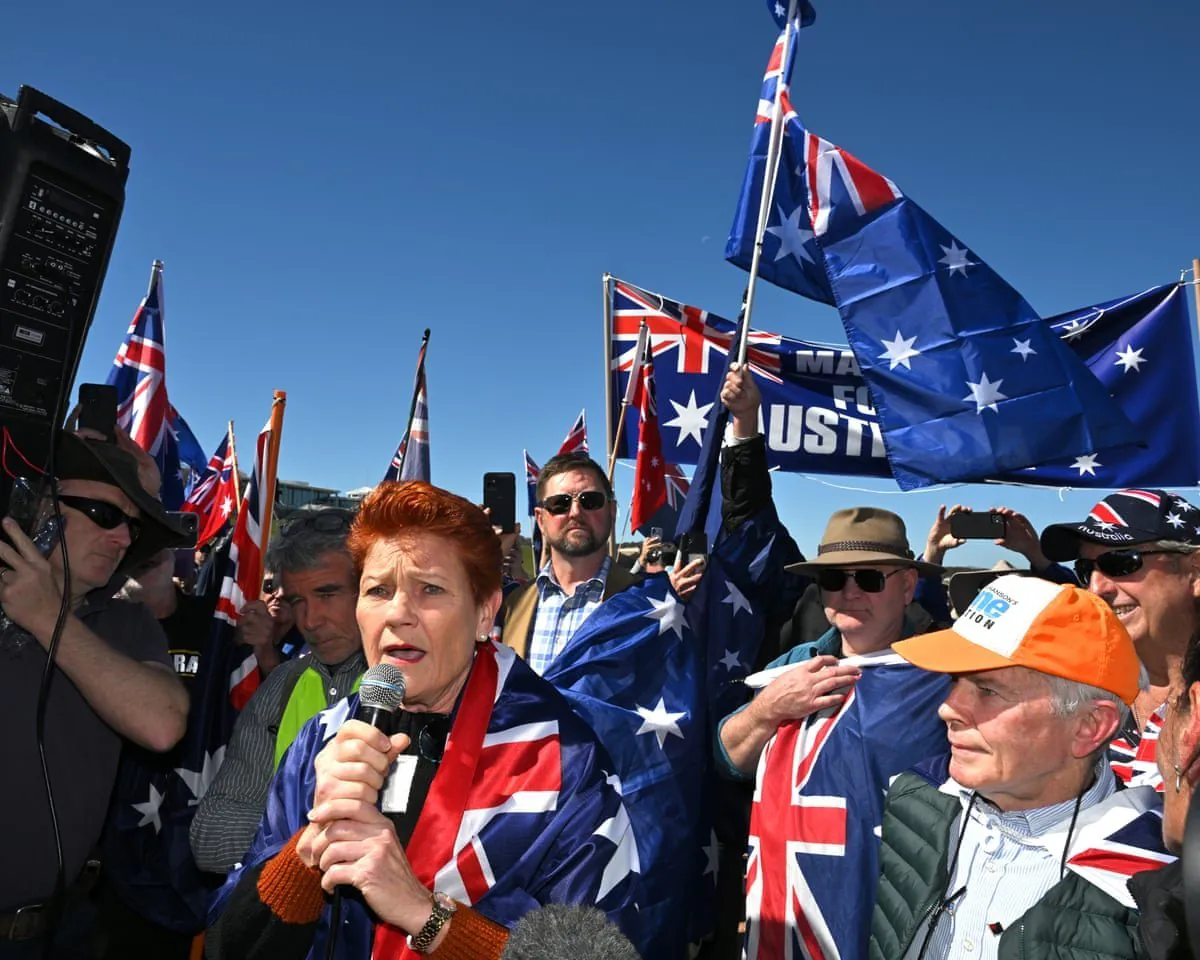
But despite the critical role migrants play, they’re being unfairly blamed for problems created by poor government planning. Anti-migration rallies have sparked heated debate, with some arguing that new entrants are draining the welfare system and diluting national identity.
Opposition Leader Angus Taylor has said that “mass migration is changing Australia for the worse”, while One Nation leader Pauline Hanson has claimed that “lack of housing is due to mass migration they’ve allowed to come into the country”.
But experts say this is a gross oversimplification of the issue.
“That’s got to stop,” said ANU academic Liz Allen. “This is the failure of policy and politicians to do what they need to do.
Migrants are being scapegoated for problems that are not of their making.”
As the temperature of the migration debate ratchets higher, political leaders are promising to cut the intake.
Labor’s net overseas migration target is 225,000 a year, while the Coalition has promised below 200,000, and One Nation wants the figure cut to 130,000.
But will this solve the problem, or simply make it worse? Security analysts say that reducing migration will only exacerbate the shortage of skilled workers, putting pressure on essential industries and the economy as a whole.
“It’s a short-sighted approach that will have long-term consequences,” one expert warned.
Analysis: What This Means for Australia
The migration debate is about more than just numbers – it’s about the kind of nation Australia wants to be. As Prime Minister Anthony Albanese said, “I want an Australia that has the right population…
I want an Australia that is united, one that has social cohesion at our core.”
But what does this mean in practice? How can Australia balance the need for economic growth with the need for social cohesion?
The answer lies in a nuanced approach to migration policy, one that takes into account the complex needs of the economy and society.
Law enforcement insiders warn that a blanket reduction in migration will only drive the problem underground, creating a black market for labour and putting vulnerable workers at risk.
“It’s a recipe for disaster,” one insider said.
Industry observers believe that a more targeted approach is needed, one that addresses the specific needs of different industries and regions. “We need to be smart about migration, not just slash and burn,” said one expert.
As the debate rages on, one thing is clear: migrants are not the problem, but a vital part of the solution. It’s time for Australia’s leaders to take a step back and rethink their approach to migration – before it’s too late.