Desert Blood Feud: Arrests Made After Violent Clash at Remote Outstation, but Traditional Owners Fear Further Bloodshed
- Three people hospitalised and three arrested after violent dispute at Oak Valley outstation in Central Australia
- Rival families among traditional owners at war over access to housing, with tensions simmering for eight years
- Traditional owners fear further violence unless authoritative decision is made on who can live at outstation
- Central Land Council accused of failing to help resolve dispute despite numerous pleas for help
The dusty, sun-scorched outstation of Oak Valley in Central Australia is a tiny community torn apart by a bitter feud between rival families.
The violence that erupted last weekend, leaving three people hospitalised and three under arrest, is just the latest chapter in an eight-year battle over access to housing that has left traditional owners fearing for their lives.
At the heart of the dispute are the Liddy sisters, Erin and Tara, who are part of the traditional owner group that has been locked in a bitter struggle with a rival family over who can live at the outstation.

The sisters were in the Top End when they received frantic calls from their family members in the early hours of Sunday morning, pleading for help.
Erin Liddy recalled the harrowing moment she received the call from her brother, who was at the outstation. “He said ‘I need help, you need to call the police’,” she said.

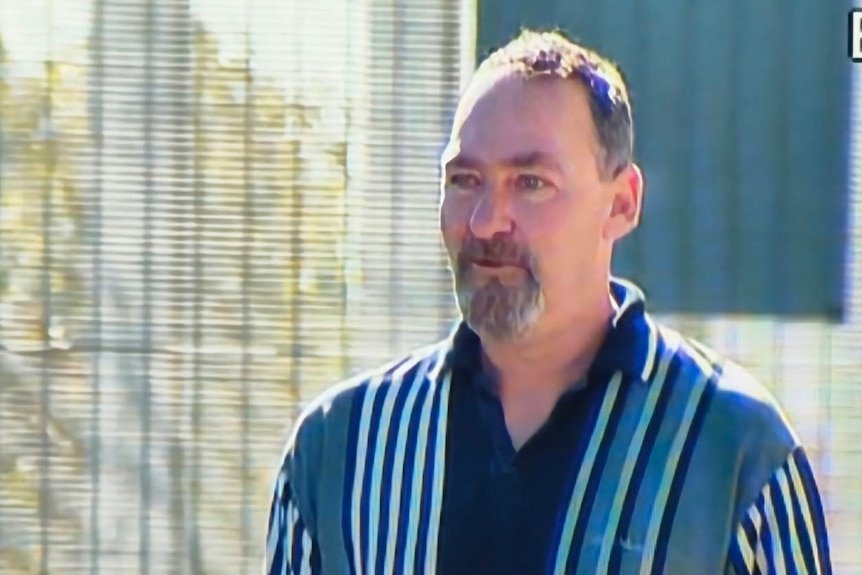


“I was up here calling family members to try and get help, and my sister Tara was calling the police.” The sisters were then sent videos of the attack, which showed a group of at least 10 people perpetrating the violence, with children present.
The attack left three of the Liddy family members with significant injuries, including a broken jaw, a broken eye socket, and significant damage to a 60-year-old woman’s eye.
“Everybody’s extremely shaken up, emotional, traumatised,” Tara Liddy said. “We had to fly the children back to Darwin yesterday, they’re all traumatised, having nightmares, they can’t sleep.”
Northern Territory Police attended the outstation and made arrests later that day.
Two men, aged 36 and 52, and a 55-year-old woman were charged with a series of offences, including aggravated assault and engaging in violent conduct.
The NT Police spokesperson said investigations were ongoing and the people involved were known to one another.
The dispute over access to housing at Oak Valley has been simmering for eight years, with the rival family group wanting to move into a house but being barred by the Aboriginal land trust board that manages the homes.
The Liddy sisters claim that the Central Land Council (CLC) has failed to help resolve the dispute despite numerous pleas for help.
Tara Liddy accused the CLC of refusing to facilitate mediation or intervene to protect the safety of the traditional owners.
“This issue has been sitting with them for a significant amount of time and they have refused to facilitate any form of mediation or intervene in a way that protects the safety of these old people that are sitting on their traditional homelands,” she said.
However, CLC chief executive Les Turner disputed this claim, stating that the organisation had offered mediation to both parties but “haven’t achieved agreement yet”.
Turner added that the family conflict was unrelated to land or traditional ownership, and that the CLC’s role was limited to helping to arrange an independent mediation.
Analysis: What This Means for Australia
The Oak Valley dispute highlights the deep-seated issues that can arise when traditional owner groups are at odds over access to housing in remote communities.
The incident also raises questions about the effectiveness of organisations like the Central Land Council in resolving disputes and providing support to traditional owners.
Law enforcement insiders warn that the failure to address these underlying issues can lead to further violence and escalation.
“When you have a situation like this, where families are at odds over access to housing, it can create a powder keg of tension that can erupt into violence at any moment,” one insider said.
Security analysts say that the incident also highlights the need for greater investment in community programs and services that can help to address the underlying causes of these disputes.
“You need to get to the root of the problem and address the issues that are driving these conflicts,” one analyst said.
In the meantime, the Liddy sisters and their family members remain on edge, fearful of further violence and concerned about the lack of action from authorities.
“We just want a resolution to this dispute so that we can live in peace,” Erin Liddy said. “We don’t want to see anyone else get hurt.”