Western Europe Sizzles in Record-Breaking Heatwave: Dozens Dead, Cities in Chaos as Temperatures Soar to 44.3C
- Western Europe is in the grip of a devastating heatwave that has claimed dozens of lives, shut down schools and cultural landmarks, and disrupted power supplies.
- France has recorded its hottest day since records began, with temperatures reaching a scorching 44.3C in the southwestern town of Pissos.
- Italy’s health ministry has placed 16 cities on its highest heat alert, warning the heatwave could intensify further, peaking between Sunday and Monday.
- The heatwave has killed hundreds of thousands of birds at poultry farms in France, and at least 48 people have died in France from drowning while trying to cool off.
The heatwave that has engulfed Western Europe has left a trail of destruction and chaos in its wake, shattering records and pushing the region to the brink.
The United Kingdom, not known for its scorching temperatures, has been particularly affected, with the mercury soaring to a record-breaking 36.1C in southern England.
The heat has been so unbearable that hundreds of schools have closed or shortened their day, and officials have warned that even healthy people could be in danger.
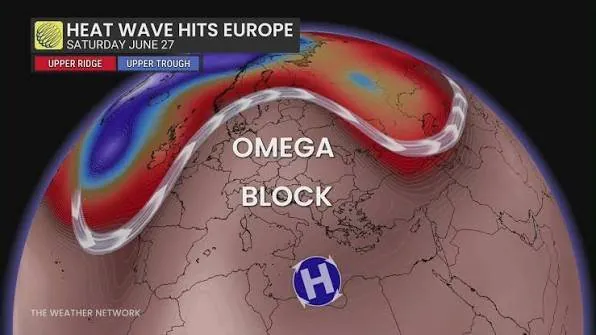
The core of the heatwave is a weather pattern known as an Omega block, which has trapped heat over regions for extended periods, with cooler weather on its fringes.
This phenomenon has pushed temperatures as much as 18C above normal, according to the Reuters Climate Monitor.


The results have been catastrophic, with at least 48 people dying in France from drowning while trying to cool off, and two young children killed by heat in a car.
In Spain, two elderly people have died of heat stroke after days of temperatures exceeding 40C. But the impact of the heatwave goes beyond human lives.
Hundreds of thousands of birds have been killed at poultry farms in Brittany and the Pays de la Loire, and France’s nuclear power plants have cut output by about seven per cent of total demand as high temperatures limited access to cooling water.
The Eiffel Tower and the Louvre have announced early closing times, and the Changing of the Guard outside Buckingham Palace has been scaled back, without the usual ceremony of soldiers in scarlet tunics and heavy bearskin hats.
The Uffizi Galleries in Florence, one of Italy’s top tourist sites, halted ticket sales on Wednesday to fix an air conditioning malfunction, and local authorities in Switzerland opened air-conditioned theatres for free daytime cinema screenings.
Farmers in France have moved to night shifts to protect workers and reduce fire risk, as the country struggles to cope with the extreme temperatures.
Analysis: What This Means for AustraliaThe heatwave that has engulfed Western Europe serves as a stark reminder of the devastating impact of climate change.
As the world grapples with rising temperatures, Australia is not immune to the effects of extreme weather events. In fact, the country is warming at a rate that is twice the global average, making prolonged heat episodes increasingly likely.
The consequences of such events can be severe, from devastating bushfires to crippling droughts. As the Australian government continues to grapple with the challenges of climate change, the heatwave in Western Europe serves as a wake-up call.
The country must take immediate action to reduce its carbon footprint, invest in renewable energy, and develop strategies to mitigate the effects of extreme weather events.
The economic and social consequences of inaction could be catastrophic, from damage to infrastructure to loss of human life.
Security analysts say that the heatwave in Western Europe highlights the need for Australia to develop a comprehensive national security strategy that takes into account the impacts of climate change.
Law enforcement insiders warn that the country must be prepared to deal with the social and economic fallout of extreme weather events, from looting and civil unrest to displacement and migration.
As the world struggles to cope with the effects of climate change, Australia must take a leadership role in developing solutions to this global crisis.
The country has a unique opportunity to invest in renewable energy, reduce its carbon footprint, and develop innovative technologies to mitigate the effects of extreme weather events.
The consequences of inaction could be devastating, but with bold leadership and a commitment to action, Australia can emerge as a leader in the fight against climate change.
The heatwave that has engulfed Western Europe has left a trail of destruction and chaos in its wake, shattering records and pushing the region to the brink. The United Kingdom, not known for its scorching temperatures, has been particularly affected, with the mercury soaring to a record-breaking 36.1C in southern England. The heat has been so unbearable that hundreds of schools have closed or shortened their day, and officials have warned that even healthy people could be in danger.
The core of the heatwave is a weather pattern known as an Omega block, which has trapped heat over regions for extended periods, with cooler weather on its fringes. This phenomenon has pushed temperatures as much as 18C above normal, according to the Reuters Climate Monitor. The results have been catastrophic, with at least 48 people dying in France from drowning while trying to cool off, and two young children killed by heat in a car. In Spain, two elderly people have died of heat stroke after days of temperatures exceeding 40C.
But the impact of the heatwave goes beyond human lives. Hundreds of thousands of birds have been killed at poultry farms in Brittany and the Pays de la Loire, and France’s nuclear power plants have cut output by about seven per cent of total demand as high temperatures limited access to cooling water. The Eiffel Tower and the Louvre have announced early closing times, and the Changing of the Guard outside Buckingham Palace has been scaled back, without the usual ceremony of soldiers in scarlet tunics and heavy bearskin hats.
The Uffizi Galleries in Florence, one of Italy’s top tourist sites, halted ticket sales on Wednesday to fix an air conditioning malfunction, and local authorities in Switzerland opened air-conditioned theatres for free daytime cinema screenings. Farmers in France have moved to night shifts to protect workers and reduce fire risk, as the country struggles to cope with the extreme temperatures.
The heatwave that has engulfed Western Europe serves as a stark reminder of the devastating impact of climate change. As the world grapples with rising temperatures, Australia is not immune to the effects of extreme weather events. In fact, the country is warming at a rate that is twice the global average, making prolonged heat episodes increasingly likely. The consequences of such events can be severe, from devastating bushfires to crippling droughts.
As the Australian government continues to grapple with the challenges of climate change, the heatwave in Western Europe serves as a wake-up call. The country must take immediate action to reduce its carbon footprint, invest in renewable energy, and develop strategies to mitigate the effects of extreme weather events. The economic and social consequences of inaction could be catastrophic, from damage to infrastructure to loss of human life.
Security analysts say that the heatwave in Western Europe highlights the need for Australia to develop a comprehensive national security strategy that takes into account the impacts of climate change. Law enforcement insiders warn that the country must be prepared to deal with the social and economic fallout of extreme weather events, from looting and civil unrest to displacement and migration.
As the world struggles to cope with the effects of climate change, Australia must take a leadership role in developing solutions to this global crisis. The country has a unique opportunity to invest in renewable energy, reduce its carbon footprint, and develop innovative technologies to mitigate the effects of extreme weather events. The consequences of inaction could be devastating, but with bold leadership and a commitment to action, Australia can emerge as a leader in the fight against climate change.