Venezuela Earthquake Disaster: Desperate Search for Survivors as Death Toll Nears 1,000 and Frustration Mounts Over State Response
- Death toll estimated to be nearing 1,000, with 172 still trapped under rubble and over 50,000 reported missing
- Foreign rescue teams and aid arrive in hardest-hit areas, but frustrations mount over limited resources and state response
- Economic toll estimated at AUD$9.69 billion, with oil production expected to be curtailed due to power outages and port delays
- Rescue efforts hindered by lack of heavy equipment, with residents and volunteers taking matters into their own hands
The devastating twin earthquakes that struck Venezuela have left a trail of destruction and despair in their wake, with desperate rescue teams racing against time to find survivors trapped under the rubble.
The death toll is estimated to be nearing 1,000, with 172 still trapped and over 50,000 reported missing. As the full extent of the disaster becomes clear, frustrations are mounting over the limited resources and slow response from the state.
The earthquakes, which measured 7.2 and 7.5 on the Richter scale, devastated parts of Caracas and surrounding areas, leaving a swathe of destruction in their wake.
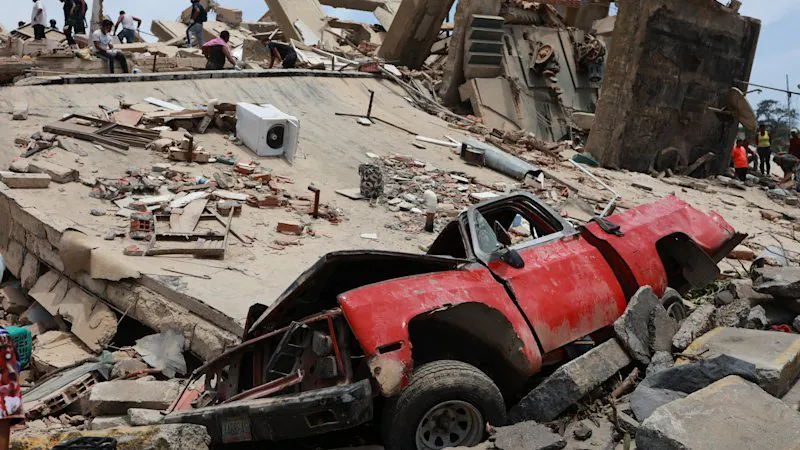
The hardest-hit region of La Guaira state was still without electricity on Friday, with a transmission line outage slowing efforts to restore full service to a key port, refinery, and petrochemical complex.
Rescue teams, including those from countries that have opposed Venezuela in the past, have begun arriving in the affected areas, but their efforts are being hindered by a lack of heavy equipment.

Residents and volunteers are taking matters into their own hands, digging through debris with their hands and improvised tools in a desperate bid to find survivors.
Jennifer Palacios, 25, lost her six-year-old son and five other relatives when the earthquakes struck her home in the Hugo Chavez housing complex. “It’s the community that has managed to get people out alive,” she said, sitting in front of the rubble.
“We need them to bring cranes to move the slabs. There are still people trapped.”
The government of interim President Delcy Rodriguez has pledged a massive deployment of assistance, but its response has been patchy at best.
Police and national guard motorcycle patrols are directing traffic, but help is scarce in many areas, with firefighters, police, civil protection, and the military either absent or minimally present.
Analysis: What This Means for Australia
The disaster in Venezuela has significant implications for Australia, particularly in terms of its own disaster preparedness and response. The country’s geographical location makes it prone to natural disasters such as earthquakes, cyclones, and bushfires.
The Venezuelan disaster highlights the importance of having a robust emergency response system in place, with adequate resources and equipment to respond quickly and effectively.
Security analysts say that the disaster also raises concerns about the stability of the Venezuelan government, which has been plagued by corruption, mismanagement, and economic turmoil.
The international community’s response to the disaster, including the dispatch of rescue teams and aid, may help to alleviate some of the pressure on the government, but the long-term implications for regional stability remain uncertain.
Law enforcement insiders warn that the disaster may also have implications for Australia’s own national security, particularly in terms of the potential for increased migration and asylum seeker flows.
The Venezuelan disaster may lead to an increase in the number of people seeking to flee the country, which could put pressure on Australia’s border control systems.
Industry observers believe that the disaster may also have economic implications for Australia, particularly in terms of trade and investment. Venezuela is a significant producer of oil, and the disruption to oil production and exports may have flow-on effects for the global economy.
As the situation in Venezuela continues to unfold, it is clear that the disaster will have far-reaching consequences for the country and the wider region.
The international community’s response will be critical in alleviating the suffering of those affected and supporting the Venezuelan government in its response efforts.
Mexico, Colombia, India, and Spain have sent rescue teams, supplies, and equipment to support the relief efforts, while the US has pledged $US150 million in aid and eased sanctions.
The US military has also dispatched two ships to support rescue efforts.
The UN’s migration body has estimated that nearly seven million people could be affected by the disaster, with the US Geological Survey warning that the death toll could reach over 10,000.
The Venezuelan disaster is a stark reminder of the importance of disaster preparedness and response, and the need for international cooperation and support in times of crisis.