Death Toll Mounts in Venezuela Earthquake Disaster: 1,430 Dead, Thousands Missing, and a Nation in Crisis as Aid Struggles to Reach Devastated Communities
- Venezuela’s twin earthquakes have left a trail of destruction, with 1,430 confirmed dead and thousands more missing, as the country struggles to cope with the disaster.
- Residents are taking matters into their own hands, searching for loved ones in the rubble, as they claim the government’s response has been slow and inadequate.
- The international community has rallied to support Venezuela, with aid pouring in from around the world, but the challenge of reaching devastated communities remains a significant hurdle.
The devastating twin earthquakes that struck Venezuela have left the nation reeling, with the death toll climbing to 1,430 and thousands more missing.
The coastal city of La Guaira has been particularly hard hit, with residents describing a scarcity of government help as they desperately search for loved ones in the rubble.
The earthquakes, which measured 7.2 and 7.5 in magnitude, struck within 39 seconds of each other, causing widespread destruction and reducing parts of northern Venezuela to rubble.
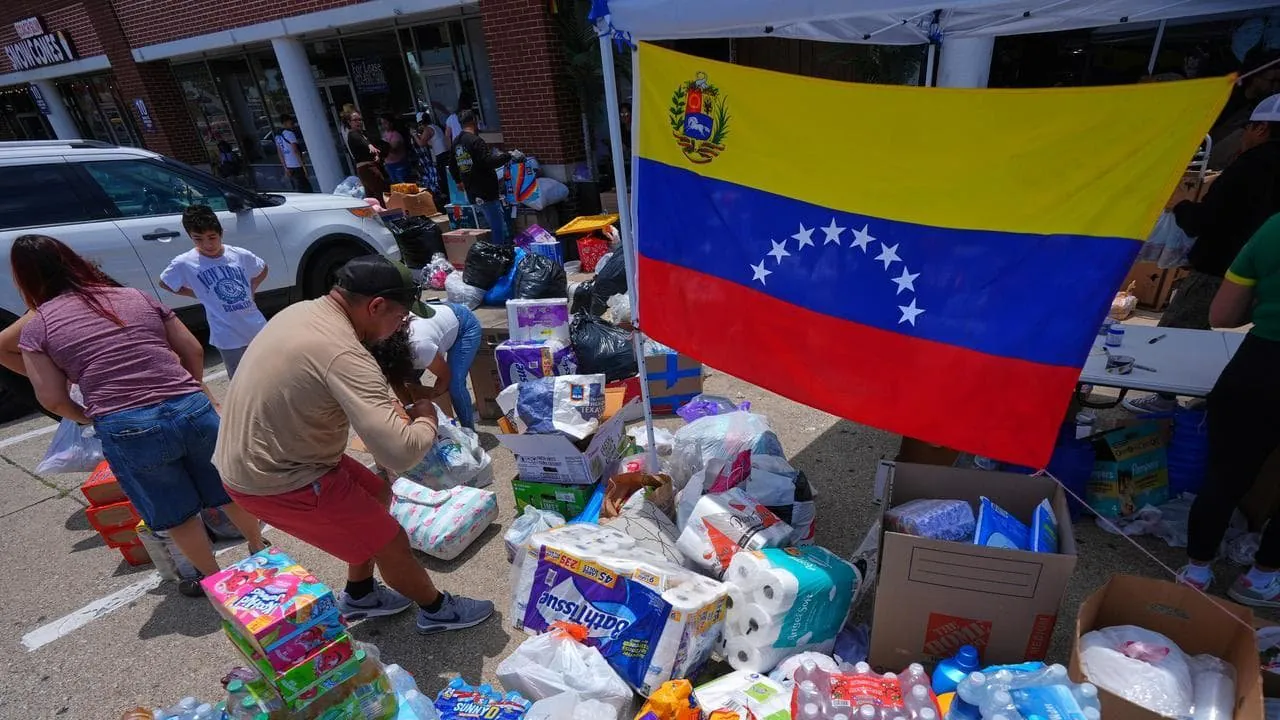
The estimated damage is a staggering $US6.7 billion ($9.7 billion), according to the UN.
As the “golden window” for rescue efforts ticks away, residents are taking matters into their own hands, using hammers and power tools to try to cut through concrete slabs in search of survivors.


The Venezuelan government has deployed 14,000 military and police members to La Guaira, but residents claim more resources are urgently needed. Acting President Delcy Rodriguez has acknowledged the “critical hours for rescuing people alive” are running out, but her government’s response has been criticized by many.
Lawyer Ricardo Trias, 73, is still waiting for a death certificate for his godson Armando Lopez, 54, whose body was pulled from the rubble of his building in the coastal town of Caraballeda on Thursday night.
As the situation on the ground remains dire, the international community has rallied to support Venezuela.
The United States has deployed two warships, transport planes, and helicopters, along with $US150 million ($217 million) in aid, while British Prime Minister Sir Keir Starmer has announced £2 million ($3.8 million) in humanitarian aid, along with a search-and-rescue team.
Analysis: What This Means for AustraliaThe devastating earthquakes in Venezuela serve as a stark reminder of the importance of disaster preparedness and response.
As a nation prone to natural disasters, Australia must take heed of the lessons from Venezuela and ensure that its own emergency response systems are robust and effective.
The Australian government has a critical role to play in supporting international disaster relief efforts, and the deployment of aid and personnel to Venezuela is a welcome step.
However, it is also essential that Australia learns from the challenges faced by Venezuela in responding to this disaster, particularly in terms of the need for swift and effective communication, coordination, and resource allocation.
As the situation in Venezuela continues to unfold, Australia must remain vigilant and prepared to respond to the needs of its own citizens, both at home and abroad.
The devastating impact of these earthquakes serves as a sobering reminder of the importance of disaster preparedness and the need for a robust and effective emergency response system.
Security analysts say that the disaster in Venezuela highlights the importance of building resilience in the face of natural disasters, and the need for governments to prioritize disaster preparedness and response.
The Australian government must take heed of these lessons and ensure that its own emergency response systems are equipped to respond to the challenges posed by natural disasters.
Law enforcement insiders warn that the disaster in Venezuela also highlights the importance of ensuring that emergency response systems are able to operate effectively in the face of widespread destruction and chaos.
The Australian government must prioritize the development of robust and effective emergency response systems that are able to respond to the challenges posed by natural disasters.
Industry observers believe that the disaster in Venezuela will have significant implications for the global economy, particularly in terms of the impact on trade and commerce.
The Australian government must be prepared to respond to these challenges and ensure that its own economy is resilient in the face of global uncertainty.
As the situation in Venezuela continues to unfold, one thing is clear: the devastating impact of these earthquakes serves as a stark reminder of the importance of disaster preparedness and response.
Australia must take heed of the lessons from Venezuela and ensure that its own emergency response systems are robust, effective, and able to respond to the challenges posed by natural disasters.
The devastating twin earthquakes that struck Venezuela have left the nation reeling, with the death toll climbing to 1,430 and thousands more missing. The coastal city of La Guaira has been particularly hard hit, with residents describing a scarcity of government help as they desperately search for loved ones in the rubble.
The earthquakes, which measured 7.2 and 7.5 in magnitude, struck within 39 seconds of each other, causing widespread destruction and reducing parts of northern Venezuela to rubble. The estimated damage is a staggering $US6.7 billion ($9.7 billion), according to the UN.
As the “golden window” for rescue efforts ticks away, residents are taking matters into their own hands, using hammers and power tools to try to cut through concrete slabs in search of survivors. The Venezuelan government has deployed 14,000 military and police members to La Guaira, but residents claim more resources are urgently needed.
Acting President Delcy Rodriguez has acknowledged the “critical hours for rescuing people alive” are running out, but her government’s response has been criticized by many. Lawyer Ricardo Trias, 73, is still waiting for a death certificate for his godson Armando Lopez, 54, whose body was pulled from the rubble of his building in the coastal town of Caraballeda on Thursday night.
As the situation on the ground remains dire, the international community has rallied to support Venezuela. The United States has deployed two warships, transport planes, and helicopters, along with $US150 million ($217 million) in aid, while British Prime Minister Sir Keir Starmer has announced £2 million ($3.8 million) in humanitarian aid, along with a search-and-rescue team.
The devastating earthquakes in Venezuela serve as a stark reminder of the importance of disaster preparedness and response. As a nation prone to natural disasters, Australia must take heed of the lessons from Venezuela and ensure that its own emergency response systems are robust and effective.
The Australian government has a critical role to play in supporting international disaster relief efforts, and the deployment of aid and personnel to Venezuela is a welcome step. However, it is also essential that Australia learns from the challenges faced by Venezuela in responding to this disaster, particularly in terms of the need for swift and effective communication, coordination, and resource allocation.
As the situation in Venezuela continues to unfold, Australia must remain vigilant and prepared to respond to the needs of its own citizens, both at home and abroad. The devastating impact of these earthquakes serves as a sobering reminder of the importance of disaster preparedness and the need for a robust and effective emergency response system.
Security analysts say that the disaster in Venezuela highlights the importance of building resilience in the face of natural disasters, and the need for governments to prioritize disaster preparedness and response. The Australian government must take heed of these lessons and ensure that its own emergency response systems are equipped to respond to the challenges posed by natural disasters.
Law enforcement insiders warn that the disaster in Venezuela also highlights the importance of ensuring that emergency response systems are able to operate effectively in the face of widespread destruction and chaos. The Australian government must prioritize the development of robust and effective emergency response systems that are able to respond to the challenges posed by natural disasters.
Industry observers believe that the disaster in Venezuela will have significant implications for the global economy, particularly in terms of the impact on trade and commerce. The Australian government must be prepared to respond to these challenges and ensure that its own economy is resilient in the face of global uncertainty.
As the situation in Venezuela continues to unfold, one thing is clear: the devastating impact of these earthquakes serves as a stark reminder of the importance of disaster preparedness and response. Australia must take heed of the lessons from Venezuela and ensure that its own emergency response systems are robust, effective, and able to respond to the challenges posed by natural disasters.