Exclusive: Treasurer Jim Chalmers Reveals Australia’s $21 Billion AI Gamble – But at What Cost to Workers and Creators?
- Treasurer Jim Chalmers bets on AI to turn around Australia’s lagging productivity, but experts warn of risks to the labour market and creators’ rights
- The government’s $21 billion investment in AI giant Anthropic sparks concerns over copyright controls and the future of work
- Chalmers defends the government’s track record on AI, but admits to “bracket creep” issues in the income tax system
- As the Reserve Bank considers interest rate changes, the Treasurer says AI is key to unlocking productivity growth and lowering inflation
Australia’s productivity crisis has been decades in the making, with stagnant growth and weak business investment taking a toll on the economy. But Treasurer Jim Chalmers is pinning his hopes on artificial intelligence (AI) to turn things around.
In an exclusive interview, Chalmers revealed that AI will be “front and centre” of the government’s intergenerational report, set to be released later this year.
Chalmers’ vision for AI-driven productivity growth is ambitious, but it’s not without its risks. The Treasurer’s meeting with AI giant Anthropic’s CEO, Dario Amodei, has sparked concerns over copyright controls and the future of work.
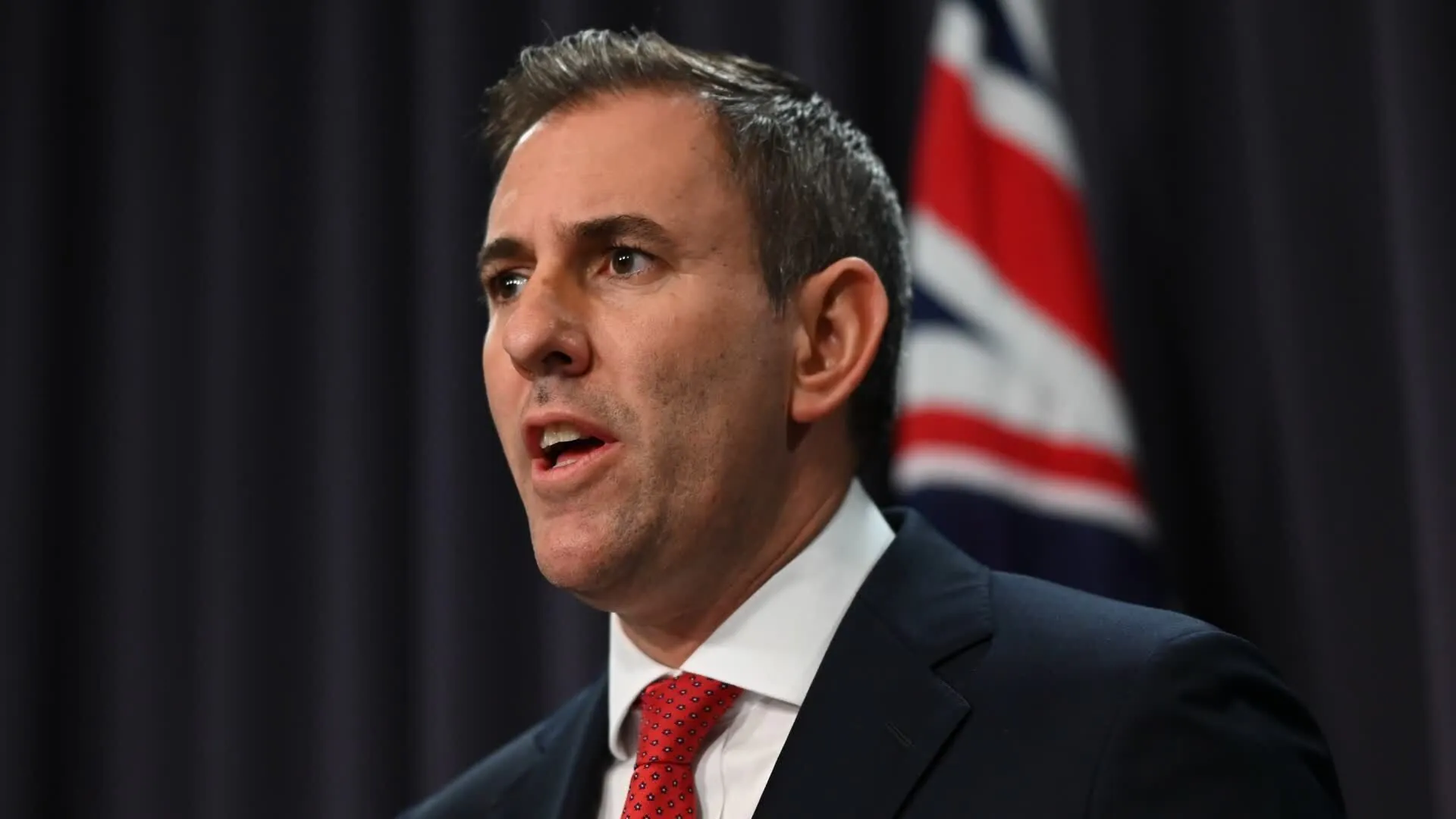
With a proposed $21 billion investment in Australia on the table, the stakes are high. Chalmers insists that creators’ rights will be protected, but critics argue that the government’s track record on AI is patchy at best.
So, what’s driving the government’s AI push? The answer lies in the numbers.




Australia’s productivity decline has spanned two decades, with the most recent federal budget revealing a staggering $10 billion cut in compliance costs. Chalmers claims this will boost GDP by $13 billion, the biggest productivity gain in three decades.
But with housing prices cooling and interest rates in flux, the Treasurer knows that AI is key to unlocking growth and lowering inflation.
Security analysts say that Australia’s unique blend of renewable energy opportunities, government stability, and national security arrangements makes it an attractive destination for investors. But with great power comes great responsibility, and Chalmers is alive to the risks of AI for the labour market.
“The big risk is obviously that we don’t find a way to make this improve people’s standard of living at work,” he warns.
Law enforcement insiders warn that the government’s AI framework must be carefully calibrated to avoid unintended consequences. “We’re dealing with some of the biggest, most fundamental issues, not just in our economy, but in our society more broadly,” Chalmers acknowledges.
“We don’t intend to get it wrong. We intend to get it right.”
As the government navigates the complexities of AI, it’s clear that the stakes are high. With a general election looming and the economy in flux, Chalmers’ $21 billion gamble on AI will be closely watched.
Will it pay off, or will it prove to be a costly mistake? Only time will tell.
Analysis: What This Means for Australia
The government’s AI push has significant implications for national security, law enforcement, and the labour market. As Australia becomes increasingly reliant on AI, the need for robust regulation and oversight will only grow.
Chalmers’ commitment to protecting creators’ rights is welcome, but it’s unclear whether the government’s framework will be enough to mitigate the risks of AI.
Industry observers believe that the government’s AI strategy will have far-reaching consequences for the economy and society. “This is a game-changer for Australia,” says one insider.
“But we need to make sure we get it right. The risks are real, and we can’t afford to get it wrong.”
As the Treasurer navigates the AI landscape, he’ll need to balance competing demands from investors, creators, and workers. With the clock ticking on the intergenerational report, Chalmers knows that the stakes are high.
Will he be able to deliver on his promises, or will Australia’s AI gamble prove to be a costly mistake?