
Pauline Hanson’s Explosive Claim: ‘Migrants Come to Australia Purely for Welfare’ as She Blames End of White Australia Policy for National Chaos
- Pauline Hanson sparks outrage with claims that migrants are ‘ripping off’ the NDIS and coming to Australia ‘purely for the welfare system’
- The One Nation leader blames the end of the White Australia policy for the country’s migration issues, sparking concerns about her views on multiculturalism
- Hanson’s comments come after a meeting with far-right activist Tommy Robinson, who has a history of racism and extremism
- Experts warn that Hanson’s views could fuel division and racism in Australia, with many questioning her suitability to hold public office
The lead: Pauline Hanson has sparked a firestorm of controversy after claiming that migrants are coming to Australia ‘purely for the welfare system’.
In a shocking interview with far-right activist Tommy Robinson, Hanson blamed the end of the White Australia policy for the country’s migration issues, leaving many wondering if she is fit to hold public office.
The core news: Hanson’s comments were made during a podcast appearance with Robinson, who has a history of racism and extremism.
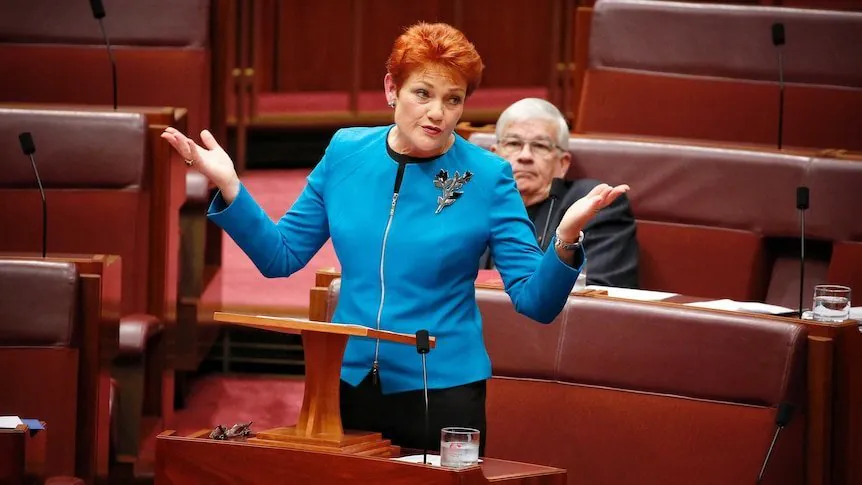
The One Nation leader claimed that migrants from countries like Italy, Germany, and Poland had ‘integrated into the system’ by learning to speak English, but that many others had started to come to Australia ‘purely for the welfare system or to get on our NDIS’.
She also suggested that Muslims in Australia were prominent among people ‘ripping off’ the NDIS, sparking concerns about her views on multiculturalism.
The deep dive: The White Australia policy was a series of laws and administrative practices introduced after 1901 to restrict non-European immigration and preserve Australia as a predominantly white, British society.
The policy was gradually dismantled after the Second World War, while the final discriminatory elements were removed by the Whitlam government in 1973. Hanson’s comments have sparked concerns that she is trying to revive a divisive and racist era in Australian history.
Analysis: What This Means for Australia: Hanson’s comments have serious implications for Australia’s multicultural society.
By blaming the end of the White Australia policy for the country’s migration issues, she is fueling division and racism. Experts warn that her views could lead to increased tensions between different communities and undermine the country’s social cohesion.
Furthermore, her comments about Muslims ‘ripping off’ the NDIS are not only factually incorrect but also perpetuate harmful stereotypes. Expert commentary: Security analysts say that Hanson’s views are a threat to national security, as they could fuel extremism and radicalization.
Law enforcement insiders warn that her comments could lead to increased tensions between different communities, making it harder to police and maintain public safety. Industry observers believe that Hanson’s views could damage Australia’s international reputation and undermine the country’s economic interests.
In conclusion, Pauline Hanson’s comments are a stark reminder of the dangers of divisive and racist rhetoric in Australian politics. By blaming the end of the White Australia policy for the country’s migration issues, she is fueling division and racism.
It is imperative that Australians reject her views and work towards a more inclusive and multicultural society.
The lead: Pauline Hanson has sparked a firestorm of controversy after claiming that migrants are coming to Australia ‘purely for the welfare system’. In a shocking interview with far-right activist Tommy Robinson, Hanson blamed the end of the White Australia policy for the country’s migration issues, leaving many wondering if she is fit to hold public office.
The core news: Hanson’s comments were made during a podcast appearance with Robinson, who has a history of racism and extremism. The One Nation leader claimed that migrants from countries like Italy, Germany, and Poland had ‘integrated into the system’ by learning to speak English, but that many others had started to come to Australia ‘purely for the welfare system or to get on our NDIS’. She also suggested that Muslims in Australia were prominent among people ‘ripping off’ the NDIS, sparking concerns about her views on multiculturalism.
The deep dive: The White Australia policy was a series of laws and administrative practices introduced after 1901 to restrict non-European immigration and preserve Australia as a predominantly white, British society. The policy was gradually dismantled after the Second World War, while the final discriminatory elements were removed by the Whitlam government in 1973. Hanson’s comments have sparked concerns that she is trying to revive a divisive and racist era in Australian history.
Analysis: What This Means for Australia: Hanson’s comments have serious implications for Australia’s multicultural society. By blaming the end of the White Australia policy for the country’s migration issues, she is fueling division and racism. Experts warn that her views could lead to increased tensions between different communities and undermine the country’s social cohesion. Furthermore, her comments about Muslims ‘ripping off’ the NDIS are not only factually incorrect but also perpetuate harmful stereotypes.
Expert commentary: Security analysts say that Hanson’s views are a threat to national security, as they could fuel extremism and radicalization. Law enforcement insiders warn that her comments could lead to increased tensions between different communities, making it harder to police and maintain public safety. Industry observers believe that Hanson’s views could damage Australia’s international reputation and undermine the country’s economic interests.
In conclusion, Pauline Hanson’s comments are a stark reminder of the dangers of divisive and racist rhetoric in Australian politics. By blaming the end of the White Australia policy for the country’s migration issues, she is fueling division and racism. It is imperative that Australians reject her views and work towards a more inclusive and multicultural society.