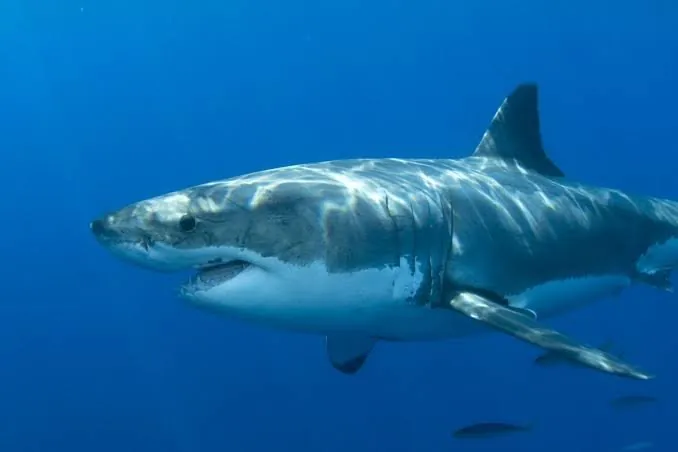
Fears of Great White Shark Sighting Unfounded as Diver Attacked by Broadnose Sevengill Shark in Tasmanian Waters
- A diver has been bitten on the forearm by a shark in waters off Bruny Island, Tasmania, sparking a police warning for beachgoers to remain vigilant.
- The species involved is believed to be a two-metre-long broadnose sevengill shark, a major predator of other sharks, according to Fishing Tasmania.
- The attack occurred while the diver was spearfishing on scuba gear, retrieving a fish on his spear when the shark struck.
- Police are patrolling the area, but have had no further sightings of the shark, and are urging people to follow local safety advice.
The peaceful waters off Bruny Island, Tasmania, turned into a scene of chaos on Saturday morning when a diver was bitten by a shark, sparking a frantic response from emergency services.
The incident has left the diving community on high alert, and police are urging beachgoers to remain vigilant.
According to Tasmania Police, the diver was attacked at around 9:10 am while diving with two other people at a depth of eight metres, approximately 50 metres offshore from Coal Point, Adventure Bay.

The shark, believed to be a two-metre-long broadnose sevengill shark, bit the diver on the forearm, but fortunately, the injuries were not life-threatening.
The diver, who was able to return to shore with the help of his fellow divers, was treated by paramedics at the scene.




An eyewitness, who did not wish to be named, told the ABC that the group of divers were spearfishing on scuba gear when the incident occurred.
“The guy who was bitten had speared a fish and had been bitten by the shark while retrieving the fish on the spear,” he said.
The broadnose sevengill shark is considered a major predator of other shark species, according to Fishing Tasmania. The organization advises that people may hook a broadnose sevengill shark that has been scavenging on other sharks.
While shark attacks are rare in Tasmanian waters, this incident serves as a stark reminder of the dangers that lurk beneath the surface.
Inspector Darren Latham of Tasmania Police warned that while this appears to be an isolated incident, people planning to swim or dive in the area should remain vigilant, follow local safety advice, and be aware of their surroundings.
“We are reminding anyone planning to swim or dive in the area to remain vigilant, follow local safety advice and be aware of their surroundings,” he said.
Security analysts say that shark attacks are often a result of a combination of factors, including the shark’s natural habitat, the presence of bait fish, and human activity.
“Sharks are attracted to areas with abundant food sources, and in this case, the diver’s spearfishing activity may have inadvertently attracted the shark,” said one analyst.
Law enforcement insiders warn that shark attacks can have a significant impact on local communities, particularly in areas that rely heavily on tourism. “Shark attacks can have a devastating impact on local businesses and the community as a whole,” said one insider.
“It’s essential that authorities take proactive measures to prevent such incidents and ensure public safety.”
Analysis: What This Means for Australia
The incident highlights the importance of shark safety and the need for authorities to take proactive measures to prevent such incidents. While shark attacks are rare, they can have a significant impact on local communities and the economy.
The incident also raises questions about the effectiveness of current shark mitigation strategies and the need for more research into shark behavior.
As the summer months approach, Australians are flocking to the beaches, and incidents like this serve as a stark reminder of the importance of shark safety.
With the country’s coastline stretching over 25,000 kilometres, it’s essential that authorities have a robust shark mitigation strategy in place to prevent such incidents and ensure public safety.
Experts believe that education and awareness are key to preventing shark attacks.
“By educating the public on shark safety and the importance of following local safety advice, we can reduce the risk of shark attacks,” said one expert.
“It’s essential that we take a proactive approach to shark safety and work together to prevent such incidents.”
As the investigation into the incident continues, authorities are urging people to remain vigilant and follow local safety advice. With the summer months approaching, it’s essential that Australians take shark safety seriously and take proactive measures to prevent such incidents.
shark attacks Tasmanian tourism Australian Bureau of Statistics