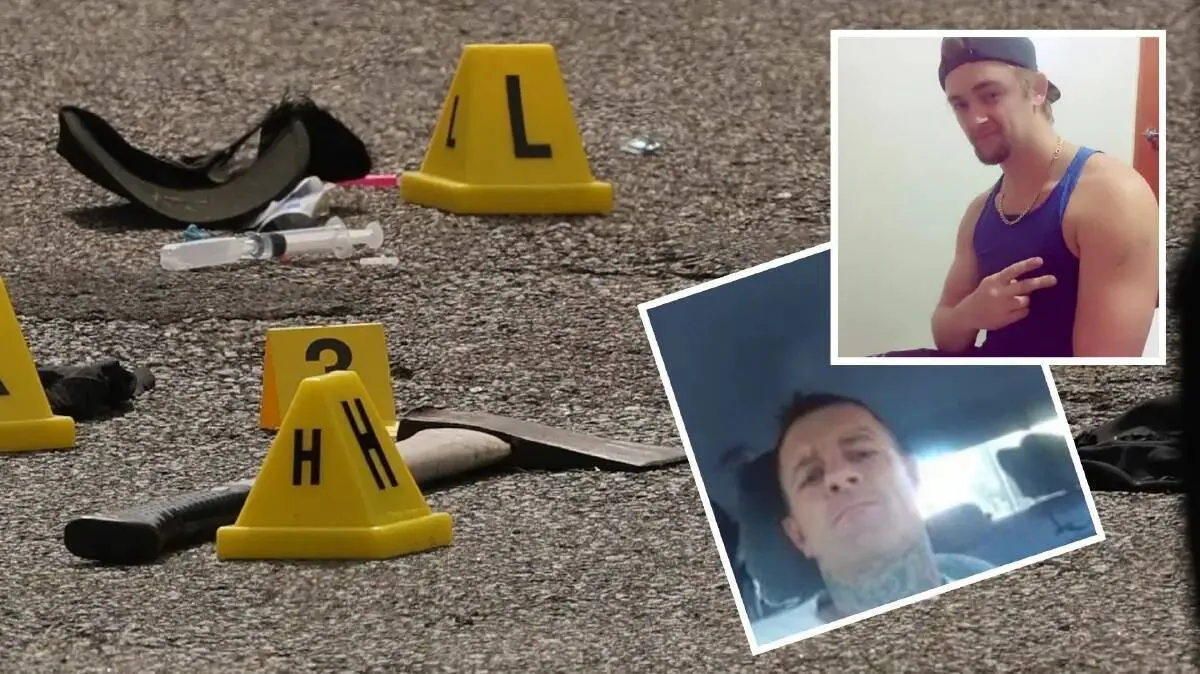
Ash Morgan’s Killer Walks Free: The Shocking Verdict That’s Left a Community Reeling
- Kane Flanders, 32, found not guilty of murder and manslaughter over the death of Ash Morgan in a street brawl
- The court heard Mr Morgan was armed with an axe and threatened Mr Flanders before being struck with a metal scooter
- Mr Flanders’ legal team argued self-defence, claiming he acted reasonably in response to the threat
The streets of Raymond Terrace are still reeling from the shocking verdict that has left a community grappling with the concept of justice.
Kane Flanders, 32, has been found not guilty of murder and manslaughter over the death of Ash Morgan, 38, in a brutal street brawl that was caught on camera.
The acquittal has raised questions about the limits of self-defence and the reliability of witnesses in high-stakes trials.

The court heard that the altercation between Mr Flanders and Mr Morgan began with a heated exchange that escalated into a physical fight. Mr Morgan, armed with an axe, threatened Mr Flanders, who responded by striking him with a Razor-branded scooter.
The impact was fatal, leaving Mr Morgan with severe head injuries that would ultimately prove fatal.




The jury was shown footage of the fight, which was captured on CCTV and a mobile phone, and heard from multiple witnesses who described the events leading up to the tragedy.
At the heart of the trial was the question of self-defence.
Mr Flanders’ legal team argued that their client had acted reasonably in response to the threat posed by Mr Morgan, who was described as “agitated and hysterical” during the altercation.
Defence barrister Stuart Boeving told the jury that Mr Flanders had been left with no choice but to defend himself, and that his actions were justified in the circumstances.
However, the prosecution had argued that Mr Flanders’ actions were not reasonable, and that he had overreacted to the situation. The jury ultimately sided with the defence, delivering a verdict that has left many in the community stunned.
Analysis: What This Means for Australia
The acquittal of Kane Flanders has significant implications for the concept of self-defence in Australia. As security analysts point out, the verdict highlights the complexities of determining what constitutes reasonable force in the face of a perceived threat.
“This case shows that the law is not always black and white,” says one expert.
“The jury’s decision demonstrates that the courts are willing to consider the nuances of each individual case, rather than relying on a blanket approach to self-defence.”
Law enforcement insiders also warn that the verdict may embolden individuals to take the law into their own hands. “This case sends a worrying message that violence can be justified in certain circumstances,” says one source.
“It’s a concern for community safety, and highlights the need for greater education and awareness around conflict resolution and de-escalation techniques.”
As the community comes to terms with the verdict, there are also questions about the reliability of witnesses in high-stakes trials. The defence had argued that two key witnesses, including Mr Morgan’s partner, had given unreliable evidence.
The fact that the jury appeared to accept this argument has raised concerns about the importance of witness credibility in the justice system.
Industry observers believe that the case may lead to a renewed focus on witness preparation and the use of technology in court proceedings. “This case highlights the need for more robust witness protection measures and the use of advanced technology to verify evidence,” says one expert.
As for Mr Flanders, he will remain in custody on other charges for which he has been refused bail. The community may have received a verdict, but the debate about justice and self-defence is far from over.