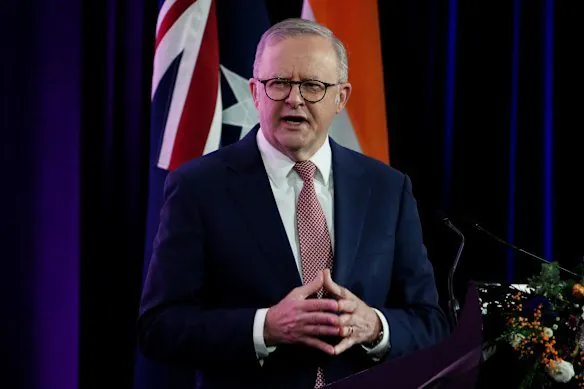
Labor’s National Conference: A Turning Point for Australia’s Future?
- Prime Minister Anthony Albanese announces plans for a Fair Work Court to tackle wage theft and worker exploitation
- Labor delegates unanimously pass motion to remove disincentives for “orderly decarbonisation”, paving the way for a possible diesel fuel rebate reform
- Opposition leader Angus Taylor slams Pauline Hanson’s comments on domestic violence, calling it a “scourge on this nation”
- Labor’s national conference passes motions on artificial intelligence, superannuation, and Makarrata, signaling a shift in the party’s policy direction
The Labor National Conference has begun in Adelaide, and the mood is electric. Delegates are gathered to debate and shape the party’s policy direction, and already, some significant announcements have been made.
Prime Minister Anthony Albanese has announced plans for a Fair Work Court, a lower-cost, faster dispute-resolution mechanism to tackle wage theft and worker exploitation.
This move has been welcomed by many, but employers are likely to be concerned about the potential implications. One of the most significant debates of the day centered around environmental policy.
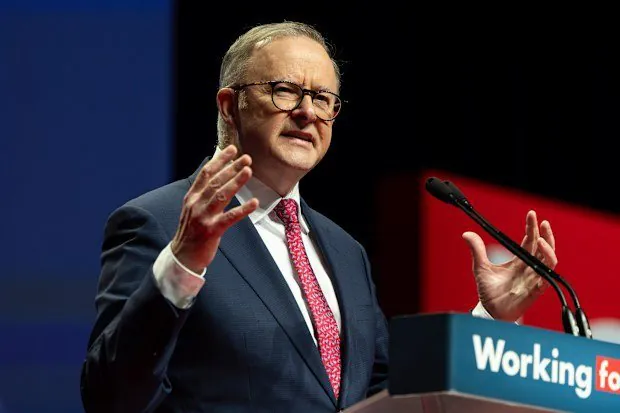
Labor delegates unanimously passed a motion to remove disincentives for “orderly decarbonisation”, which is widely seen as a reference to the fuel tax credit scheme. This scheme refunds some or all of the excise paid on diesel used by eligible businesses and primary producers, reducing their fuel costs.
However, climate advocates argue that it is a disincentive for industries to decarbonize. The amendment has the support of Labor MP for Bennelong, Jerome Laxale.



Meanwhile, opposition leader Angus Taylor has been speaking out against Pauline Hanson’s comments on domestic violence. Hanson described domestic violence as a “two-way street”, which Taylor slammed as “unambiguously unacceptable”.
Taylor called on the government to commit to not allowing an Australian doctor who joined Islamic State back into the country. The conference has also seen a push for a national framework for artificial intelligence and standards for data centre development.
Only two amendments are scheduled for debate today, and it seems that Prime Minister Albanese’s speech on the subject last week has alleviated most of the concerns held by party members.
Analysis: What This Means for AustraliaThe Labor National Conference is a critical moment for the party and the country.
The announcements and debates so far signal a shift in the party’s policy direction, with a focus on worker rights, environmental policy, and national security. The Fair Work Court is a significant move, and the diesel fuel rebate reform could have major implications for industries.
However, it’s also clear that there are still many challenges ahead, particularly in the area of national security.
Security analysts say that the government’s decision to not allow the Australian doctor who joined Islamic State back into the country is a welcome move, but more needs to be done to address the root causes of extremism.
Law enforcement insiders warn that the threat of terrorism is still very real, and the government needs to be proactive in addressing it. The conference has also highlighted the need for a more nuanced discussion around domestic violence.
Experts say that Hanson’s comments were not only hurtful but also misguided.
They argue that domestic violence is a complex issue that requires a comprehensive approach, including education, support services, and a commitment to addressing the root causes of violence.
In terms of economic implications, the diesel fuel rebate reform could have significant consequences for industries.
Business leaders are likely to be concerned about the potential impact on their bottom line, but environmental advocates argue that it’s a necessary step towards a more sustainable future.
Ultimately, the Labor National Conference is a critical moment for the party and the country. The decisions made here will have far-reaching implications for Australia’s future, and it’s essential that all stakeholders are engaged in the conversation.
Education Minister Jason Clare and Health Minister Mark Butler met with university students who will benefit from the expansion of paid prac. The federal government will extend the $338.60 per week payment to 10 allied health university degrees as part of cost-of-living measures.
However, the Commonwealth scheme won’t be extended to medical and optometry students. Labor’s national conference has carried a motion calling on the government to mandate superannuation payments for workers younger than 18.
The requirement is currently only in place for those under 18 who work more than 30 hours a week. Penny Wong has delivered a speech in Manila, where she’s once again taken aim at China’s recent ballistic missile test.
The foreign minister has called on countries across the region to resist coercive behavior by great powers and do more to shape their own future. Australia’s unemployment rate remained at 4.4 per cent in June, in seasonally adjusted terms.
Data released by the ABS shows 76,000 extra people gained employment last month, driven mostly by a rise in part-time employment.
Labor MP Ed Husic has thrown his support behind a gas export tax, saying multinational gas companies have for too long got an “incredibly sweet deal” from Australia.
He argues that the country needs something better, fairer, and with teeth. The federal government will commit to not allowing an Australian doctor who joined Islamic State back into the country.
The opposition leader has urged the government to make a clear commitment on this issue, saying the prime minister is hiding on it. In conclusion, the Labor National Conference is a critical moment for the party and the country.
The decisions made here will have far-reaching implications for Australia’s future, and it’s essential that all stakeholders are engaged in the conversation.
The Labor National Conference has begun in Adelaide, and the mood is electric. Delegates are gathered to debate and shape the party’s policy direction, and already, some significant announcements have been made. Prime Minister Anthony Albanese has announced plans for a Fair Work Court, a lower-cost, faster dispute-resolution mechanism to tackle wage theft and worker exploitation. This move has been welcomed by many, but employers are likely to be concerned about the potential implications.
One of the most significant debates of the day centered around environmental policy. Labor delegates unanimously passed a motion to remove disincentives for “orderly decarbonisation”, which is widely seen as a reference to the fuel tax credit scheme. This scheme refunds some or all of the excise paid on diesel used by eligible businesses and primary producers, reducing their fuel costs. However, climate advocates argue that it is a disincentive for industries to decarbonize. The amendment has the support of Labor MP for Bennelong, Jerome Laxale.
Meanwhile, opposition leader Angus Taylor has been speaking out against Pauline Hanson’s comments on domestic violence. Hanson described domestic violence as a “two-way street”, which Taylor slammed as “unambiguously unacceptable”. Taylor called on the government to commit to not allowing an Australian doctor who joined Islamic State back into the country.
The conference has also seen a push for a national framework for artificial intelligence and standards for data centre development. Only two amendments are scheduled for debate today, and it seems that Prime Minister Albanese’s speech on the subject last week has alleviated most of the concerns held by party members.
The Labor National Conference is a critical moment for the party and the country. The announcements and debates so far signal a shift in the party’s policy direction, with a focus on worker rights, environmental policy, and national security. The Fair Work Court is a significant move, and the diesel fuel rebate reform could have major implications for industries. However, it’s also clear that there are still many challenges ahead, particularly in the area of national security.
Security analysts say that the government’s decision to not allow the Australian doctor who joined Islamic State back into the country is a welcome move, but more needs to be done to address the root causes of extremism. Law enforcement insiders warn that the threat of terrorism is still very real, and the government needs to be proactive in addressing it.
The conference has also highlighted the need for a more nuanced discussion around domestic violence. Experts say that Hanson’s comments were not only hurtful but also misguided. They argue that domestic violence is a complex issue that requires a comprehensive approach, including education, support services, and a commitment to addressing the root causes of violence.
In terms of economic implications, the diesel fuel rebate reform could have significant consequences for industries. Business leaders are likely to be concerned about the potential impact on their bottom line, but environmental advocates argue that it’s a necessary step towards a more sustainable future.
Ultimately, the Labor National Conference is a critical moment for the party and the country. The decisions made here will have far-reaching implications for Australia’s future, and it’s essential that all stakeholders are engaged in the conversation.
Education Minister Jason Clare and Health Minister Mark Butler met with university students who will benefit from the expansion of paid prac. The federal government will extend the $338.60 per week payment to 10 allied health university degrees as part of cost-of-living measures. However, the Commonwealth scheme won’t be extended to medical and optometry students.
Labor’s national conference has carried a motion calling on the government to mandate superannuation payments for workers younger than 18. The requirement is currently only in place for those under 18 who work more than 30 hours a week.
Penny Wong has delivered a speech in Manila, where she’s once again taken aim at China’s recent ballistic missile test. The foreign minister has called on countries across the region to resist coercive behavior by great powers and do more to shape their own future.
Australia’s unemployment rate remained at 4.4 per cent in June, in seasonally adjusted terms. Data released by the ABS shows 76,000 extra people gained employment last month, driven mostly by a rise in part-time employment.
Labor MP Ed Husic has thrown his support behind a gas export tax, saying multinational gas companies have for too long got an “incredibly sweet deal” from Australia. He argues that the country needs something better, fairer, and with teeth.
The federal government will commit to not allowing an Australian doctor who joined Islamic State back into the country. The opposition leader has urged the government to make a clear commitment on this issue, saying the prime minister is hiding on it.
In conclusion, the Labor National Conference is a critical moment for the party and the country. The decisions made here will have far-reaching implications for Australia’s future, and it’s essential that all stakeholders are engaged in the conversation.