
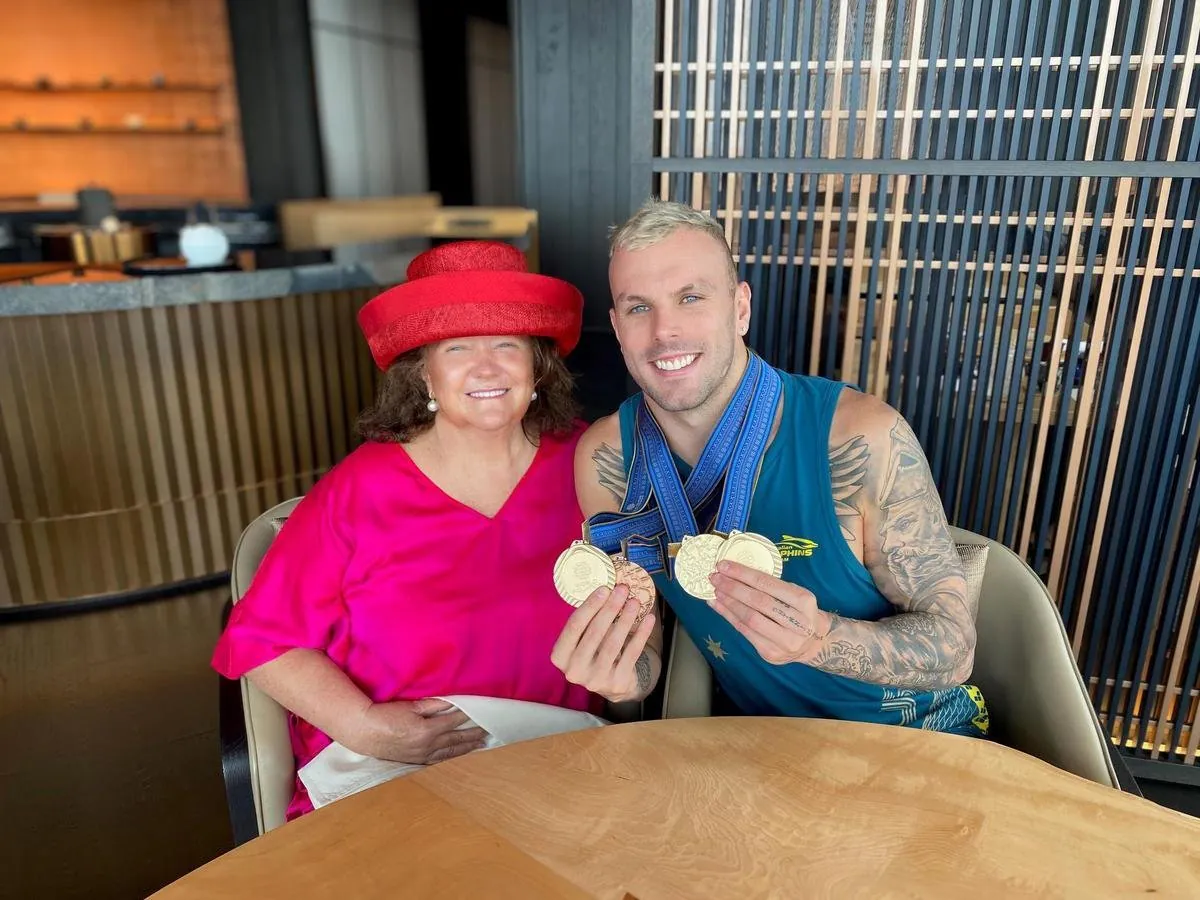
Exclusive: Gina Rinehart’s Secret Bonuses for Aussie Swimmers Spark Controversy Amid Commonwealth Games
- Australia’s top swimmers are set to pocket up to $20,000 for winning gold at the Commonwealth Games, thanks to a secret bonus scheme backed by billionaire Gina Rinehart.
- But the incentives have sparked controversy, with some athletes reportedly told not to thank Rinehart if they win a medal.
- The bonuses come as many athletes in other sports lament a lack of financial support, despite Commonwealth Games Australia providing a $5,000 grant to every member of the Glasgow team.
- Freestyle king Kyle Chalmers has welcomed the potential windfalls, saying they give athletes “a lot more purpose and reason” to compete.
The Commonwealth Games swimming events are set to kick off tonight, and Australian athletes are primed to make a splash. But behind the scenes, a secret bonus scheme backed by billionaire Gina Rinehart has sparked controversy among athletes and officials.
According to reports, Rinehart’s bonuses will see individual swimmers pocket $20,000 for a gold medal, $15,000 for silver, and $10,000 for bronze.
Relay team members will also be rewarded with $7,500 per person for a world record, $5,000 for a gold medal, $3,750 for silver, and $2,500 for bronze.
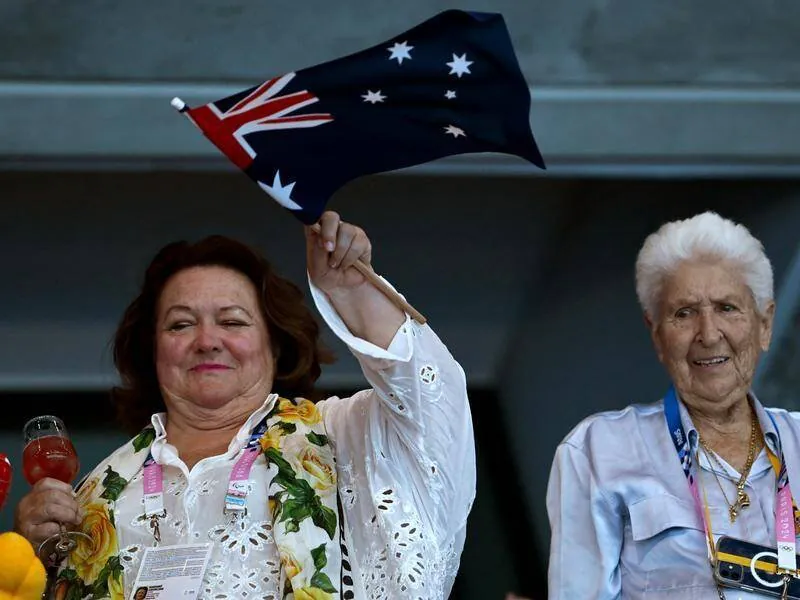
The bonuses are on top of annual payments Rinehart makes to many of Australia’s top-tier swimmers. But the incentives have sparked controversy, with some athletes reportedly told not to thank Rinehart if they win a medal.
A report in the Sydney Morning Herald on Friday said swimmers had been instructed not to acknowledge Rinehart’s contribution when talking to the media after swimming.
The bonuses come as many athletes in other sports lament a lack of financial support. Despite Commonwealth Games Australia providing a $5,000 grant to every member of the Glasgow team, many athletes struggle to make ends meet.
Freestyle king Kyle Chalmers, a seven-time Commonwealth Games gold medallist, welcomed the potential windfalls, saying they give athletes “a lot more purpose and reason” to compete.
“I’m super grateful to have the support of CGA to get us here, but to be able to have some medal incentive, it gives us a lot more purpose and reason,” Chalmers said ahead of the opening ceremony.
“Otherwise, you get a medal and the uniform… so [I’m] very grateful to have supporters.”
But not everyone is happy with the arrangement.
Commonwealth Games Australia chef de mission Petria Thomas distanced the organisation from Rinehart’s bonuses, saying it was a “separate arrangement” and not something the CGA was involved in.
The bonuses have also raised questions about the disparity in funding between sports. While Australian swimmers are set to reap the rewards of Rinehart’s generosity, athletes in other sports are struggling to make ends meet.
Chalmers acknowledged the challenge, saying it was “very challenging” for many swimmers to juggle arduous training schedules with work and study.
Analysis: What This Means for AustraliaThe controversy surrounding Rinehart’s bonuses highlights the complex issues surrounding athlete funding in Australia.
While the bonuses may provide a welcome boost to Australian swimmers, they also raise questions about the fairness and equity of the funding model. Security analysts say the lack of transparency around Rinehart’s bonuses is concerning, particularly given the reported instruction to athletes not to thank her in public.
“This kind of behaviour can create a culture of secrecy and mistrust,” one analyst said. Law enforcement insiders warn that the disparity in funding between sports can also have broader implications for athlete welfare and performance.
“When athletes are struggling to make ends meet, it can affect their mental and physical health, which in turn can impact their performance on the field,” an insider said.
Industry observers believe the controversy surrounding Rinehart’s bonuses highlights the need for a more sustainable and equitable funding model for Australian athletes. “We need to find a way to support our athletes that is fair, transparent, and sustainable,” one observer said.
As the Commonwealth Games get underway, the controversy surrounding Rinehart’s bonuses is likely to continue to simmer in the background.
But one thing is certain: Australian athletes will be watching closely to see how the bonuses play out, and what they might mean for their own futures in the sport.
The Commonwealth Games swimming events are set to kick off tonight, and Australian athletes are primed to make a splash. But behind the scenes, a secret bonus scheme backed by billionaire Gina Rinehart has sparked controversy among athletes and officials.
According to reports, Rinehart’s bonuses will see individual swimmers pocket $20,000 for a gold medal, $15,000 for silver, and $10,000 for bronze. Relay team members will also be rewarded with $7,500 per person for a world record, $5,000 for a gold medal, $3,750 for silver, and $2,500 for bronze. The bonuses are on top of annual payments Rinehart makes to many of Australia’s top-tier swimmers.
But the incentives have sparked controversy, with some athletes reportedly told not to thank Rinehart if they win a medal. A report in the Sydney Morning Herald on Friday said swimmers had been instructed not to acknowledge Rinehart’s contribution when talking to the media after swimming.
The bonuses come as many athletes in other sports lament a lack of financial support. Despite Commonwealth Games Australia providing a $5,000 grant to every member of the Glasgow team, many athletes struggle to make ends meet. Freestyle king Kyle Chalmers, a seven-time Commonwealth Games gold medallist, welcomed the potential windfalls, saying they give athletes “a lot more purpose and reason” to compete.
“I’m super grateful to have the support of CGA to get us here, but to be able to have some medal incentive, it gives us a lot more purpose and reason,” Chalmers said ahead of the opening ceremony. “Otherwise, you get a medal and the uniform… so [I’m] very grateful to have supporters.”
But not everyone is happy with the arrangement. Commonwealth Games Australia chef de mission Petria Thomas distanced the organisation from Rinehart’s bonuses, saying it was a “separate arrangement” and not something the CGA was involved in.
The bonuses have also raised questions about the disparity in funding between sports. While Australian swimmers are set to reap the rewards of Rinehart’s generosity, athletes in other sports are struggling to make ends meet. Chalmers acknowledged the challenge, saying it was “very challenging” for many swimmers to juggle arduous training schedules with work and study.
The controversy surrounding Rinehart’s bonuses highlights the complex issues surrounding athlete funding in Australia. While the bonuses may provide a welcome boost to Australian swimmers, they also raise questions about the fairness and equity of the funding model.
Security analysts say the lack of transparency around Rinehart’s bonuses is concerning, particularly given the reported instruction to athletes not to thank her in public. “This kind of behaviour can create a culture of secrecy and mistrust,” one analyst said.
Law enforcement insiders warn that the disparity in funding between sports can also have broader implications for athlete welfare and performance. “When athletes are struggling to make ends meet, it can affect their mental and physical health, which in turn can impact their performance on the field,” an insider said.
Industry observers believe the controversy surrounding Rinehart’s bonuses highlights the need for a more sustainable and equitable funding model for Australian athletes. “We need to find a way to support our athletes that is fair, transparent, and sustainable,” one observer said.
As the Commonwealth Games get underway, the controversy surrounding Rinehart’s bonuses is likely to continue to simmer in the background. But one thing is certain: Australian athletes will be watching closely to see how the bonuses play out, and what they might mean for their own futures in the sport.