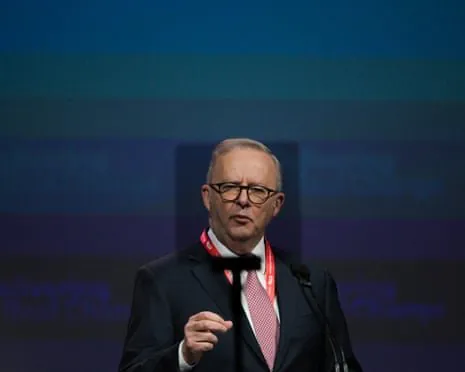
Albanese Divided: Prime Minister Distances Himself from Labor’s Voluntary Assisted Dying Telehealth Policy Amid Fears of ‘Misuse’
- Labor’s national conference adopts policy to expand voluntary assisted dying access to telehealth, despite Prime Minister Anthony Albanese’s reservations
- Albanese fears telehealth consultations could lead to “misuse” or undermine the system, despite supporting voluntary euthanasia
- Labor’s policy platform also includes commitments to artificial intelligence taskforce, workers’ rights, and tougher gambling reforms
- Prime Minister defends Labor’s tightly managed national conference as evidence of a more united party, despite criticism of internal deals and lack of debate
Anthony Albanese has found himself at odds with his own party over a contentious policy to allow Australians to access voluntary assisted dying through telehealth. The Prime Minister has distanced himself from Labor’s newly adopted policy, citing concerns that it could lead to “misuse” or undermine the system.
The policy, which was adopted at Labor’s 50th national conference, would allow people to consult with doctors via phone or video about voluntary assisted dying, a move that has sparked warnings about unintended consequences for vulnerable Australians.
Albanese, who supports voluntary euthanasia, told ABC’s Insiders that he was “yet to be convinced” that telehealth consultations were the right move. “I think it is important that people have the right to die … with dignity,” he said.

“But it’s also important that protections be placed around it.” The Prime Minister’s reservations come despite the policy being a key commitment in Labor’s platform, which also includes a pledge to always allow a conscience vote on the issue.
The ban on telehealth consultations for voluntary assisted dying has been in place since 2017, with doctors facing fines of up to $300,000 for contravening the law.



Advocates have argued that the restriction unfairly impacts Australians in remote and regional areas, who may not have access to face-to-face consultations. However, Albanese’s concerns about the potential for “misuse” have sparked fears that the policy may not be implemented anytime soon.
Analysis: What This Means for Australia
The debate over voluntary assisted dying has significant implications for Australia’s healthcare system and the rights of terminally ill patients.
The ban on telehealth consultations has been in place for several years, and the move to lift it has sparked a heated debate about the potential consequences.
While advocates argue that it would provide greater access to end-of-life care, critics warn that it could lead to unintended consequences, such as coercion or exploitation of vulnerable patients.
Security analysts say that the policy could also have national security implications, particularly in terms of protecting vulnerable Australians from potential exploitation. “The potential for misuse is a significant concern,” said one analyst.
“We need to ensure that any policy changes are carefully considered and that adequate safeguards are in place to protect vulnerable Australians.”
Law enforcement insiders also warn that the policy could lead to increased pressure on doctors and healthcare professionals, who may be forced to navigate complex and sensitive issues.
“We need to ensure that healthcare professionals are adequately trained and supported to deal with these complex issues,” said one insider.
The debate over voluntary assisted dying is set to continue, with Albanese’s reservations sparking a wider discussion about the policy’s implications for Australia. As the Prime Minister navigates the complex issue, he will need to balance the competing demands of his party, healthcare professionals, and the broader community.
Expert Commentary
“The move to lift the ban on telehealth consultations for voluntary assisted dying is a complex issue that requires careful consideration,” said Dr. Karen Hitchcock, a palliative care specialist.
“While it’s essential to provide greater access to end-of-life care, we need to ensure that adequate safeguards are in place to protect vulnerable patients.”
“The potential for misuse is a significant concern, and we need to ensure that any policy changes are carefully considered,” said Dr. Brian Owler, a medical ethicist.
“We need to balance the competing demands of patient autonomy and the need to protect vulnerable Australians.”