Car Makers in the Crosshairs: Australia’s Data Protection Crisis Exposed as Toyota and Hyundai Face Investigation
- The Australian car industry is under fire as the government launches a probe into Toyota and Hyundai’s data collection practices, sparking concerns over customer privacy and national security.
- Experts warn that the country’s outdated laws and lack of clear regulations are leaving drivers vulnerable to hacking and data misuse.
- The investigation has sparked calls for a simple, enforceable framework to protect consumer data and prevent sensitive information from being transmitted overseas.
- As the electric vehicle market booms, industry insiders say policymakers must act now to prevent a data protection disaster.
The Australian car industry is facing a crisis of trust as the government launches a formal investigation into Toyota and Hyundai’s data collection practices.
The probe, led by the Office of the Australian Information Commissioner (OAIC), has sent shockwaves through the industry, with experts warning that the country’s outdated laws and lack of clear regulations are leaving drivers vulnerable to hacking and data misuse.
At the heart of the investigation is the question of what data is being collected, how it’s being used, and whether customers are aware of the risks.
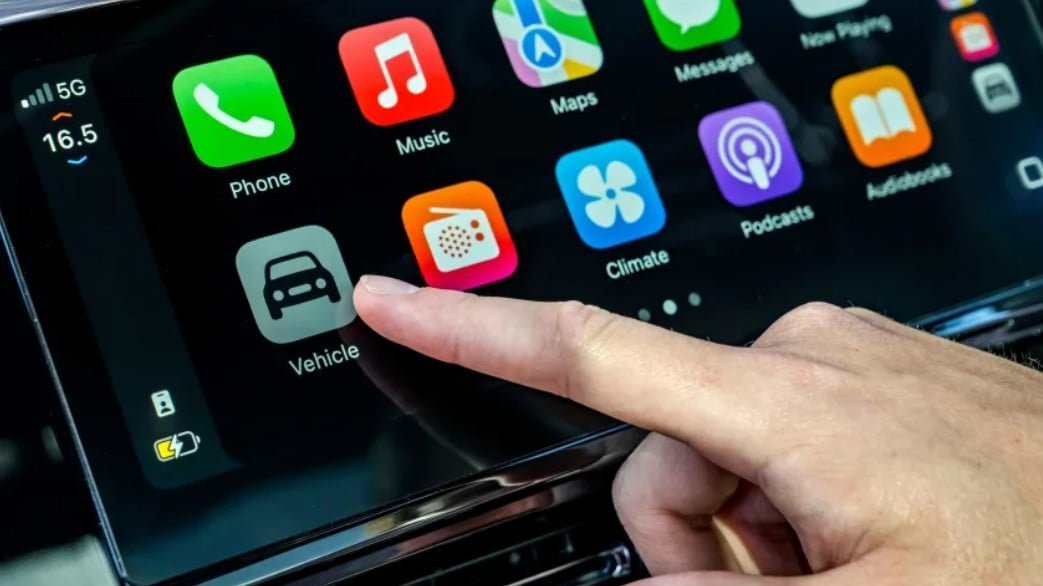
The OAIC has confirmed that Toyota and Hyundai are “subject to a formal investigation examining exactly what data is collected, how it is used, and whether customers are aware of their policies”.
A spokesman for the OAIC said the investigation “has a broader application for the Australian community”, sparking concerns that the issue goes far beyond just two car manufacturers.




Respected car industry analyst Mike Sinclair has warned that the industry is wrestling with a legal framework that is “difficult to navigate”. “Australia has no vehicle-specific law governing connected car data,” he said.
“It has a privacy statute written in 1988, a voluntary industry code that is not enforceable, a right-to-repair scheme that excludes the data stream in question, and three reform processes running in three portfolios with no one holding carriage.” The lack of clear regulations has created a Wild West scenario, where car makers are left to police themselves and customers are left in the dark.
Australian Electric Vehicle Association president James Pickering has called on authorities to introduce a simple framework that car makers and their customers can understand.
“Instead of instigating fear and distrust in the connected vehicles we drive, policymakers have the power to make effective changes to protect drivers and consumer choice,” he said.
The AEVA is pushing for increased hacking protection and local processing of data, which should also default to “off” unless customers opt in.
Analysis: What This Means for Australia
The investigation has significant implications for Australia’s national security and data protection landscape. As the electric vehicle market continues to boom, the risk of data breaches and hacking grows.
Experts warn that Chinese cars, in particular, pose a risk due to China’s national intelligence law, which allows agencies to direct data extraction and use.
Alastair McGibbons, former head of the Australian Cyber Security Centre, said “Toyota talking about where the data is located is a really early way of starting to say [we need an Australian standard for data protection]”.
Security analysts say that the lack of clear regulations is a ticking time bomb, waiting to unleash a data protection disaster on Australian consumers. “The longer we wait to act, the greater the risk,” said one insider.
“We need a simple, enforceable framework that protects consumer data and prevents sensitive information from being transmitted overseas.” Law enforcement insiders warn that the current lack of regulation is also making it difficult to investigate and prosecute data breaches.
Industry observers believe that policymakers must act now to prevent a data protection crisis. “The government needs to take a proactive approach to regulating the industry,” said one expert.
“We need clear guidelines and penalties for non-compliance.
Anything less is just kicking the can down the road.” As the investigation into Toyota and Hyundai continues, one thing is clear: the Australian car industry is at a crossroads, and the fate of consumer data hangs in the balance.