

Exposed: Adelaide Man’s Twisted Online Campaign of Hate Against Australian Federal Police
- A 40-year-old Adelaide man has been charged with using a carriage service to menace, harass or cause offence after allegedly posting threatening messages online targeting the Australian Federal Police.
- The shocking investigation was sparked after the AFP received information about the alleged messages, which were posted on social media earlier this year.
- A mobile phone seized during a search warrant at the man’s Adelaide home allegedly contained the incriminating messages, which were posted over several months from social media accounts linked to the man.
- The man has been granted police bail and is expected to face court in September, but experts warn of the growing threat of online harassment against law enforcement agencies.
The Australian Federal Police have charged a 40-year-old Adelaide man with using a carriage service to menace, harass or cause offence, after he allegedly unleashed a twisted online campaign of hate against the agency.
The shocking investigation was sparked after the AFP received information about the alleged messages, which were posted on social media earlier this year.
According to police, the alleged posts were directed at the AFP and were deemed to be threatening and harassing in nature.
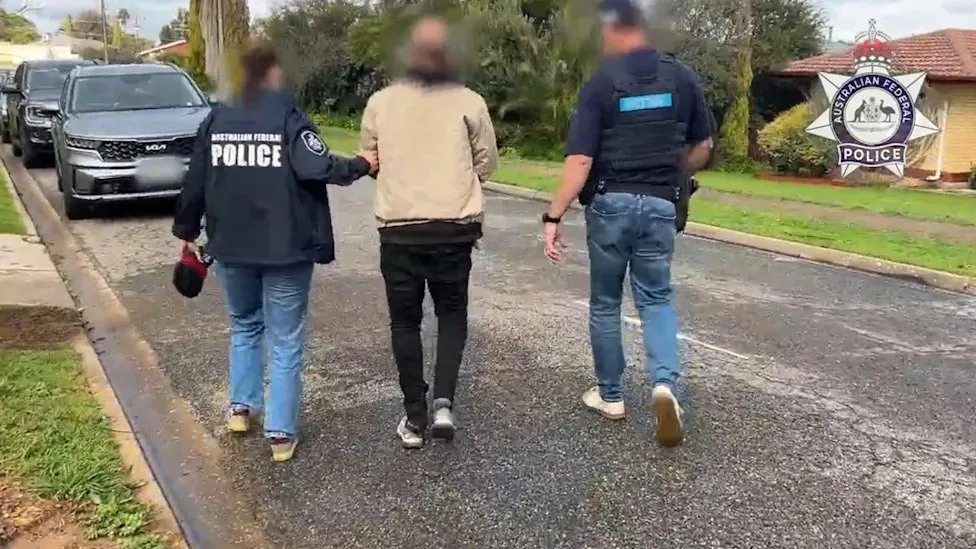
The AFP’s cybercrime unit sprang into action, linking the alleged posts to the 40-year-old man and executing a search warrant at his Adelaide home on Thursday.
A mobile phone was found and seized during the search, which police alleged contained the incriminating messages.
The man’s alleged online campaign of hate is just the latest example of the growing threat of online harassment against law enforcement agencies. In recent years, there has been a surge in reports of police officers and other emergency services personnel being targeted by online trolls and harassers.
Experts warn that this type of behaviour can have serious consequences, not only for the individuals targeted but also for the broader community.
So, what drives individuals to engage in this type of behaviour? According to security analysts, the anonymity of the internet can embolden people to say and do things they would never dream of doing in person.
“The internet can be a breeding ground for hate and harassment,” one expert said. “When people feel anonymous, they can feel emboldened to say and do things that they would never say or do in person.”
Analysis: What This Means for Australia
The charging of the Adelaide man is a timely reminder of the need for law enforcement agencies to take online harassment seriously.
As the internet continues to play an increasingly large role in our lives, the need for effective laws and regulations to govern online behaviour has never been more pressing.
The Australian government has taken steps to address the issue, including the introduction of new laws aimed at cracking down on online harassment and abuse.
But more needs to be done. According to law enforcement insiders, the current laws are not sufficient to deal with the scale and complexity of the problem.
“We need to see a more comprehensive approach to addressing online harassment,” one insider said. “This includes better education and awareness programs, as well as more effective laws and regulations to govern online behaviour.”
As the Adelaide man prepares to face court, the case serves as a reminder of the importance of taking online harassment seriously.
The charges he faces are a serious reminder that online behaviour has real-world consequences, and that those who engage in hate and harassment will be held to account.