

Australia’s Debt Bomb: How Labor’s Spending Spree Has Left Taxpayers Facing a $1 Trillion Tab
- Taxpayers are now forking out a whopping $30 billion a year in interest payments – more than the annual cost of childcare, unemployment benefits, or the Australian Defence Force
- The nation’s debt has skyrocketed to a staggering $1 trillion, with each Australian now owing roughly $36,000
- The opposition has slammed the government’s lack of a plan to rein in the debt, warning it will take 100 years to pay off at the current rate
- Experts warn that the debt crisis will have far-reaching consequences for the nation’s economic security and the next generation of Australians
The news that Australia’s debt has blown out to a staggering $1 trillion is a stark reminder of the nation’s precarious financial situation.
The interest payments alone are now approaching $30 billion a year, a sum that eclipses the annual cost of childcare, unemployment benefits, or the Australian Defence Force.
The milestone reflects roughly $36,000 of debt per person, driven by pandemic-era spending and rising costs of government services.
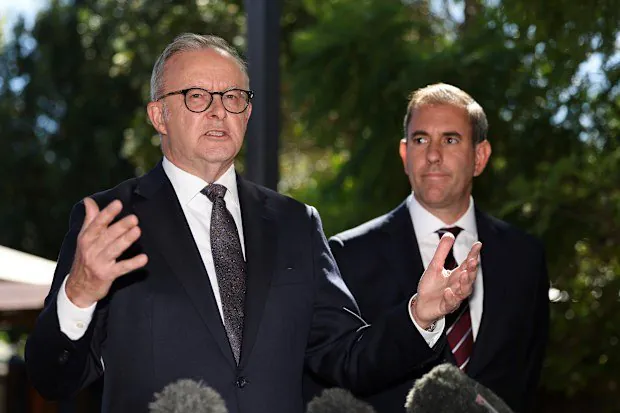
The federal opposition has seized on the news, accusing Labor of having no plan to rein in the debt. Deputy Opposition Leader Jane Hume claimed that it would take 100 years to clear Labor’s debt even if $20,000 was paid off every hour.
“Labor doesn’t have a plan to pay down debt; they only have a plan for more deficits and more debt, and that’s going to cost the next generation,” she said.
Hume argued that the Coalition has a genuine plan to pay down debt through its proposed future generations fund, which would use sovereign wealth generated from Australia’s resources to reduce the amount owed.
She also pointed out that the Labor government has received $400 billion in windfall revenue gains over the past four years, but has spent it all.
“Their budget says that they are expecting deficits in every year for the next decade. Now, people at home know that if you’ve racked up a debt, you don’t keep spending on your credit card.
But that’s exactly what Labor are doing.”
Health Minister Mark Butler defended the government’s record, acknowledging the trillion-dollar milestone was significant but noting Australia’s debt remained relatively low compared with countries including Germany, the United States, the United Kingdom, and Japan.
“This is a big headline number; there’s no question about it. We also need to put it in international context… our debt is much lower than other countries we compare ourselves to,” Butler said.
Butler argued that the government has made progress in reducing the debt, pointing out that it has been brought down by almost $200 billion against the projections inherited from the former Coalition government.
He also claimed that the government has delivered $60 billion of savings in this year’s budget, with more than three-quarters of that coming from his portfolio.
However, he conceded that more needed to be done to strengthen the budget.
Analysis: What This Means for Australia
The nation’s debt crisis has serious implications for Australia’s economic security and the next generation of Australians. Security analysts say that the debt will limit the government’s ability to respond to future economic shocks and make it harder to fund essential services.
Law enforcement insiders warn that the debt will also impact the nation’s ability to invest in critical infrastructure and national security initiatives.
Industry observers believe that the debt crisis will have far-reaching consequences for the nation’s economy, including higher interest rates, reduced government spending, and a decrease in the value of the Australian dollar.
They also warn that the debt will be a major issue in the next federal election, with voters demanding action from politicians to address the crisis.
As the nation grapples with the implications of its debt crisis, one thing is clear: the government must take decisive action to rein in the debt and ensure the long-term economic security of Australia.
The opposition’s proposal for a future generations fund is one possible solution, but it remains to be seen whether the government will take up the challenge and implement meaningful reforms.
For now, the nation remains on a collision course with a debt bomb that threatens to blow a hole in the budget and leave taxpayers facing a massive tab.
As the government navigates the treacherous waters of economic uncertainty, one thing is certain: the debt crisis will be a major issue for years to come.