
EXPOSED: The Hidden Dangers of Drinking During Pregnancy – Thousands of Aussie Women Unaware of the Risks as Alcohol Industry Fails to Implement Warning Labels
- A staggering 1 in 4 women still drink during pregnancy, despite warnings from health experts
- Thousands of alcohol products remain on shelves without mandatory pregnancy warning labels, putting unborn babies at risk
- Experts demand tougher rules and clearer warnings to prevent lifelong brain damage and fetal alcohol spectrum disorder (FASD)
- Heartbreaking stories of mothers who drank during pregnancy, unaware of the devastating consequences for their children
Amanda, a Gold Coast mother, was four months pregnant before she discovered she was expecting a baby. Despite her doctor’s reassurances that “a few drinks here and there won’t hurt”, she unknowingly put her unborn child at risk. Her daughter was later diagnosed with FASD, a lifelong neurodevelopmental condition caused by drinking during pregnancy.
“This is lifelong brain damage,” Amanda warned. “If cigarettes can have warning labels on every single packet, then it has to be on all alcohol products as well.” Her story is not an isolated one, with thousands of Australian women still drinking during pregnancy, often unaware of the risks.
According to the National Organisation for Fetal Alcohol Spectrum Disorders (NOFASD), there is no safe amount of alcohol to drink during pregnancy, and no safe time to drink it. Yet, more than 20% of the 12,500 products analysed in 2023 and 2024 still lacked the mandatory pregnancy warning label, a requirement introduced by the federal government in 2020.
Simone Pettigrew, head of health promotion at The George Institute for Global Health, slammed the alcohol industry for its lack of action. “Alcohol producers are just not particularly motivated to implement these warnings,” she said. “It makes actual assessment of compliance really difficult.”
Geraldine Kirkcaldie, a Brisbane resident who drank through an entire pregnancy due to a crippling alcohol addiction, now sober for 17 years, echoed Amanda’s concerns. “You might be inclined to gamble and say, ‘A couple of drinks will be OK’, or, ‘I only drank once,'” she said. “But if that warning is right in front of that person — and the person’s partner and family — it’s not left to doubt, and it’s not left to gambling.”
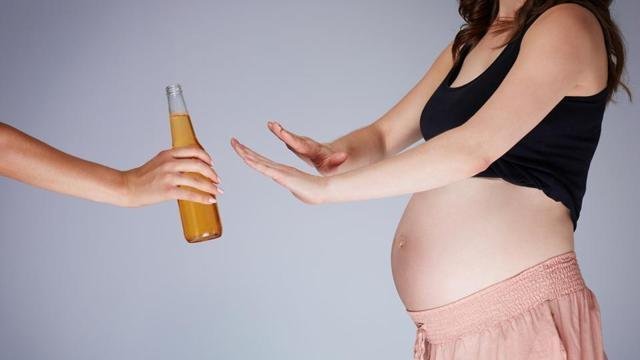
Alcohol Beverages Australia’s Alistair Coe defended the industry, stating that older stock could remain on shelves indefinitely without the label. However, Professor Pettigrew argued that this “loophole” allowed companies to delay rolling out the warnings, and that pregnancy warning stickers should be applied to all unlabelled products to ensure compliance.
As the debate rages on, one thing is clear: the risks of drinking during pregnancy are real, and the consequences can be devastating. It’s time for the alcohol industry to take responsibility and implement clear, visible warnings on all products to protect the health and wellbeing of unborn babies.