
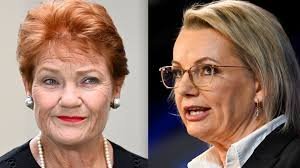
Pauline Hanson on Track to Become Australia’s Most Unlikely Prime Minister as One Nation Surges in Polls
- One Nation leader Pauline Hanson has overtaken Opposition leader Sussan Ley as preferred prime minister in new polling.
- Hanson’s popularity surge could see her become the first senator to become prime minister since 1968.
- If an election were called today, Labor would win comfortably, but One Nation would likely become the largest opposition party.
The Australian political landscape is on the cusp of a seismic shift, with Pauline Hanson’s One Nation party surging in popularity and the Liberal Party in disarray. According to new polling, Hanson has surpassed Opposition leader Sussan Ley as the preferred prime minister, with 26 per cent of the vote compared to Ley’s 16 per cent. Meanwhile, Labor Prime Minister Anthony Albanese remains in the lead with 39 per cent.
The poll of 1,933 Australians, conducted from January 13 to 21, reveals a significant shift in voter sentiment, with One Nation’s primary vote increasing by 1 per cent to 24 per cent, while the former Coalition’s vote slipped backwards by 2 per cent to 21 per cent. The Greens secured 13 per cent of the primary vote, while Other parties garnered 12 per cent.
If the results were replicated at an election, Labor would win comfortably, but One Nation would likely become the largest opposition party, according to data research site DemosAU head of research George Hasanakos. This would be an untraditional, although not impossible, transition for Hanson, who would become the first senator to become prime minister since John Gorton in 1968.
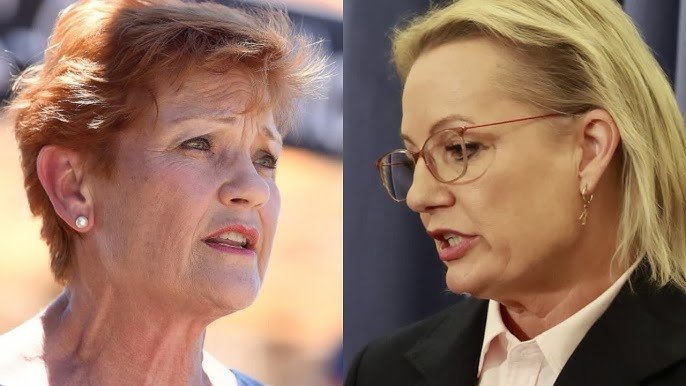
The rise of One Nation has significant implications for Australian politics, particularly in Queensland, where the party has traditionally performed well. The Nationals’ decision to split from the Coalition last week has further fragmented the right side of politics, creating an opportunity for One Nation to capitalize on discontent among conservative voters.
Analysis: What This Means for Australia
The surge in support for One Nation has significant implications for national security, law enforcement, and the economy. As a party that has long been critical of immigration and multiculturalism, a One Nation government would likely take a hardline stance on border control and national security. This could lead to a shift in Australia’s approach to counter-terrorism and its relationships with key allies.
Security analysts say that a One Nation government would likely prioritize domestic security over international cooperation, potentially leading to a more insular approach to foreign policy. This could have significant implications for Australia’s role in regional security agreements and its relationships with key trading partners.
Industry observers believe that a One Nation government would also take a more populist approach to economic policy, potentially leading to increased protectionism and a shift away from free trade agreements. This could have significant implications for Australian businesses and the broader economy.
As the Australian political landscape continues to shift, one thing is clear: Pauline Hanson’s One Nation party is on the rise, and its influence will be felt for years to come.