

Breakthrough in 60-Year-Old Cold Case: New Leads in the Baffling Disappearance of the Beaumont Children
- A new investigation into the 1966 disappearance of the Beaumont children from Glenelg Beach has uncovered shocking new evidence, including a possible child’s bone and a hidden network around the family.
- A convicted sex offender, Bill Cotton, has been placed at the Beaumont home on the day of the disappearance, and is linked to a convicted paedophile suspected in another cold case.
- A journalist and citizen investigators have found new witnesses, evidence, and a possible motive for the crime, but police are still searching for concrete proof.
The disappearance of the Beaumont children – Jane, 9, Arnna, 7, and Grant, 4 – from Adelaide’s Glenelg Beach on January 26, 1966, is one of Australia’s most enduring mysteries. For 60 years, the case has baffled detectives, journalists, and the public, with countless theories and suspects emerging, but no convictions. Now, a new investigation has uncovered shocking new evidence that could finally bring closure to the family and the community.
Bryan Littlely, a journalist and true-crime investigator, has spent over a decade delving into the case, and claims to have found new witnesses, evidence, and a possible motive for the crime. At the centre of his investigation is Bill Cotton, a convicted sex offender who was jailed in 1953 for gross indecency and blackmail involving a teenage boy at a Glenelg toilet block. Littlely alleges that Cotton was having an affair with Nancy Beaumont, the children’s mother, and was at the family home on the day of the disappearance.
Littlely also claims to have linked Cotton to Stan Hart, a convicted paedophile suspected in the 1973 Adelaide Oval abduction of Joanne Ratcliffe, 11, and Kirste Gordon, 4. In March 2025, Littlely and volunteers excavated a disused site on Hart’s old property in Yatina, South Australia, and discovered a fragment of juvenile-sized pelvic bone embedded with a sliver of green glass. The bone, dubbed the “Yatina glass bone,” is now with South Australia Police, who are working to determine if it is human and if a DNA sample can be obtained.
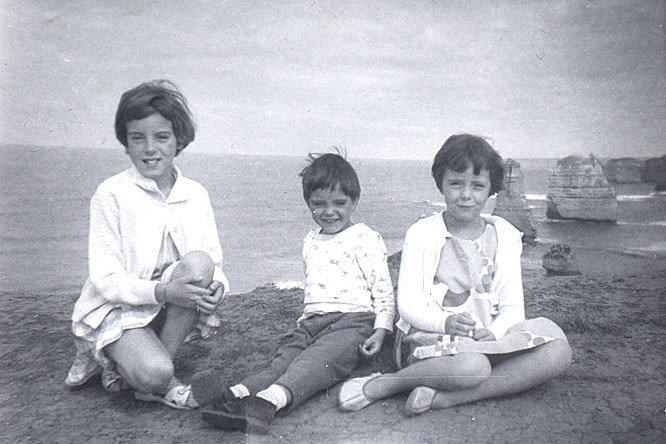
Analysis: What This Means for Australia
The Beaumont case is not just a tragic event, but a window into the dark underbelly of Australian society in the 1960s. The fact that the children were able to cross paths with paedophiles and sex offenders in their own community raises serious questions about the failures of law enforcement and social services at the time. The case also highlights the need for greater vigilance and awareness about the dangers of child exploitation and abuse.
Security analysts say that the case demonstrates the importance of community-led investigations and the power of citizen journalism in holding authorities accountable. The fact that Littlely and his team have been able to uncover new evidence and witnesses after 60 years is a testament to the importance of persistence and dedication in seeking truth and justice.
As the investigation continues, one thing is clear: the Beaumont case is a stark reminder of the need for greater transparency and accountability in our justice system. It is a call to action for all Australians to demand more from our authorities and to work together to create a safer, more just society for all.
Expert commentary: “The Beaumont case is a classic example of how a lack of transparency and accountability can lead to a culture of silence and impunity. It’s time for our authorities to take responsibility and work with the community to bring justice to the victims and their families.”
A reward of $1 million is on offer for information leading to a conviction in the Beaumont case. Anyone with information is urged to contact Crime Stoppers on 1800 333 000. Information can be provided anonymously.