
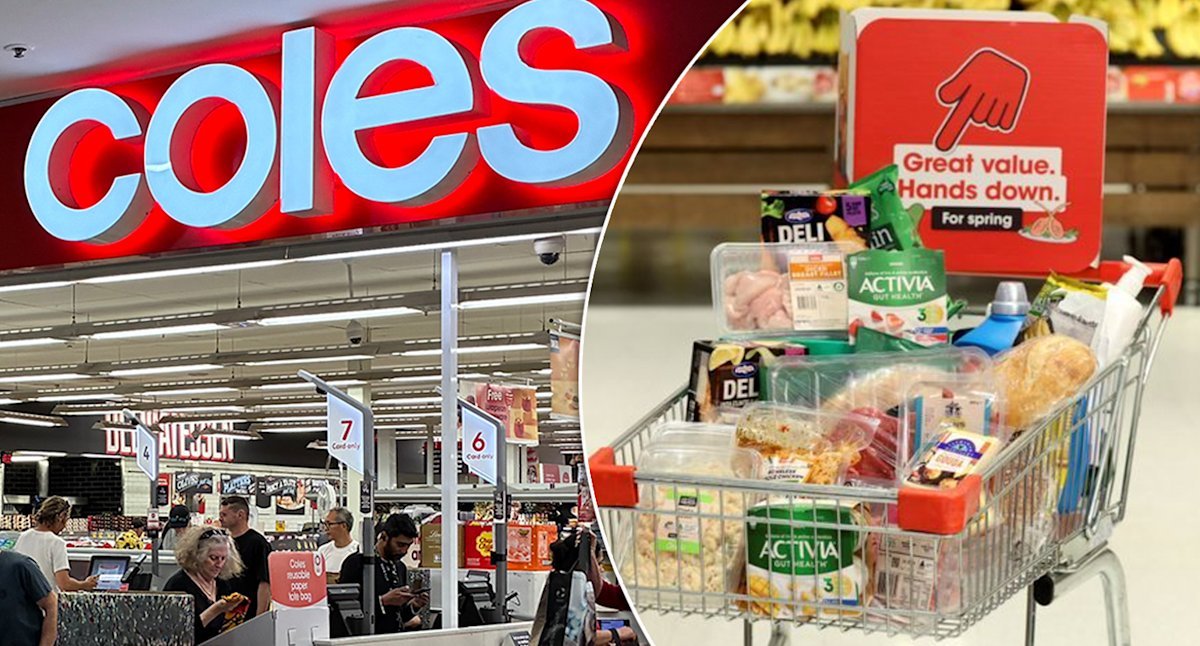
Supermarket Scandal: Coles Accused of ‘Planned’ Campaign to Mislead Customers on Price Discounts
- Coles faces bombshell Federal Court case over ‘illusory’ discounts on 245 household products
- ACCC alleges Coles jacked up prices before discounting them to a price that was actually more than, or the same as, the regular price
- Consumer watchdog claims Coles’ “Down Down” promotions were “utterly misleading” and designed to deceive customers
- Case has major implications for Australian consumers, with concerns over price gouging and misleading advertising
The Australian Competition and Consumer Commission (ACCC) has launched a scathing attack on supermarket giant Coles, accusing the company of a “planned” campaign to mislead customers on price discounts. The ACCC’s allegations were revealed in the opening remarks of a landmark Federal Court case, which could have far-reaching implications for Australian consumers.
The ACCC claims that Coles engaged in a systematic effort to deceive customers by artificially inflating prices before discounting them, making it appear as though customers were getting a better deal than they actually were. The watchdog alleges that this practice was part of Coles’ “Down Down” promotions, which have been in place since 2010.
The court case centers around the pricing of 245 common household products, with the ACCC arguing that Coles’ discounts were “illusory” and designed to mislead customers. The ACCC’s legal counsel, Garry Rich, claimed that Coles’ customers had been repeatedly deceived by the supermarket, with the pricing not being “fair dinkum”.
Evidence presented in court showed that Coles had internal compliance documents that revealed key changes to policy guardrails on the discount program before the allegedly misleading conduct. The ACCC alleges that all but one of the promotions would have been prohibited under the earlier policy, and that the price changes had more to do with commercial considerations than providing genuine discounts to customers.
The case has sparked intense debate over the meaning of price and what a reasonable shopper would have thought. Justice Michael O’Bryan pushed back on important elements of the ACCC case, arguing that the first, or “regular” price, in the case of the dog food at $4 was “irrelevant”. He said circumstances had changed due to an increase in costs and it was not a reasonable comparison with the “Down, Down” price of $4.50.
However, the ACCC’s allegations have sparked widespread concern over the practices of supermarkets and their impact on Australian consumers. Consumer group CHOICE welcomed the Federal Court action, saying that supermarket promotions had a “significant influence” on how people made purchasing decisions. “During a cost-of-living crisis, retailers should be doing all they can to ensure clear, transparent pricing — not obscuring rising prices with confusing promotions,” director of campaigns and communications Andy Kelly said.
Analysis: What This Means for Australia
This case has major implications for Australian consumers, with concerns over price gouging and misleading advertising at the forefront. If the ACCC’s allegations are proven, it could lead to a major shake-up in the way supermarkets operate in Australia. It also raises questions about the role of the ACCC in protecting consumers and ensuring that companies are held accountable for their actions.
Security analysts say that this case highlights the need for greater transparency and accountability in the supermarket industry. “This case is a wake-up call for retailers who may be engaging in similar practices,” said one expert. “It’s time for companies to be held accountable for their actions and to ensure that they are putting the interests of consumers first.”
Law enforcement insiders warn that this case could have far-reaching implications for the way companies operate in Australia. “This case shows that companies cannot get away with misleading advertising and price gouging,” said one insider. “It’s time for companies to take responsibility for their actions and to ensure that they are complying with the law.”
The outcome of this case will be closely watched by consumers and industry experts alike. If the ACCC’s allegations are proven, it could lead to a major shift in the way supermarkets operate in Australia, and could have significant implications for the country’s economy and consumers.