
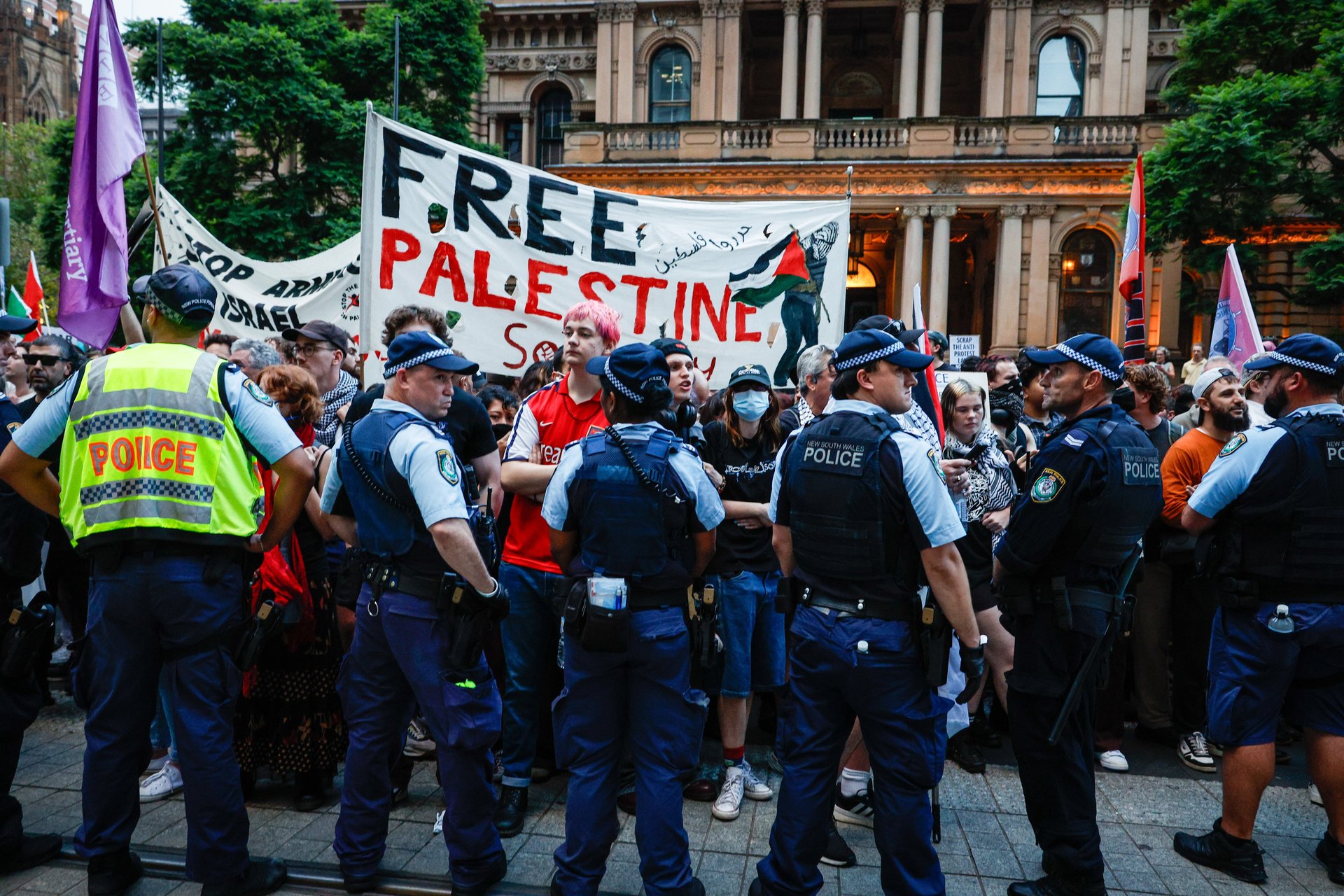
Freedom of Assembly Restored in NSW: But at What Cost to Public Safety?
- NSW police commissioner lifts temporary restrictions on public assembly and protests, sparking concerns about community safety
- Move comes just two months after the Bondi terror attack, which left the state on high alert
- Police watchdog announces investigation into police actions during recent protest, citing “significant number of complaints”
In a move that has sparked both relief and concern, the NSW police commissioner, Mal Lanyon, has announced the lifting of temporary restrictions on public assembly and protests in the state. The restrictions, which were implemented in the wake of the Bondi terror attack, had been in place for two months. While the move is seen as a victory for free speech and assembly, it raises questions about the potential risks to public safety.
The restrictions were initially put in place to prevent further violence and maintain order in the wake of the terror attack, which left the state reeling. Under the laws passed by the NSW Government on December 24, Commissioner Lanyon was granted the power to temporarily declare public areas “restricted” from assemblies. However, with the restrictions now lifted, public assemblies are no longer restricted in any area of Sydney or the Eastern Suburbs.
While Commissioner Lanyon has urged the community to “consider and respect others” and exercise calm, the move has raised concerns about the potential for further violence and unrest. The police watchdog, the Law Enforcement Conduct Commission (LECC), has already announced an investigation into police actions during a recent protest against the visit of Israeli President Isaac Herzog to Sydney, citing a “significant number of complaints” over the operation.
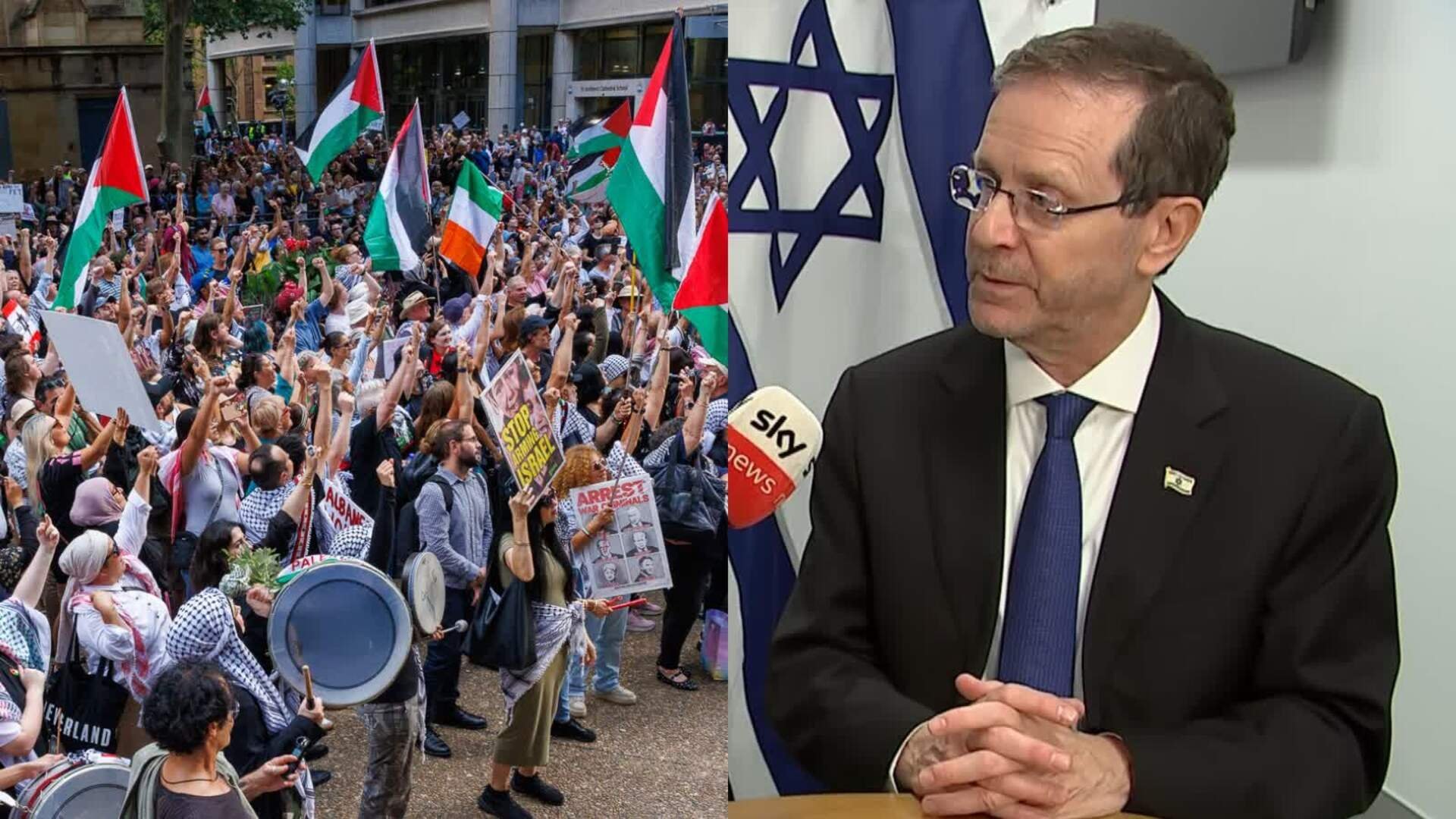
The LECC will investigate the lawfulness and appropriateness of the conduct of the NSW Police Force, as well as individual officers, during the protest. Commissioner Lanyon has defended the police operation, saying he had “significant concerns about the safety of the community and managing the visit of a head of state.” However, he has also acknowledged that the restrictions had been “felt by different parts of society in different ways.”
Analysis: What This Means for Australia
The lifting of the restrictions on public assembly and protests in NSW raises significant questions about the balance between individual freedoms and public safety. While the move is seen as a victory for free speech and assembly, it also highlights the ongoing challenges facing law enforcement in maintaining order and preventing violence. As Australia continues to grapple with the threat of terrorism and social unrest, the ability of authorities to balance individual rights with community safety will be crucial.
Security analysts say that the lifting of the restrictions may lead to an increase in protests and demonstrations, which could put additional pressure on law enforcement resources. “The police will need to be vigilant in monitoring and managing these events to prevent any potential flashpoints,” said one expert. “It’s a delicate balance between allowing people to exercise their rights and keeping the community safe.”
Industry observers believe that the move may also have implications for the economy, as increased protests and demonstrations could lead to disruptions to business and trade. “The last thing we need is for protests to get out of hand and cause chaos on our streets,” said one business leader. “We need to find a way to balance individual rights with the need to maintain order and stability.”
As the state of NSW navigates this new landscape, one thing is clear: the ongoing debate about individual freedoms and public safety will continue to be a pressing concern for authorities and the community alike.