
Australia’s $4.5 Trillion Superannuation Pot Held Hostage by Iran War Crisis: Expert Warns of Prolonged Oil Price Pain
- Australia’s massive superannuation fund is at risk due to the escalating Iran war and oil supply crisis, with experts warning of prolonged high oil prices.
- A global energy expert predicts oil prices will remain high until 2027, affecting Australia’s economy and superannuation returns.
- The Iran war has disrupted global oil markets, with a “less than 1 per cent chance” of a swift resolution, according to a former White House press secretary.
Australia’s $4.5 trillion superannuation pot, one of the world’s largest pension capital pots, is facing a significant threat due to the escalating Iran war and oil supply crisis. At a recent Australian super investment conference in New York, experts warned that the conflict is unlikely to resolve quickly, leading to prolonged high oil prices that will impact Australia’s economy and superannuation returns.
Dr. Karen Young, a senior research scholar at the Centre on Global Energy Policy, Columbia University, described the situation as an “absolute crisis” that won’t be resolved quickly. She predicted that oil prices could remain high until 2027, with a moderate scenario seeing prices at around $US80 a barrel by the end of 2026.
The Iran war has disrupted global oil markets, with the Strait of Hormuz, through which 20 per cent of the world’s oil exports flow, being a critical transit point. Dr. Young warned that if Iran attacks pipelines from the United Arab Emirates and Saudi Arabia, it could lead to a “more permanent escalated price level.”

Analysis: What This Means for Australia
The implications of this crisis are far-reaching for Australia. With $820 billion of its superannuation fund invested in the US, and predictions that this could increase to $2.2 trillion by 2035, the country’s economic and diplomatic ties with the US are at stake. The Australian government views its superannuation pot as a key financial and diplomatic tool to curry favor with the White House. However, the ongoing conflict and oil supply crisis threaten to undermine this strategy.

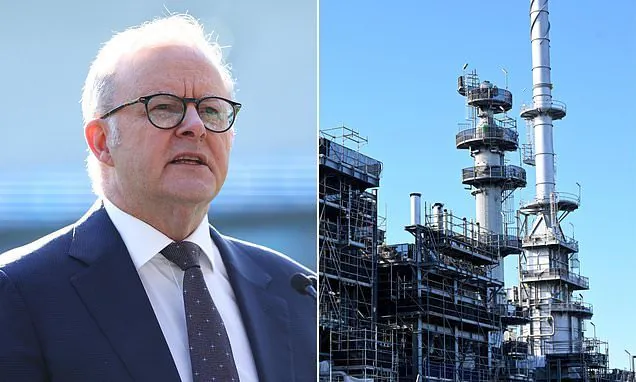


Security analysts warn that the Iran war has already led to a “significant disruption” to global oil and gas markets, and the situation is unlikely to resolve quickly. This will have a ripple effect on Australia’s economy, with higher oil prices impacting inflation, employment, and consumer spending.
Law enforcement insiders also warn that the conflict has exposed vulnerabilities in global infrastructure, with data centres being a key investment area. The recent attacks on data centres in Iran have highlighted the need for the US and its allies to protect not just obvious targets, like military bases and oilfields, but also data centres.
Industry observers believe that the Australian government must reassess its strategy and diversify its investments to mitigate the risks associated with the Iran war and oil supply crisis. This could involve exploring alternative energy sources and investing in infrastructure that is less vulnerable to global disruptions.