Australia’s Secret War: Government Refuses to Confirm SAS Deployment to Middle East Amid Fears of Escalating Conflict
- The federal government is keeping the Australian people in the dark about a potential deployment of elite SAS troops to the war-torn Middle East.
- A new report claims around 90 SAS soldiers were sent to the region two weeks ago, sparking fears of a deeper involvement in the conflict.
- Defence Minister Richard Marles has refused to confirm or deny the report, citing the need to protect the secrecy of special forces operations.
- The move has raised concerns about the government’s transparency and the potential risks to Australian lives in the region.
The Australian government is facing intense scrutiny over its handling of a potential deployment of the country’s most elite fighting soldiers to the Middle East.
A new report suggests that around 90 SAS troops were sent to the region roughly two weeks ago, likely to Al Minhad Air Base in the United Arab Emirates.
However, Defence Minister Richard Marles has refused to confirm or deny the report, sticking to a long-held tradition of keeping the movements of the SAS top secret.
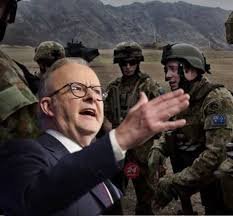
The SAS troops are reportedly on standby in case Australians in the region need help evacuating, sparking fears of a deeper involvement in the conflict. The government’s decision to keep the deployment under wraps has raised concerns about transparency and the potential risks to Australian lives in the region.
Former SAS leader Bob Hunter pointed to a long history of protecting Australians caught in conflict zones, saying: “That’s what they do. They prepare for it all the time.”


The Greens argue that the latest deployment claims reveal the government’s thinking, suggesting that they expect things to get worse and are not telling the Australian public what they’re intending to do.
Senator David Shoebridge said: “One, they expect things to get worse.
And two, they’re not telling the Australian public what they’re intending to do.” The government has pushed back on suggestions of broader involvement, with Marles stating: “We’re not having boots on the ground in Iran.
This is not a conflict that we are involved in.”
However, the government’s distinction about being purely defensive could become harder to maintain. Reports in recent days suggest that the United Arab Emirates is now willing to join military action in the region.
Already, Australia’s prized early warning aircraft, the E-7 Wedgetail, with around 85 personnel, is helping defend the UAE. Shoebridge said: “It’s always been providing critical targeting information into the US Central Command.
This is clearly partly Australia’s war.”
Analysis: What This Means for Australia
The potential deployment of SAS troops to the Middle East has significant implications for Australia’s national security and foreign policy. The government’s decision to keep the deployment under wraps has raised concerns about transparency and the potential risks to Australian lives in the region.
The move also highlights the complex and often secretive nature of special forces operations, which can make it difficult for the public to understand the government’s actions.
Security analysts say that the deployment of SAS troops to the Middle East is likely a precautionary measure, given the escalating tensions in the region.
However, the government’s refusal to confirm or deny the report has raised concerns about the potential risks to Australian lives and the country’s involvement in the conflict.
Law enforcement insiders warn that the deployment could also have implications for Australia’s domestic security, particularly if the conflict were to escalate.
Industry observers believe that the government’s decision to keep the deployment under wraps is likely driven by a desire to protect the secrecy of special forces operations.
However, this approach can also create uncertainty and mistrust among the public, particularly if the deployment is later confirmed. The government must balance the need to protect national security with the need to be transparent and accountable to the Australian people.
The situation in the Middle East is complex and rapidly evolving, and the government’s actions must be carefully considered to ensure that they are in the best interests of Australia and its citizens.
The public has a right to know what is happening in their name, and the government must be transparent and accountable in its decision-making.