Sydney School Defies Backlash to Rename Sports Houses After Indigenous Icons, But Will It Spark a Wider Culture War?
- A Sydney primary school has sparked outrage by renaming its sports houses after Indigenous figures, despite fierce opposition from parents and the community.
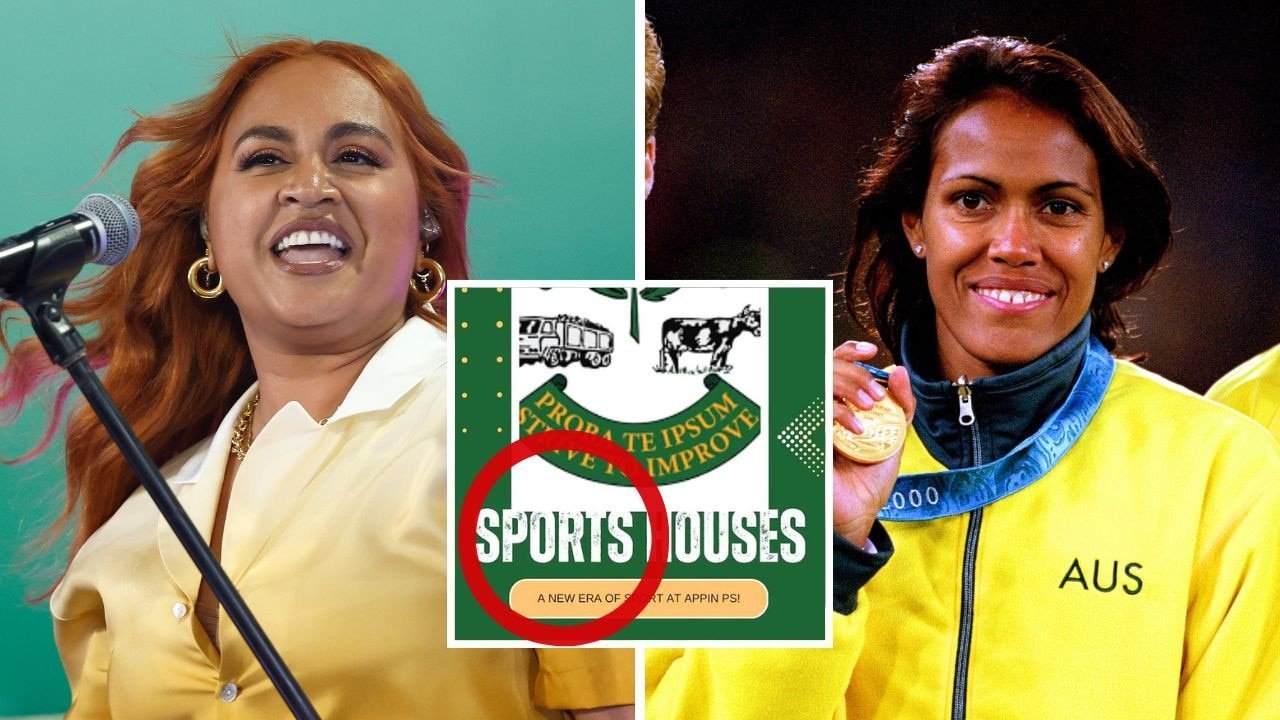
- The decision to honour Cathy Freeman, Eddie Mabo, Adam Goodes, and Jessica Mauboy has been met with accusations of being “woke” and “ridiculous”.
- The school’s move has ignited a heated debate about cultural identity, inclusivity, and the role of education in shaping Australia’s values.
- As the controversy unfolds, experts warn that it may be a symptom of a deeper cultural divide that could have far-reaching implications for the nation.
The sports houses at Appin Public School, located about 75km from Sydney’s CBD, had been named after historical figures like Lachlan Macquarie and William Hovell. However, the school has decided to rename them after four famous Indigenous personalities, sparking a firestorm of criticism and outrage.
The decision was first announced on March 20, and it wasn’t long before the backlash began. Parents and community members took to social media to express their discontent, labelling the move “woke” and “ridiculous”.
The school’s Facebook post announcing the change was inundated with comments, before the school eventually disabled comments on the post.
One parent wrote to 2GB’s Ben Fordham, expressing their concern about the decision. “They’ve told us our local school has recently changed its longstanding sports house names…
and they’ve been changed to new names including Eddie Mabo, Cathy Freeman, Adam Goodes, and Jessica Mauboy,” the email read. “The criteria for eligibility were Indigenous Australians who had made a significant difference.


It’s a typical education department woke decision. My kids can’t remember the names of the new houses, let alone what the people are famous for.”
Despite the backlash, the school’s principal, Cheny Collins, initially appeared to be reconsidering the decision. In a follow-up email to families, Collins stated that the school had decided to “pause and ensure the process is inclusive”.
However, it has since emerged that the school has decided to proceed with the name change anyway, with the decision announced in the school newsletter sent out at the start of the school holidays.
The news has sparked a heated debate about cultural identity and inclusivity.
While some have praised the school’s decision as a positive step towards reconciliation, others have condemned it as an attempt to erase Australia’s history and cultural heritage.
Journalist Scott Bailey took aim at critics, writing on X, “Imagine actually kicking up a stink about names of houses at your kid’s school based on race.
How utterly embarrassing for the parents.”
However, others have argued that the decision is a symptom of a deeper cultural divide that could have far-reaching implications for the nation. “This is not just about a school’s decision to rename its sports houses,” said one expert.
“It’s about the values and principles that we want to instil in our children. It’s about the kind of Australia we want to build for the future.”
Analysis: What This Means for Australia
The controversy surrounding Appin Public School’s decision to rename its sports houses after Indigenous figures has sparked a heated debate about cultural identity, inclusivity, and the role of education in shaping Australia’s values.
While some have praised the decision as a positive step towards reconciliation, others have condemned it as an attempt to erase Australia’s history and cultural heritage.
However, experts warn that the controversy may be a symptom of a deeper cultural divide that could have far-reaching implications for the nation. “This is not just about a school’s decision to rename its sports houses,” said one expert.
“It’s about the values and principles that we want to instil in our children. It’s about the kind of Australia we want to build for the future.”
As the debate continues, it is clear that the issue goes far beyond a simple decision about sports houses. It is about the kind of Australia we want to build, and the values and principles that we want to instil in our children.
It is about the role of education in shaping our cultural identity, and the kind of society we want to create.
Security analysts say that the controversy highlights the need for a more nuanced and inclusive approach to cultural identity and education. “We need to move beyond the simplistic and divisive rhetoric that has characterized this debate,” said one analyst.
“We need to have a more nuanced and inclusive conversation about the kind of Australia we want to build, and the values and principles that we want to instil in our children.”
Law enforcement insiders warn that the controversy could have implications for community cohesion and social stability. “When we see controversies like this, it can create divisions and tensions within the community,” said one insider.
“It’s essential that we address these issues in a constructive and respectful manner, and that we work towards building a more inclusive and cohesive society.”
Industry observers believe that the controversy highlights the need for greater cultural sensitivity and awareness in education. “We need to recognize the importance of cultural identity and heritage in shaping our values and principles,” said one observer.
“We need to ensure that our education system is inclusive and respectful of all cultures, and that it prepares our children for a diverse and rapidly changing world.”