
Community Service for Pedophile Teacher Who Preyed on ’15-Year-Old Boy’ Online – But Was It Justice?
- A former elite Sydney private school teacher has been spared jail for sending explicit messages to a minor, sparking outrage over the leniency of the sentence
- William Roberto Gulson, 28, was found guilty of procuring a child for unlawful sexual activity, but will serve his time in the community instead of behind bars
- The case has raised serious concerns about the effectiveness of the justice system in protecting children from online predators
- Gulson’s shocking online exchange with a decoy ‘minor’ was just the tip of the iceberg, with evidence revealing a disturbing pattern of behavior
The sentencing of William Roberto Gulson, a former English and drama teacher at Sydney’s elite Knox Grammar School, has left many questioning the justice system’s ability to protect children from online predators.
Gulson, 28, was found guilty of procuring a child for unlawful sexual activity after engaging in a 90-minute online exchange with someone he believed was a 15-year-old boy on LGBTQI dating app Grindr.
In reality, the ‘minor’ was a 14-year-old who, along with another teenager, was running a fake profile to catch pedophiles.
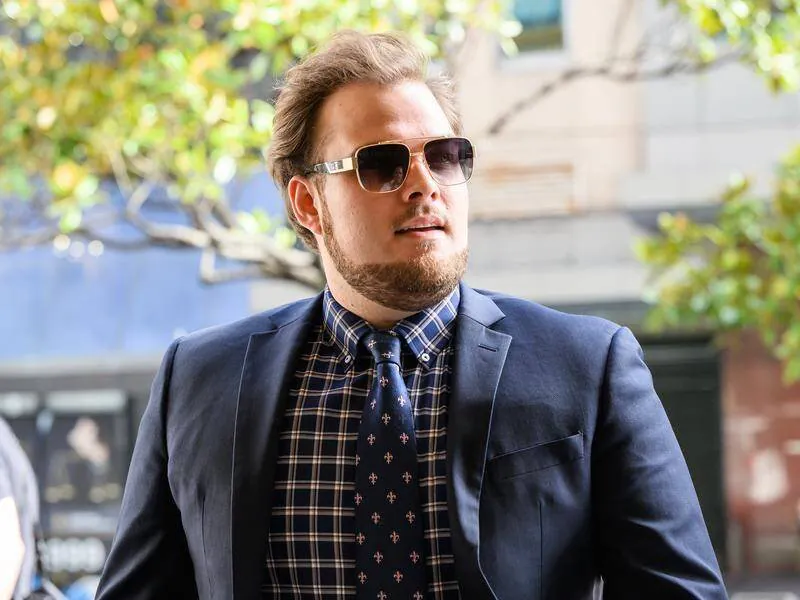
Gulson’s sentence – a three-year community bond and 400 hours of community service – has been met with outrage, with many arguing that it is too lenient given the severity of his crimes.
The former teacher will also appear on the NSW child protection register for eight years and is barred from online gaming platforms that allow communication with children.



But is this enough to prevent others like Gulson from targeting vulnerable minors online? The case against Gulson was damning.
Evidence revealed that he had engaged in a deliberate and explicit conversation with the ‘minor’, discussing kissing, licking, and meeting up for sex. He even asked the teenager to sneak out of their parents’ house so they could find a “quiet place” for their encounter.
The conversation was so explicit that Judge Hugh Donnelly described it as “extremely explicit” and revealing of Gulson’s “sexual interest in children”.
But what’s equally disturbing is Gulson’s attempt to downplay his actions, claiming that the conversation was just a “lapse in judgment” while he was multitasking and marking papers.
Judge Donnelly was having none of it, slamming Gulson’s account as “improbable, implausible and inconsistent with the logical course of events”.
The judge also pointed out that Gulson’s messages to the ‘minor’ were “very deliberate in terms of expression and keenness”, revealing a clear intent to groom and exploit.
Gulson’s online activities went far beyond this one conversation.
Evidence revealed that he had browsed for child abuse material and rape scenes, lodging 166 searches of pornography sites showing teenage boys during a three-month period in 2024.
This disturbing pattern of behavior raises serious concerns about the effectiveness of the justice system in identifying and preventing online child exploitation.
Analysis: What This Means for AustraliaThe case of William Roberto Gulson highlights the need for a more robust approach to tackling online child exploitation in Australia.
While the justice system has taken steps to address the issue, the leniency of Gulson’s sentence raises questions about the effectiveness of these measures.
As a society, we need to be more vigilant in protecting our children from online predators and ensuring that those who exploit them are held accountable.
Security analysts say that the case highlights the importance of monitoring online activity and identifying potential predators before they can harm children. “This case shows that online grooming is a real and present danger, and we need to be proactive in preventing it,” said one analyst.
“We need to educate parents and children about the risks of online exploitation and ensure that our laws and policies are effective in preventing it.”
Law enforcement insiders warn that the case is just the tip of the iceberg, with many more predators operating online.
“We need to be more aggressive in our pursuit of online predators and ensure that they are held accountable for their actions,” said one insider.
“We need to work with social media companies and online platforms to identify and prevent online exploitation.”
The case of William Roberto Gulson serves as a stark reminder of the dangers of online exploitation and the need for a more robust approach to tackling it.
As a society, we owe it to our children to ensure that they are protected from predators like Gulson and that those who exploit them are held accountable.
The sentencing of William Roberto Gulson, a former English and drama teacher at Sydney’s elite Knox Grammar School, has left many questioning the justice system’s ability to protect children from online predators. Gulson, 28, was found guilty of procuring a child for unlawful sexual activity after engaging in a 90-minute online exchange with someone he believed was a 15-year-old boy on LGBTQI dating app Grindr. In reality, the ‘minor’ was a 14-year-old who, along with another teenager, was running a fake profile to catch pedophiles.
Gulson’s sentence – a three-year community bond and 400 hours of community service – has been met with outrage, with many arguing that it is too lenient given the severity of his crimes. The former teacher will also appear on the NSW child protection register for eight years and is barred from online gaming platforms that allow communication with children. But is this enough to prevent others like Gulson from targeting vulnerable minors online?
The case against Gulson was damning. Evidence revealed that he had engaged in a deliberate and explicit conversation with the ‘minor’, discussing kissing, licking, and meeting up for sex. He even asked the teenager to sneak out of their parents’ house so they could find a “quiet place” for their encounter. The conversation was so explicit that Judge Hugh Donnelly described it as “extremely explicit” and revealing of Gulson’s “sexual interest in children”.
But what’s equally disturbing is Gulson’s attempt to downplay his actions, claiming that the conversation was just a “lapse in judgment” while he was multitasking and marking papers. Judge Donnelly was having none of it, slamming Gulson’s account as “improbable, implausible and inconsistent with the logical course of events”. The judge also pointed out that Gulson’s messages to the ‘minor’ were “very deliberate in terms of expression and keenness”, revealing a clear intent to groom and exploit.
Gulson’s online activities went far beyond this one conversation. Evidence revealed that he had browsed for child abuse material and rape scenes, lodging 166 searches of pornography sites showing teenage boys during a three-month period in 2024. This disturbing pattern of behavior raises serious concerns about the effectiveness of the justice system in identifying and preventing online child exploitation.
The case of William Roberto Gulson highlights the need for a more robust approach to tackling online child exploitation in Australia. While the justice system has taken steps to address the issue, the leniency of Gulson’s sentence raises questions about the effectiveness of these measures. As a society, we need to be more vigilant in protecting our children from online predators and ensuring that those who exploit them are held accountable.
Security analysts say that the case highlights the importance of monitoring online activity and identifying potential predators before they can harm children. “This case shows that online grooming is a real and present danger, and we need to be proactive in preventing it,” said one analyst. “We need to educate parents and children about the risks of online exploitation and ensure that our laws and policies are effective in preventing it.”
Law enforcement insiders warn that the case is just the tip of the iceberg, with many more predators operating online. “We need to be more aggressive in our pursuit of online predators and ensure that they are held accountable for their actions,” said one insider. “We need to work with social media companies and online platforms to identify and prevent online exploitation.”
The case of William Roberto Gulson serves as a stark reminder of the dangers of online exploitation and the need for a more robust approach to tackling it. As a society, we owe it to our children to ensure that they are protected from predators like Gulson and that those who exploit them are held accountable.