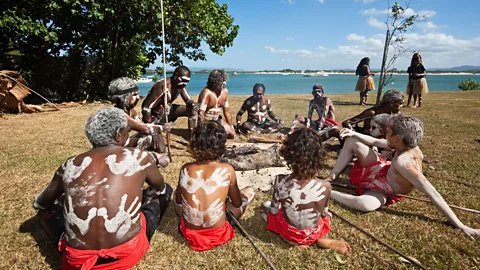
Last Hope for Dying Indigenous Language: Father’s Heartwarming Quest to Teach Sons Gudjal in the Face of Devastating Statistics
- Father Braithen Knox writes children’s book ‘Where is the Dark Emu?’ in Gudjal language to teach his sons, one of fewer than 10 known languages left in the world
- Gudjal language was forbidden to be spoken by Braithen’s grandparents, part of the Stolen Generations, leaving a generational gap in language transmission
- With the help of William Santo’s Gudjal language guide, Braithen is keeping the language alive for his family, despite Australia having one of the highest rates of language loss globally
- Experts warn that the loss of Indigenous languages poses a significant threat to cultural heritage and identity, with over 100 languages already lost since colonisation
In a heartwarming yet desperate bid to preserve his Indigenous heritage, Braithen Knox has taken matters into his own hands.
The 24-year-old father of two has written a children’s book, ‘Where is the Dark Emu?’, in the endangered Gudjal language, spoken by fewer than 10 people in the world.
The book is a labour of love, created specifically for his sons, Mateo and his younger brother, to learn their ancestral language from a young age.
Braithen’s journey to create the book began when he embarked on learning Gudjal, a language his grandparents were forbidden to speak as part of the Stolen Generations.
The trauma of this period has left a lasting impact on the transmission of the language, with many elderly Gudjala people reluctant to pass it on to younger generations.




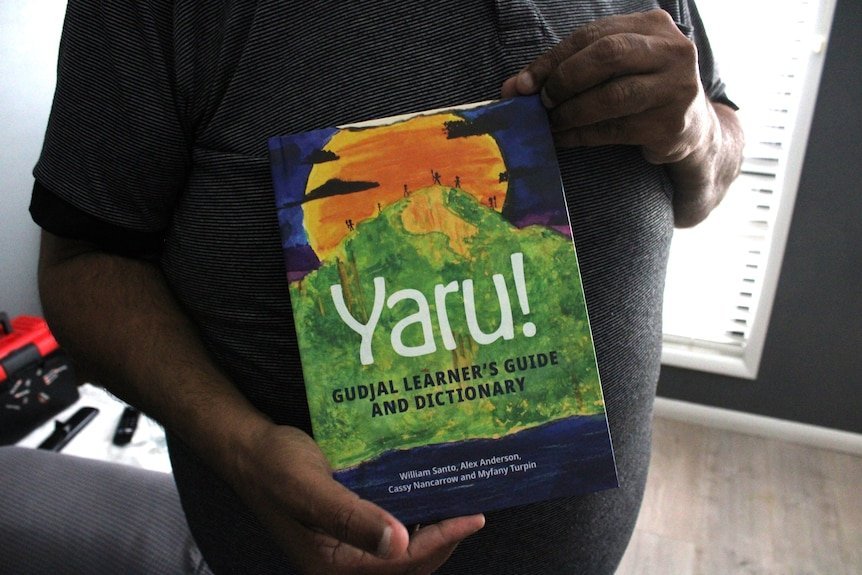
Determined to break this cycle, Braithen turned to William Santo’s Gudjal language guide, ‘Yaru!’, to help him translate the book. Santo, a Gudjala man, spent over three years compiling the dictionary with the assistance of linguists and academics.
The guide is a testament to the painstaking effort required to document and preserve a dying language.
The statistics are alarming – Australia has one of the highest rates of language loss in the world.
Prior to colonisation, there were over 250 Indigenous languages spoken in Australia, but by 2021, the Australian Bureau of Statistics recorded just over 150 languages still in use.
The loss of these languages poses a significant threat to the cultural heritage and identity of Indigenous Australians.
Analysis: What This Means for Australia
The decline of Indigenous languages has far-reaching implications for Australia’s cultural identity and national cohesion. As the country grapples with the legacy of colonisation and the Stolen Generations, the preservation of Indigenous languages is critical to reconciliation and healing.
Efforts like Braithen’s and William Santo’s are crucial in keeping these languages alive, but more needs to be done to support and resource language revitalisation programs.
Security analysts say that the loss of Indigenous languages can also have significant implications for national security, as the erosion of cultural identity can lead to social unrest and community disengagement.
Furthermore, the preservation of Indigenous languages can also play a critical role in promoting cross-cultural understanding and cooperation.
Law enforcement insiders warn that the decline of Indigenous languages can also hinder communication and trust between police and Indigenous communities, exacerbating existing social and economic disparities.
Industry observers believe that the preservation of Indigenous languages can also have significant economic benefits, particularly in the tourism and education sectors, where cultural heritage and language are key attractions.
As Braithen Knox and his family continue to learn and speak Gudjal, they are not only preserving their cultural heritage but also contributing to a broader national conversation about the importance of language preservation.
Their story serves as a powerful reminder of the urgent need for action to protect Australia’s Indigenous languages and the cultural identity they represent.