A Long-Awaited Homecoming: Aboriginal Stockman’s Remains Return to Country After 65 Years in Museum
- Thomas Cowell’s remains will be reburied in Witjira National Park, bringing closure to his family and community after six decades.
- The Southern Arrernte man’s original gravesite was disturbed by flooding, leading to his remains being transferred to the SA Museum in 1966.
- The repatriation ceremony, set to take place during National Reconciliation Week, marks a significant moment in Australia’s journey towards reconciliation.
- The SA Museum’s efforts to identify and return Mr. Cowell’s remains serve as a powerful example of the importance of preserving Indigenous cultural heritage.
The sun-baked landscape of Witjira National Park will soon welcome home the remains of Thomas Cowell, a Southern Arrernte stockman who has been away from his ancestral lands for over 65 years.
The long-awaited repatriation ceremony, set to take place on Thursday morning, will bring closure to Mr. Cowell’s family and community, who have waited patiently for his return.
Mr. Cowell’s story began to unfold in 1959, when he passed away near Kopperamanna Bore in South Australia’s far north.
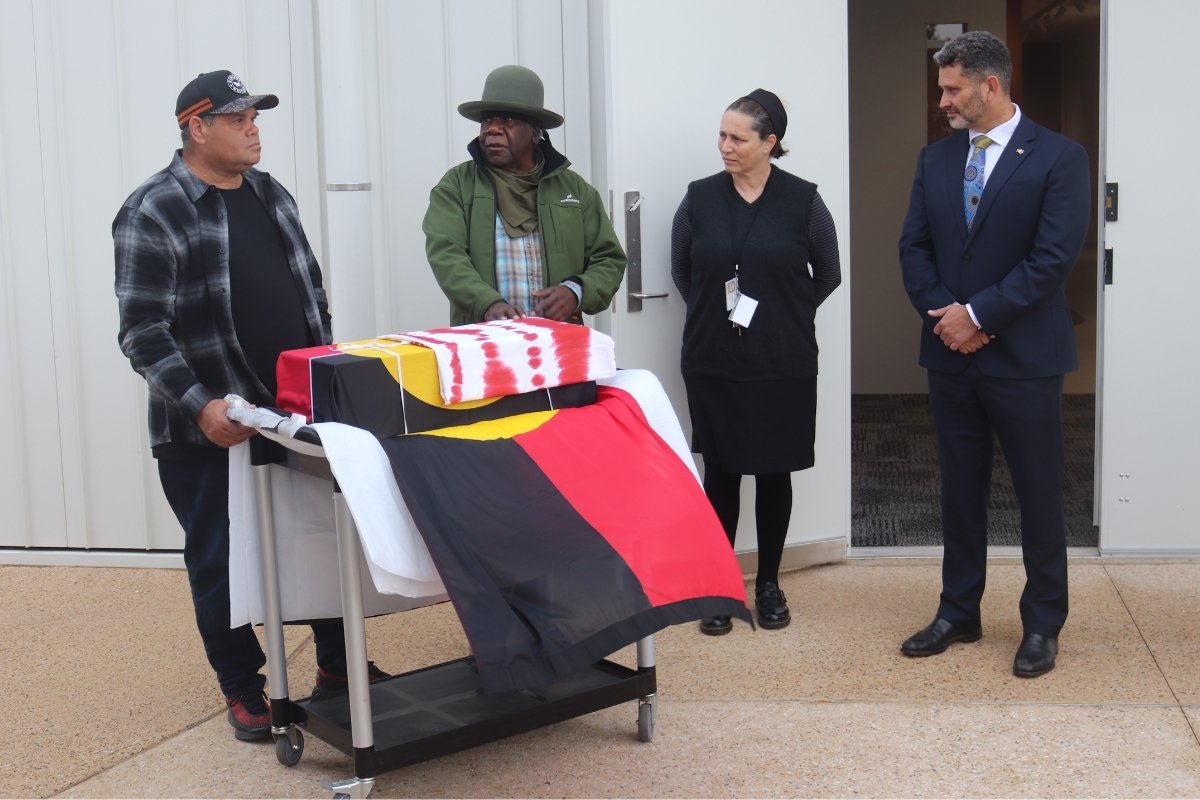
His remains were initially buried at a nearby dam, but the gravesite was washed away by flooding in 1966. With no known family members to claim him, Mr.
Cowell’s remains were transferred to the SA Museum, where they have been kept for over six decades.


However, thanks to the tireless efforts of the SA Museum’s Aboriginal heritage and repatriation team, Mr. Cowell’s identity and life story have been painstakingly researched and reconstructed.
A 1997 interview with an elder revealed that Mr. Cowell was likely a Southern Arrernte man with strong connections to the Mount Dare and Macumba area.
Further research identified members of his extended family, who have requested that he be returned to Country.
As the museum’s director, Samantha Hamilton, notes, “This work is really deep.” The repatriation of Mr. Cowell’s remains is not just a symbolic gesture; it represents a significant step towards reconciliation and healing for the Indigenous community.
The museum’s commitment to preserving Indigenous cultural heritage has been instrumental in bringing Mr. Cowell home, and their efforts serve as a powerful example for other institutions to follow.
Analysis: What This Means for Australia
The repatriation of Mr. Cowell’s remains highlights the importance of preserving Indigenous cultural heritage and the need for greater recognition and respect for Australia’s First Peoples.
As the country continues on its journey towards reconciliation, it is essential that we acknowledge the historical injustices perpetrated against Indigenous Australians and work towards healing and redress.
Security analysts say that the repatriation of Indigenous remains is a critical step towards rebuilding trust between Indigenous communities and institutions. By acknowledging the past and working towards a more inclusive future, Australia can begin to heal the wounds of its colonial past.
Law enforcement insiders warn that the failure to address Indigenous disadvantage and cultural heritage issues can have serious consequences for community safety and social cohesion. By prioritizing reconciliation and Indigenous-led initiatives, Australia can work towards creating a more just and equitable society.
Industry observers believe that the SA Museum’s efforts to repatriate Mr. Cowell’s remains demonstrate a commitment to cultural sensitivity and respect for Indigenous heritage.
As institutions across the country work towards reconciliation, it is essential that they prioritize Indigenous-led initiatives and community engagement.
As Australia continues to grapple with its complex and often fraught history, the repatriation of Mr. Cowell’s remains serves as a powerful reminder of the importance of preserving Indigenous cultural heritage and working towards reconciliation.
As the country moves forward, it is essential that we prioritize Indigenous voices and perspectives, and work towards creating a more just and equitable society for all.