Family’s Agony as Police Decide Not to Charge Over Death of Kumanjayi White in Custody: ‘We Have Got No Hope’
- Kumanjayi White’s family left reeling after police reveal no charges will be laid over his death in custody
- 24-year-old Warlpiri man died after being restrained by police in Alice Springs supermarket
- Family slams police for ‘turning up uninvited’ to deliver the devastating news on the eve of the one-year anniversary
- ‘We are sick of being treated unequally’: Family’s scathing statement sparks calls for justice and reform
The family of Kumanjayi White has been left shattered and outraged after Northern Territory Police announced that no charges will be laid over his death in custody.
The 24-year-old Warlpiri man’s tragic passing in May 2025 sparked widespread vigils and calls for justice, but the decision has only added to the family’s anguish.
Kumanjayi White’s death occurred after he was restrained by two police officers following an alleged confrontation with security guards inside a Coles supermarket in the Alice Springs CBD.
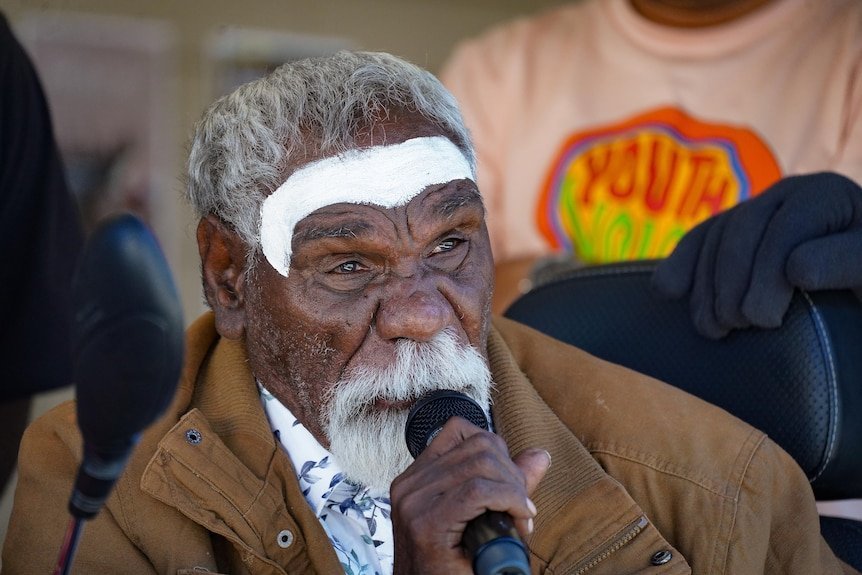
The incident has been the subject of a death in custody investigation and a use-of-force inquiry, but the outcome has left the family feeling defeated and disillusioned.
The family was informed of the decision by police on the eve of the one-year anniversary of Kumanjayi White’s death. In a statement, they expressed their anger and frustration, saying: “We have got no hope.


When will we have our justice?
How can we keep living like this?” The family also criticized the police for their handling of the situation, claiming they “turned up uninvited” to deliver the news to Kumanjayi White’s mother’s community in Lajamanu.
The incident has sparked renewed calls for justice and reform, with the family’s statement highlighting the deep-seated systemic issues that have led to the tragic loss of life.
“We are sick of being treated unequally —Wajumpa,” the statement read.
The use of the word “Wajumpa” is a powerful expression of the family’s frustration and sense of injustice, and it has resonated deeply with Indigenous Australians who have been affected by similar tragedies.
As the family begins their traditional grieving process, known as “sorry business,” they have requested that the media respect their wishes and give them space. The statement concluded: “We are going into blackout for a week — media, stay away from us, we’re [not] giving you anything more.”
The incident has also sparked a wider conversation about the need for greater accountability and transparency within the Northern Territory Police. Security analysts say that the use of force by police is a critical issue that requires urgent attention, particularly in Indigenous communities.
“The lack of accountability and oversight in these situations is alarming,” said one analyst. “It’s clear that we need a more nuanced and culturally sensitive approach to policing in Indigenous communities.”
Law enforcement insiders warn that the decision not to charge anyone over Kumanjayi White’s death in custody may have serious consequences for community trust and relations with police.
“This decision will only serve to further erode the trust between police and Indigenous Australians,” said one insider. “It’s a missed opportunity for meaningful reform and a chance to rebuild relationships.”
Analysis: What This Means for Australia
The decision not to charge anyone over Kumanjayi White’s death in custody has significant implications for Australia’s national security and law enforcement agencies. The incident highlights the need for greater accountability and transparency within the Northern Territory Police, particularly in Indigenous communities.
It also underscores the importance of culturally sensitive policing and the need for greater investment in community-led initiatives.
The incident has also sparked renewed calls for justice and reform, with many Indigenous Australians feeling that their voices are not being heard.
Industry observers believe that the decision may have serious economic and social consequences, particularly in the Northern Territory where tourism and business investment are critical to the local economy.
As the family of Kumanjayi White begins their grieving process, the nation is left to grapple with the complex and deeply ingrained issues that have led to this tragedy.
One thing is clear: meaningful reform and accountability are needed to prevent similar incidents from occurring in the future.